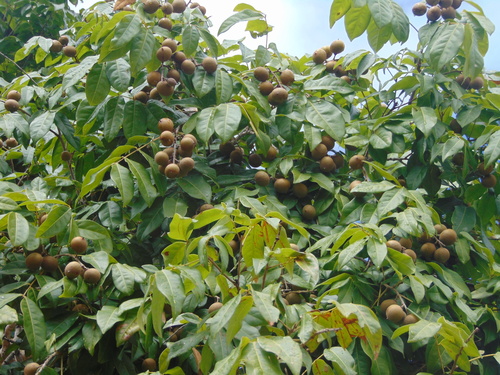
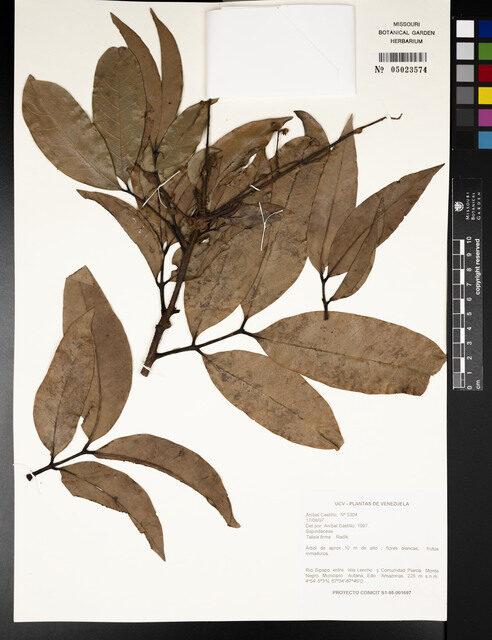
Xerospermum laevigatum
Radlk.
Rambutan pachat, Gong
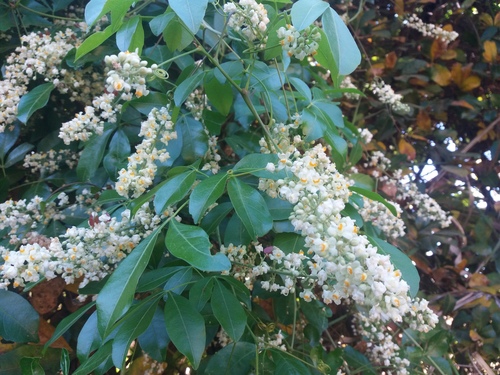
gbif· cc0
President and Fellows of Harvard College
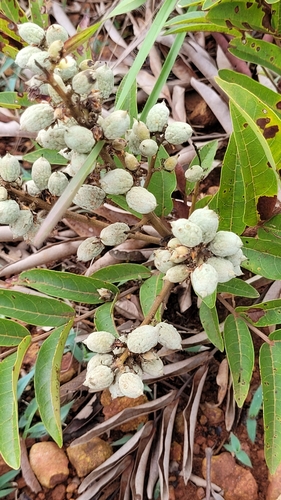
gbif· cc0
President and Fellows of Harvard College
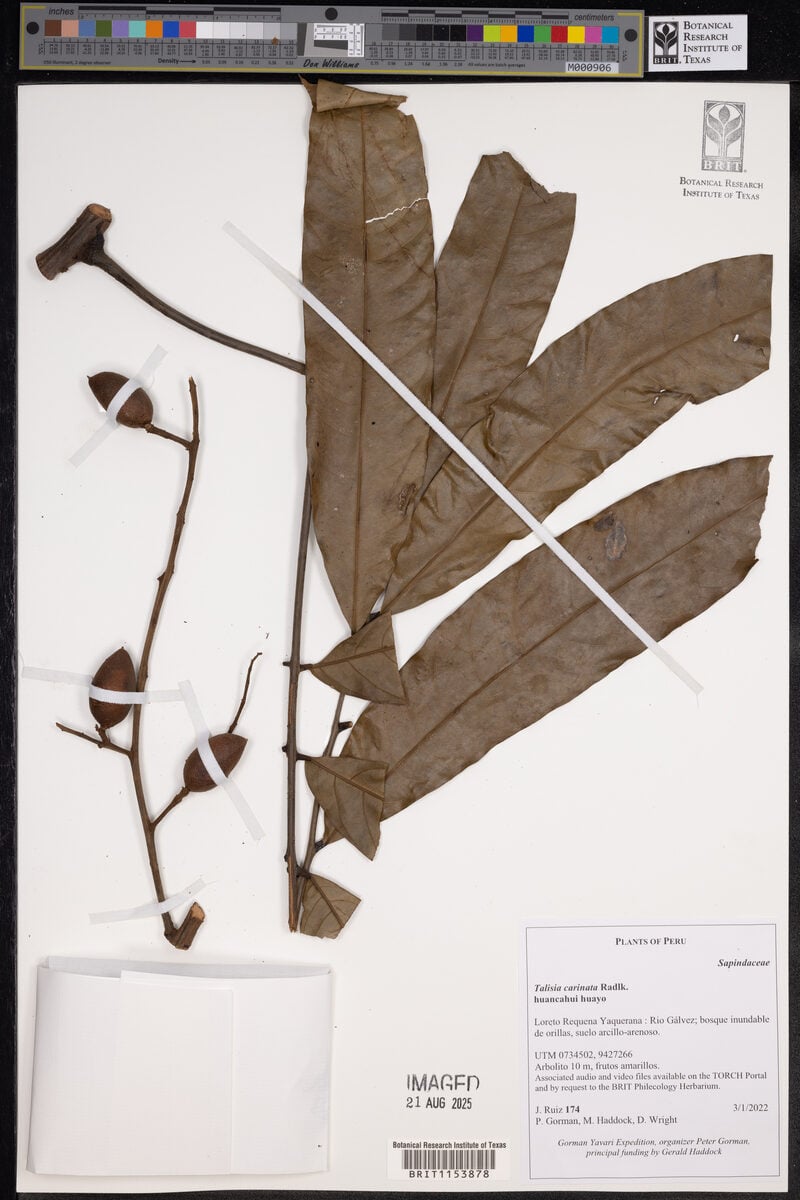
gbif· cc0
President and Fellows of Harvard College
Description
A shrub or tree. It grows to 36 m high. The trunk can be 100 cm across. The twigs are smooth when young. The flowers have 5 flower parts. The fruit stalk is not much swollen.
Edible Uses
The fleshy seed coat is eaten; the fruit is consumed though it is not considered a significant food source.
Traditional Uses
The fleshy seed coat is eaten.
This uses section is brief — help expand it
Medicinal Uses
The pulped stone and the leaves are used to alleviate stomach-ache.
Distribution
A tropical plant. It grows in primary and secondary forests. It grows up to 700 m above sea level. It grows in the lowland moist tropics.
Where It Grows
Asia, Bangladesh, Brunei, Indochina, Indonesia, Laos, Malaysia, Myanmar, SE Asia,
Cultivation
A plant of the lowland moist tropics.
Other Uses
The opinions on the timber quality are rather divergent, ranging from being suitable only for fuel, to being an inferior timber, or to being a good, tough, and durable timber.
Other Information
It is not a significant food.
Notes
There are 2 Xerospermum species.
Synonyms
Also Known As
Bonlichu
References (10)
- Adema, Leenhouts, P. W., 1994, Sapindaceae, Flora Malesiana Ser 1 Vol 11 (3) p 748
- Argent, G et al, nd, Manual of the Larger and More important non Dipterocarp Trees of Central Kalimantan Indonesia. Volume 2 Forest Research Institute, Samarinda, Indonesia. p 573
- BARC, 2016, State of Biodiversity for Food and Agriculture in Bangladesh. Bangladesh Agricultural Research Council.
- Burkill, I.H., 1966, A Dictionary of the Economic Products of the Malay Peninsula. Ministry of Agriculture and Cooperatives, Kuala Lumpur, Malaysia. Vol 2 (I-Z) p 2313
- Ferns, Useful Tropical Plants
Show all 10 references Hide references
- Hanum, F. I., 1999, Plant Diversity and Conservation Value of Ayer Hitam Forest, Selangor, Peninsula Malaysia. Pertanika J. Trop. Agric. Sci. 22(2):73-83
- Milow, P., et al, 2013, Malaysian species of plants with edible fruits or seeds and their evaluation. International Journal of Fruit Science. 14:1, 1-27
- Pasha, M. K. & Uddin, S. B., 2019, Minor Edible Fruits of Bangladesh. Bangladesh J. Plant Taxon. 26(2): 299–313
- PROSEA No. 2
- World Checklist of Useful Plant Species 2020. Royal Botanic Gardens, Kew