Xanthoceras sorbifolium
Bunge
Yellow Horn, Official's hat fruit, Shiny-leaf yellowhorn, Northern macadamia
iNaturalist· cc-by-nc
(c) Terry Townshend, some rights reserved (CC BY-NC), uploaded by Terry Townshend
iNaturalist· cc-by-nc
(c) Nickel, some rights reserved (CC BY-NC), uploaded by Nickel
iNaturalist· cc-by-nc
(c) Aleksandr_Levon, some rights reserved (CC BY-NC), uploaded by Aleksandr_Levon
Summary
Source: WikipediaXanthoceras sorbifolium is a deciduous shrub growing slowly to 6 m (19 ft) tall and 2.5 m (8 ft) wide. Hardy to UK zone 6 and not frost tender, it flowers May to June with seeds ripening September to October. The plant is hermaphroditic. It adapts to light sandy, medium loamy, or heavy clay soils with well-drained conditions across mildly acidic to basic pH ranges. Full sun is essential; it tolerates both dry and moist soils.
Description
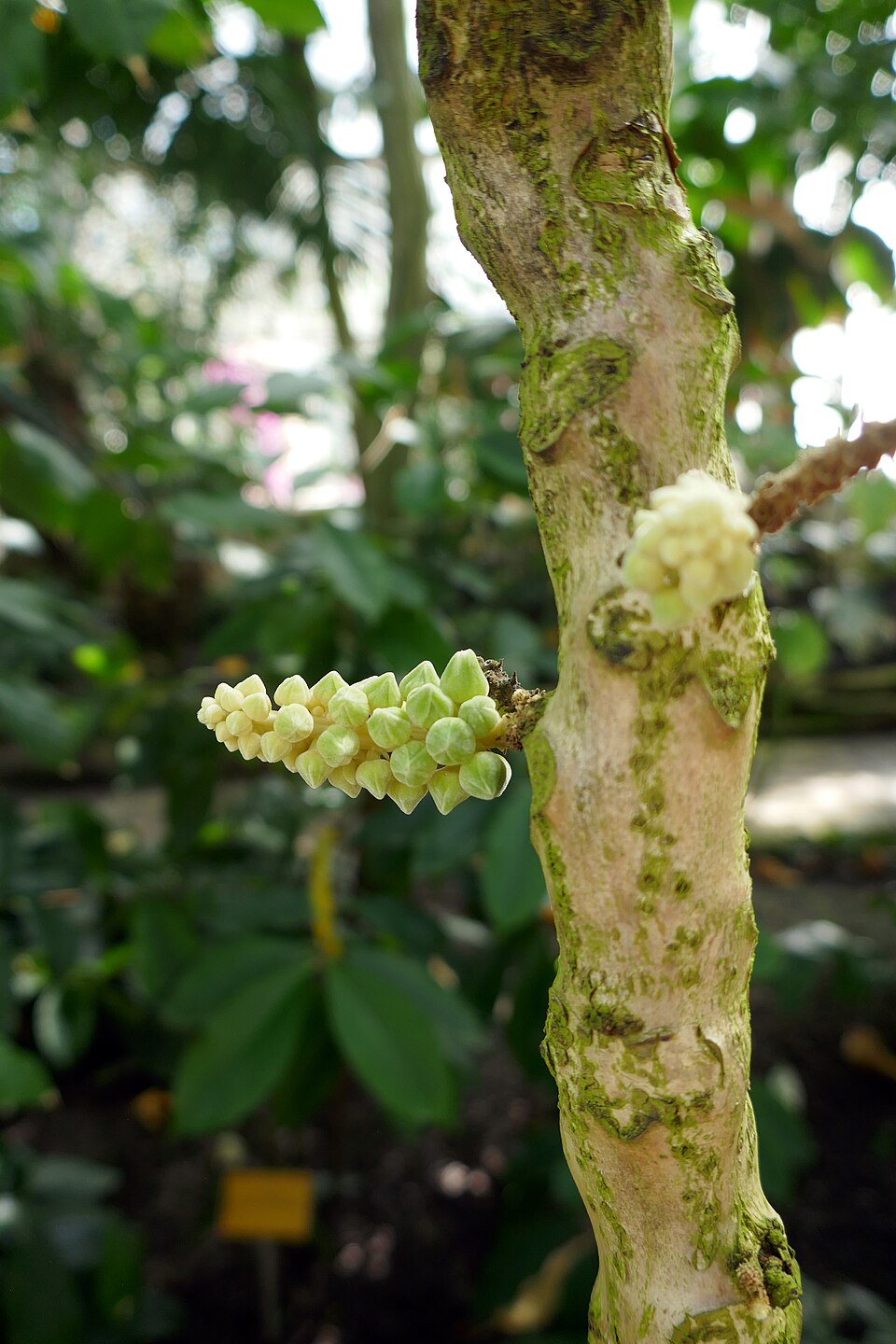
A small tree. It grows 8 m high. The bark is grey-brown and cracks into scaly ridges. It loses its leaves during the year. The leaves have leaflets along the stalk. The leaves are 30 cm long with up to 17 leaflets. These are narrowly oval and have teeth. The leaflets are 6 cm long and glossy green above. The flowers are white and have 5 petals. They are yellow to red at their bases. The fruit is a smooth thick-walled capsule. It is 6 cm across. It contains several pea sized seeds. The fruit are edible.
Edible Uses
Flowers are cooked, usually by boiling. Leaves are also cooked, usually by boiling. The seeds are about the size of a pea, quite sweet with a flavour similar to sweet chestnut — they are husked, ground into a powder, and boiled before eating.
Traditional Uses
Asia, Australia, Britain, China, Europe, France, Japan, Korea, Mongolia, North America, USA,
This uses section is brief — help expand it
Medicinal Uses
None known
Distribution
It is a temperate plant. It is native to northern China. It grows in thickets. It is cold resistant and drought tolerant. It suits hardiness zones 6-9.
Where It Grows
TEMPERATE ASIA: Gansu Sheng, Hebei Sheng, Henan Sheng, Korea, Liaoning Sheng, Nei Mongol Zizhiqu, Ningxia Huizi Zizhiqu, Shaanxi Sheng, Shandong Sheng, Shanxi Sheng,China.
Cultivation
Prefers a good loamy soil, but succeeds in most well-drained fertile soils in a sunny position. Prefers a warm dry situation. Requires protection from cold winds. Dormant plants are hardy to about -20°c. They grow best in areas with warm summers and dry springs without late frosts, the young growth can be damaged by late spring frosts. They require summer heat in order to fully ripen their wood and to stimulate the production of flower buds. They are subject to attacks by 'coral spot' fungus, particularly if the wood is not fully ripened and is then damaged by winter cold. Flowers are produced on the previous year's wood. Plants are usually slow to become established.
Propagation
Three months of cool stratification improves germination, so seed is best sown in a cold frame in autumn. Alternatively, seed can be sown in a warm greenhouse in February or March, likely after stratification. Prick seedlings into individual pots when large enough to handle, grow on in a lightly shaded greenhouse through their first winter, then plant out in late spring or early summer with some protection from cold for the first winter or two. Root cuttings 3cm long can be planted horizontally in pots in a frame in December or January with a good success rate. Suckers can be divided during the dormant season and planted directly into permanent positions.
Other Uses
None known
Production
There are (1) 2 Xanthoceras species.
Also Known As
Senden chai, Sengdeng, Wen guan guo
References (22)
- Bodkin, F., 1991, Encyclopedia Botanica. Cornstalk publishing, p 1029
- Brickell, C. (Ed.), 1999, The Royal Horticultural Society A-Z Encyclopedia of Garden Plants. Convent Garden Books. p 1065
- Coombes, A.J., 2000, Trees. Dorling Kindersley Handbooks. p 295
- Cundall, P., (ed.), 2004, Gardening Australia: flora: the gardener's bible. ABC Books. p 1489
- Enum. pl. China bor. 11. 1833 (Mem. Acad. Imp. Sci. St.-Petersbourg Divers Savans 2:85. 1835) "sorbifolia"
Show all 22 references Hide references
- Facciola, S., 1998, Cornucopia 2: a Source Book of Edible Plants. Kampong Publications, p 226
- Hedrick, U.P., 1919, (Ed.), Sturtevant's edible plants of the world. p 688
- Hibbert, M., 2002, The Aussie Plant Finder 2002, Florilegium. p 310
- Hu, Shiu-ying, 2005, Food Plants of China. The Chinese University Press. p 526
- Jackes, D. A., 2007, Edible Forest Gardens
- Khasbagan, Hu-Yin Huai, and Sheng-Ji pei, 2000, Wild Plants in the Diet of Athorchin Mongol Herdsmen in Inner Mongolia. Economic Botany 54(4): 528-536
- Kunshan, Shi, Non-wood forest products in Asia. FAO Corporate Document Repository
- Lee, Y. M., 2014, Important Plants of East Asia II: Endemic Plant Stories. East Asia Biodiversity Conservation Network p 106
- Lord, E.E., & Willis, J.H., 1999, Shrubs and Trees for Australian gardens. Lothian. p 270
- Morley, B. & Everard, B., 1970, Wild Flowers of the World. Ebury press. Plate 95
- Plants for a Future database, The Field, Penpol, Lostwithiel, Cornwall, PL22 0NG, UK. http://www.scs.leeds.ac.uk/pfaf/
- READ,
- Ryan, S., 2008, Dicksonia. Rare Plants Manual. Hyland House. p 62
- Sachula, et al, 2020, Wild edible plants collected and consumed by the locals in Daqinggou, Inner Mongolia, China. Journal of Ethnobiology and Ethnomedicine (2020) 16:60
- Valder, P., 1999, The Garden Plants of China. Florilegium. p 342, 68
- Wiersema, J. H. & Leon, B., 2013, World Economic Plants. A Standard Reference CRC Press. 2nd Ed. p 730
- World Checklist of Useful Plant Species 2020. Royal Botanic Gardens, Kew