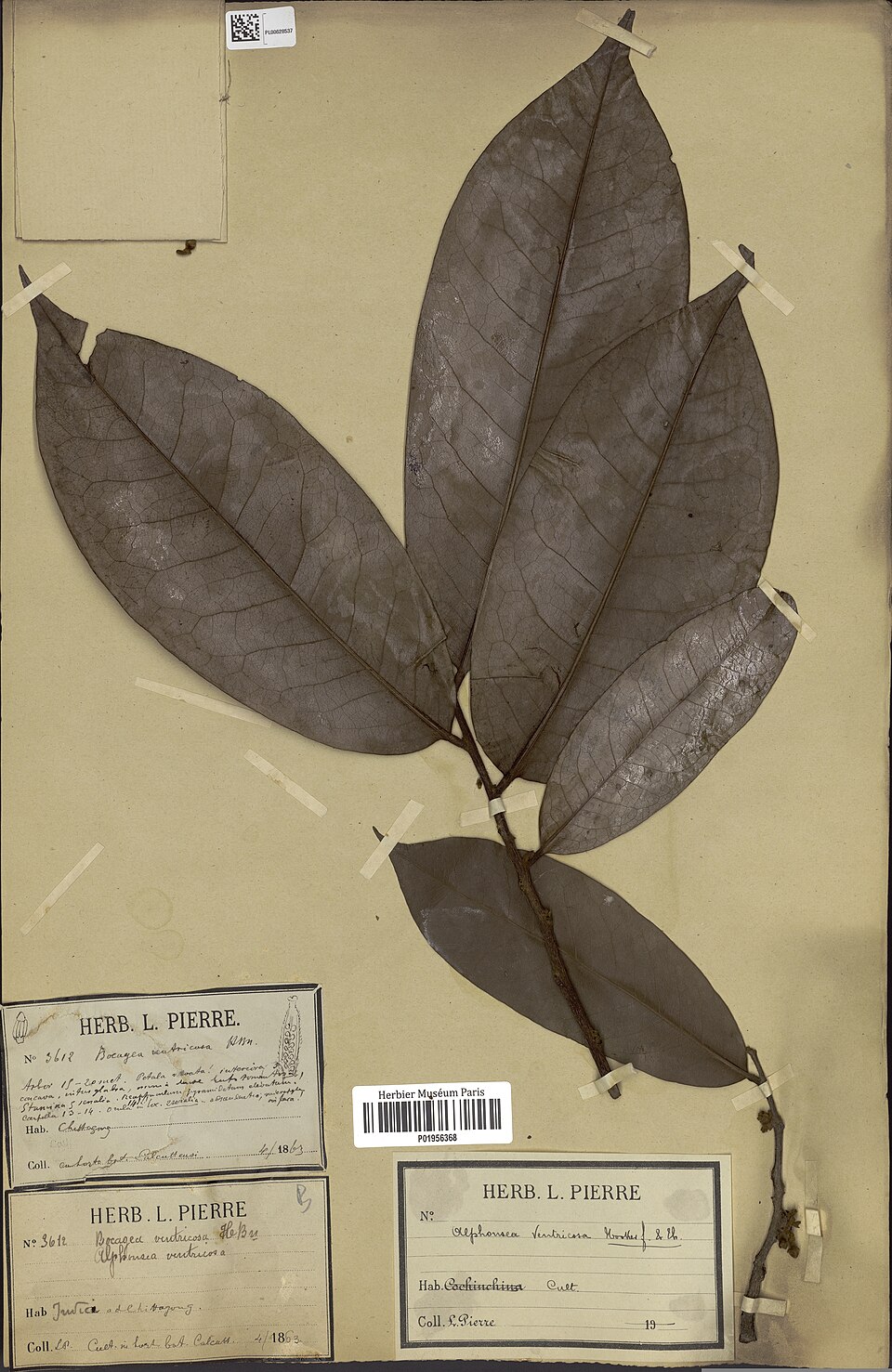
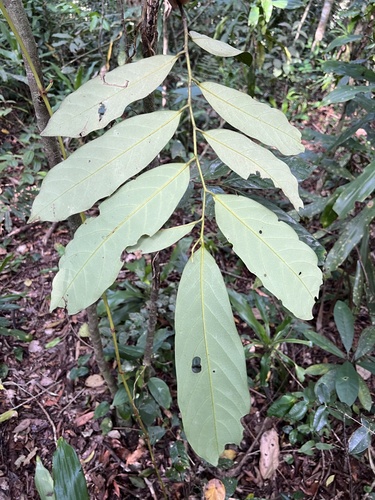
Annona atemoya
Mabb.
Atemoya
gbif· cc-by-nc-sa
Yvan
gbif· cc-by-nc-sa
Yvan
gbif· cc-by-nc
Toblerone
Description
Annona atemoya is a deciduous Tree growing to 8 m (26ft) by 8 m (26ft) at a fast rate. See above for USDA hardiness. It is hardy to UK zone 10. The flowers are pollinated by Beetles. The plant is self-fertile. It is noted for attracting wildlife. Suitable for: light (sandy), medium (loamy) and heavy (clay) soils, prefers well-drained soil and can grow in nutritionally poor soil. Suitable pH: mildly acid, neutral and basic (mildly alkaline) soils and can grow in very alkaline soils. It cannot grow in the shade. It prefers dry soil and can tolerate drought.
Edible Uses
Fruit - raw. Delicious. A sweetish flavour. The fruit contains 18% sugar, it can be utilized as a flavouring of ice cream, sherbets and beverages. Of excellent quality, it resembles A. Cherimola more than it does A. Squamosa. The fruit is about 8 - 15cm in diameter. The tree is a garden hybrid, the result of a cross between A. cherimola and A. squamosa. Said to be one of the best-tasting fruits in the world, it is often cultivated in gardens and commercial orchards. The tree can be grown in warmer regions of the tropics than A. Cherimola and so is widely cultivated there for its edible fruit.
Distribution
A garden hybrid, Annona cherimola x Annona squamosa.
Where It Grows
Coming Soon
Cultivation
In the tropics, the tree is only grown at elevations above 1,000 metres and will not survive under lowland conditions. It is grown in the lowlands in the subtropics. It grows best in areas where annual daytime temperatures are within the range 24° - 28°c, but can tolerate 12 - 32°c. Plants can tolerate occasional light frosts. Young trees will not tolerate prolonged temperatures between -3.9 to -6.7?c, whereas mature trees can withstand those temperatures with slight to moderate damage. It prefers a mean annual rainfall in the range 2,000 - 3,000mm, but tolerates 600 - 4,200mm. Prefers a moist, sandy loam with a pH of around 6. Tolerant of a range of soil conditions. Requires a moist but well-drained soil. Prefers a pH in the range 5.5 - 6.5, tolerating 5 - 7. Trees start producing fruit when about 4 - 5 years old from seed, or about 2 - 3 years after grafting. Mature trees produce from 23 - 34 kg per tree, possibly more with good management, or 5 - 20 tonnes/ha per year. Plants sometimes have two distinct flowering periods each year. Fruiting is improved if the flowers are hand pollinated. The fruit has good shipping qualities. There are many named varieties. When is it harvested? Late Autumn to Early Winter. When does it flower? Late Spring to Early Summer. Are there any agroforestry uses? How fast does it grow? Cherimoya has a moderate growth rate and can take about 3 to 4 years to start producing fruit after planting.
Propagation
Seed - normally only used to produce plants used as rootstocks. The seed usually germinates in about 4 weeks. Semi-ripe cuttings. Grafting
Other Uses
Insecticide Rootstock. Cherimoya can be used in agroforestry systems as a fruit tree. It provides shade and can be integrated into diverse cropping systems. The plants can be used as rootstocks for cultivars of this species and for other Annona species. The green fruit and seed have vermicidal and insecticidal properties.
Synonyms
Also Known As
Atemoya