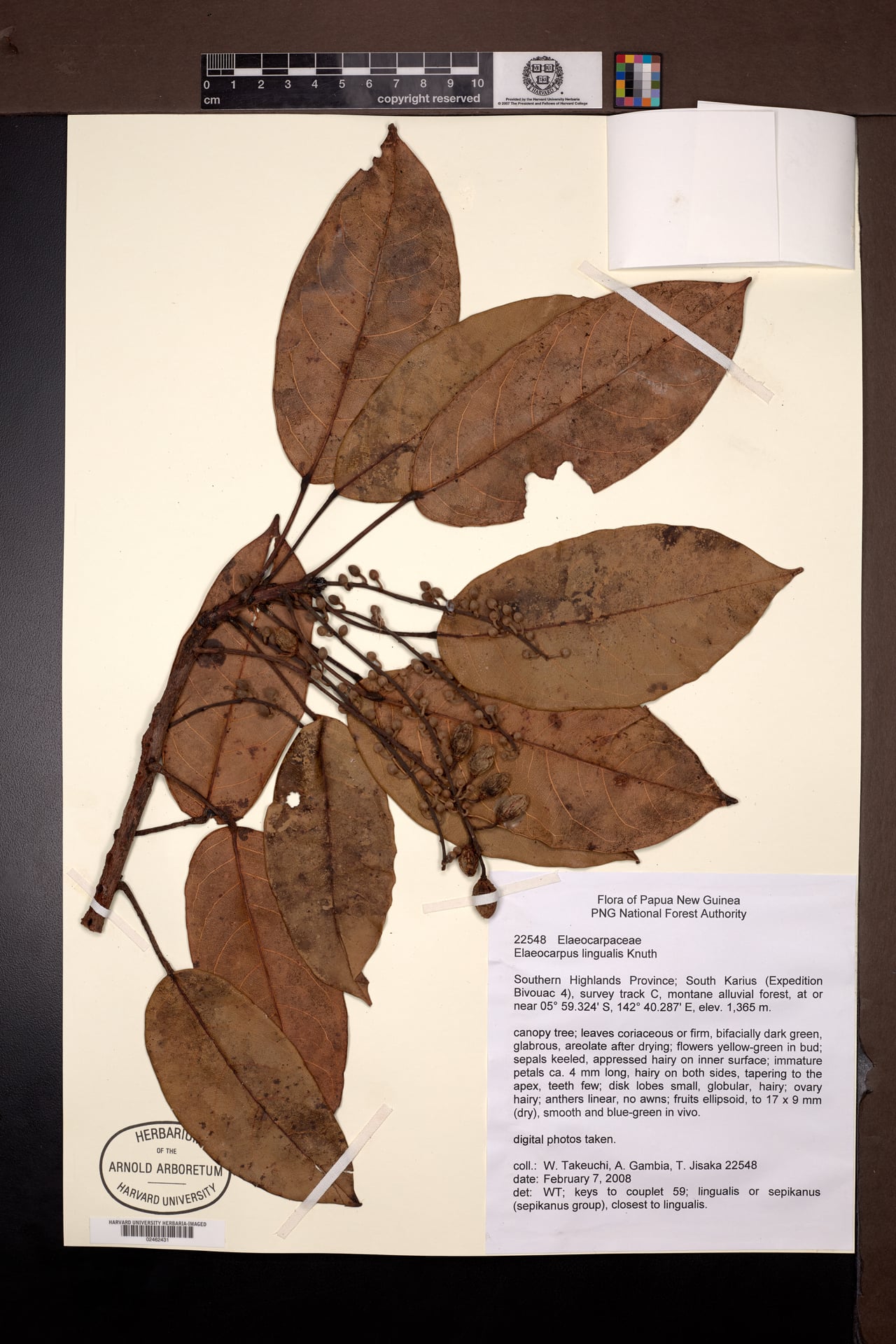
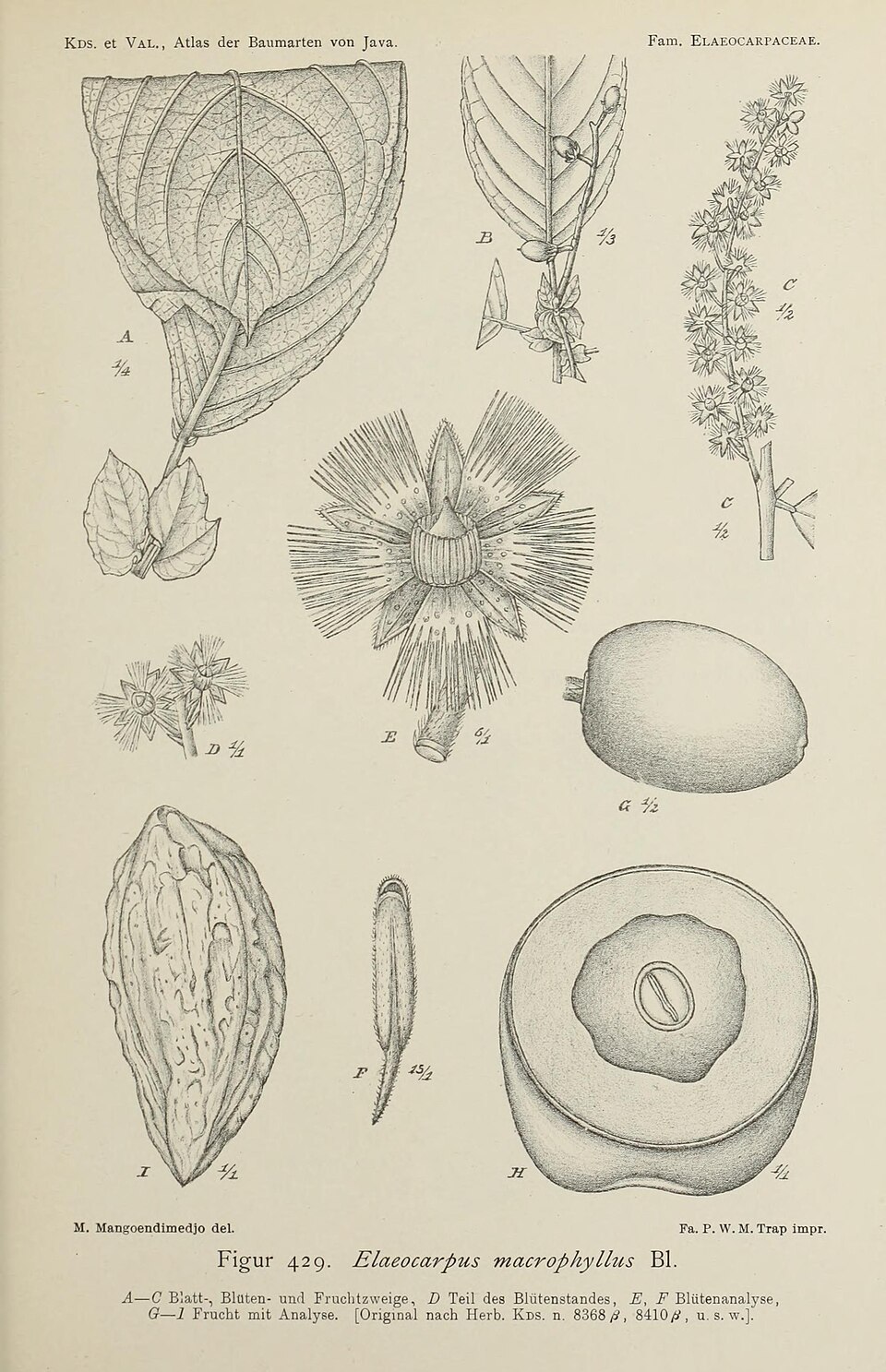
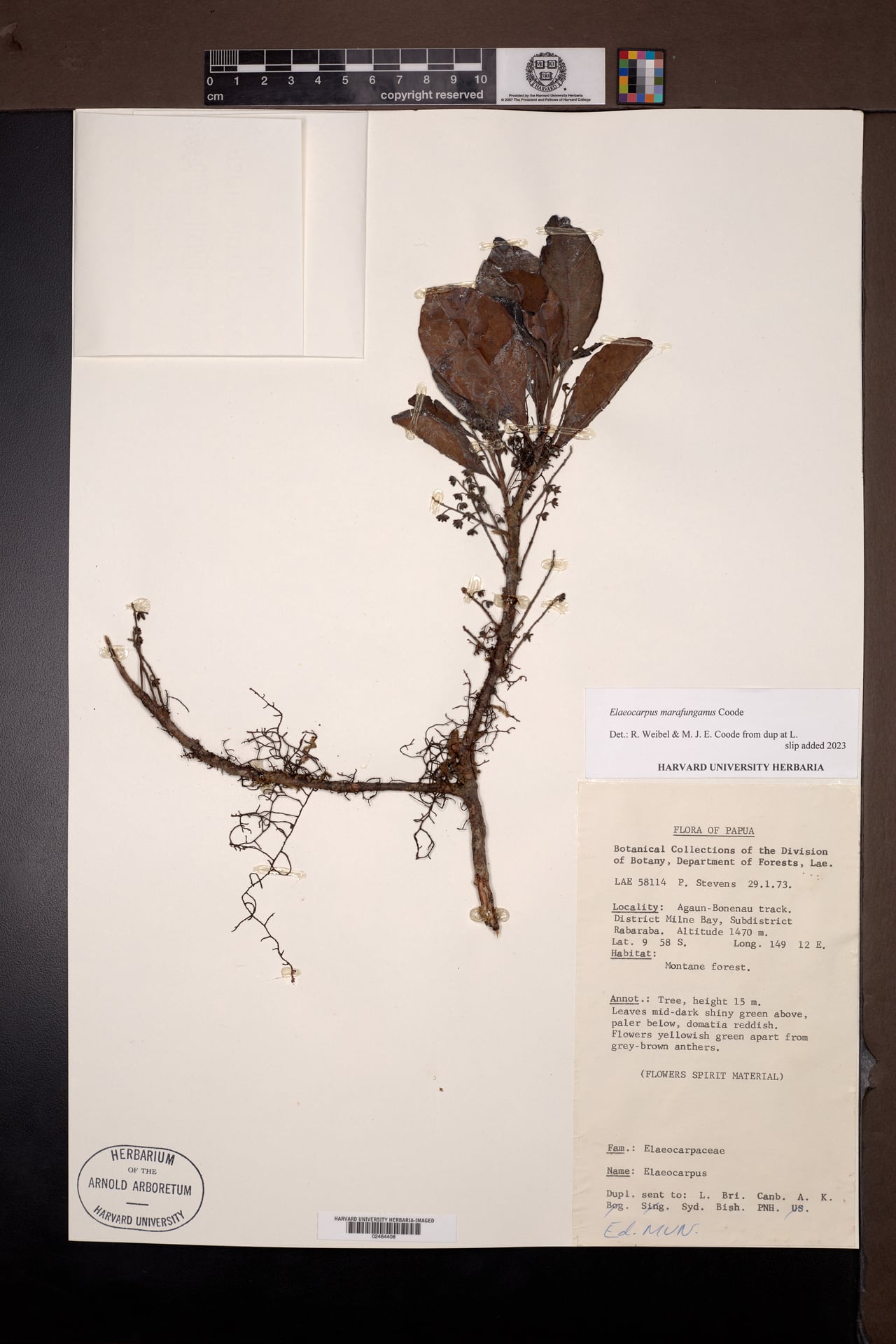
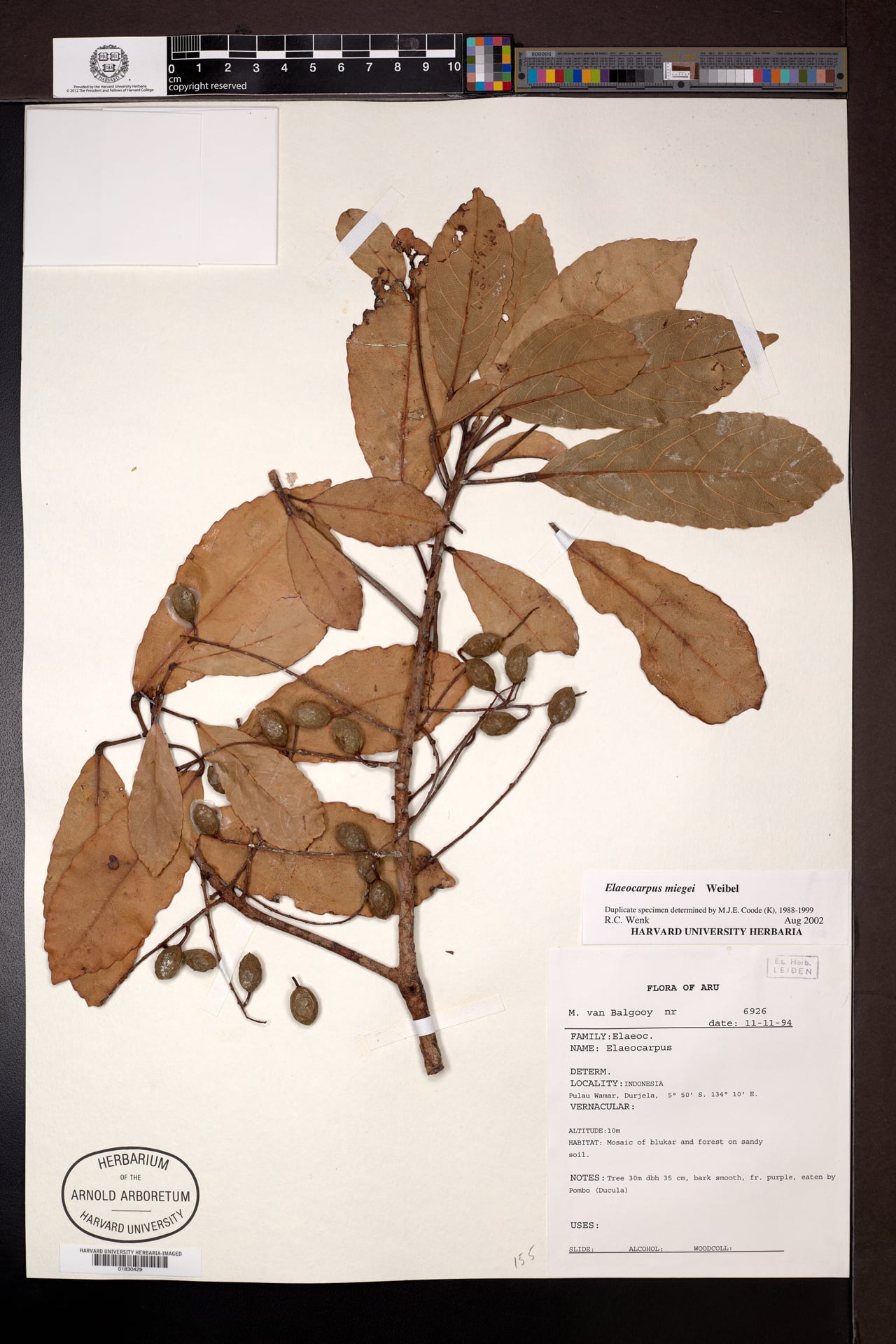
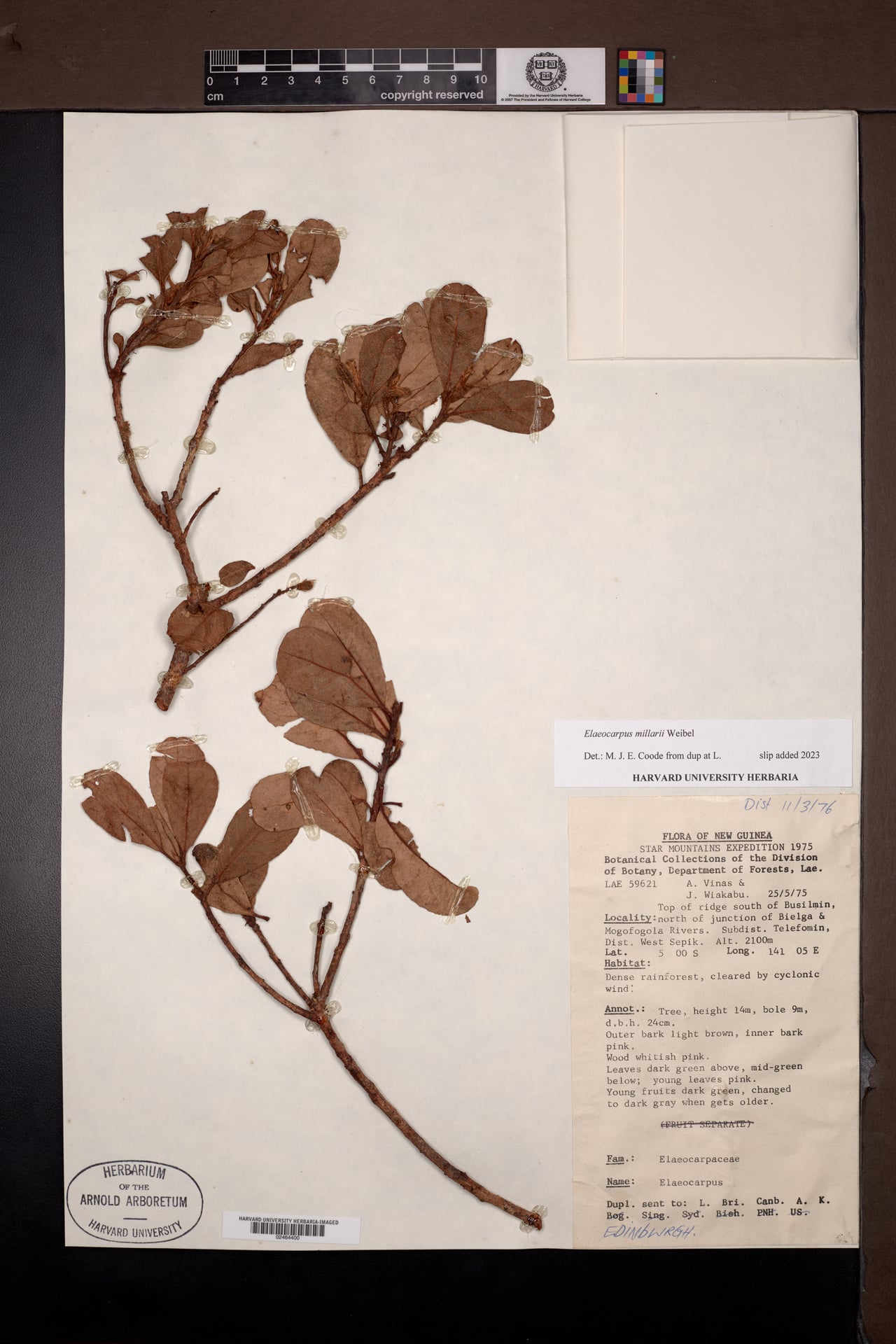
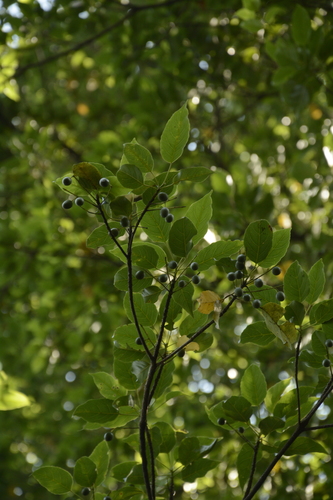
Elaeocarpus calomala
(Blanco) Merr.
Kalomala
Wikipedia· cc-by-sa
Wikimedia Commons - Elaeocarpus_calomala.jpg
gbif· cc0
President and Fellows of Harvard College
Summary
Source: WikipediaElaeocarpus calomala is a species of flowering plant in the family Elaeocarpaceae. Elaeocarpus calomala is a tree commonly found in the Philippines and used to create religious images known as santo. In the Philippines this tree is locally known as anakle, bunsilak or binting-dalaga (Tagalog, "maiden's leg"). It is similar to native tree species known as batikuling and like the olongas, another native tree species in the Philippines.
Description
A medium sized tree. It grows 25 m tall. The leaves are alternate, smooth, oval, pointed at both ends and toothed at the edges. The flowers are white and have a smell. They are borne in flower clusters along a stalk in the axils of leaves. The fruit are oval and red.
Edible Uses
Fruit. Rather dry, subacid and astringent. The red, oval fruit is about 25 - 30mm long, containing a single large seed.
Traditional Uses
The fleshy portion of the fruit is eaten raw.
This uses section is brief — help expand it
Distribution
A tropical plant. They occur in the Philippines in Mt Province and from Luzon to southern Mindanao growing in primary forest at low and high altitudes. It grows up to 1,300 m above sea level.
Where It Grows
Asia, Pacific, Philippines*, SE Asia,
Cultivation
We have no specific information for this species, but members of this genus generally grow well in full sun to moderate shade, requiring a fertile, moist but well-drained soil.
Propagation
The seed of most species in this genus is covered by a hard, woody shell and can be very slow and erratic to germinate, sometimes taking 2 years or more. Filing down the shell, or cracking it (being very careful not to damage the seed) in order to allow the ingress of moisture can help to greatly speed up germination. Sow the seed in containers in light shade. When the seedlings are large enough to handle, prick them out into individual pots and grow them on until large enough to plant out, Cuttings of almost ripe shoots, in a sandy soil in a frame. The leaves should be left on the stem.. Many species strike readily from cuttings.
Other Uses
A fibre from the inner bark is used for making rope. We have no information on the specific properties of the wood of this species, however the following is a general description of the wood from this genus:- The heartwood is light-yellowish white to pink-brown, it is not distinctly demarcated from the sapwood. The texture is moderately fine and even, with straight to shallowly interlocked grain. The wood is soft to moderately hard; light in weight to moderately heavy; weak; not very durable. It seasons fairly slowly with slight end and surface checking; shrinkage is fairly low. It is easy to resaw and cross-cut; planing is easy and leaves a moderately smooth finish; nailing properties are good. A general purpose wood, it is suitable for purposes such as general planking, shuttering, boxes, crates, wooden pallets, match splints, veneer and plywood.
Notes
There are about 360 Elaeocarpus species mostly in the tropics.
Also Known As
Bongani, Kunakun
References (8)
- Brown, W.H., 1920, Wild Food Plants of the Philippines. Bureau of Forestry Bulletin No. 21 Manila. p 108
- Burkill, I.H., 1966, A Dictionary of the Economic Products of the Malay Peninsula. Ministry of Agriculture and Cooperatives, Kuala Lumpur, Malaysia. Vol 1 (A-H) p 914
- Call, C. A., et al, 2004, Participatory Rural Appraisal in the Upland Ecosystem of Mt Malindang, Misamis Occidental, Philippines. Biodiversity Research Programme for Development in Mindanao. p 53
- Coronel, R.E., 1982, Fruit Collections in the Philippines. IBPGR Newsletter p 9
- Heywood, V.H., Brummitt, R.K., Culham, A., and Seberg, O. 2007, Flowering Plant Families of the World. Royal Botanical Gardens, Kew. p 137
Show all 8 references Hide references
- Monsalud, M.R., Tongacan, A.L., Lopez, F.R., & Lagrimas, M.Q., 1966, Edible Wild Plants in Philippine Forests. Philippine Journal of Science. p 463
- PROSEA (Plant Resources of South East Asia) handbook, Volume 2, 1991, Edible fruits and nuts.
- World Checklist of Useful Plant Species 2020. Royal Botanic Gardens, Kew