Elaeocarpus johnsonii
F. Muell.
Johnson’s Qandong, Kuranda Quandong
gbif· cc-by
Royal Botanic Gardens, Kew
gbif· cc-by
GBIF
gbif· cc-by
Herbrecs
Summary
Source: WikipediaElaeocarpus johnsonii, commonly known as Kuranda quandong or Johnson's quandong, is species of flowering plant in the family Elaeocarpaceae and is endemic to north-east Queensland. It is a small to medium-sized tree, often with several main stems, elliptic to egg-shaped leaves with the narrower end towards the base, racemes of up to seven flowers, the petals with fringed lobes, and dark blue fruit.
Description
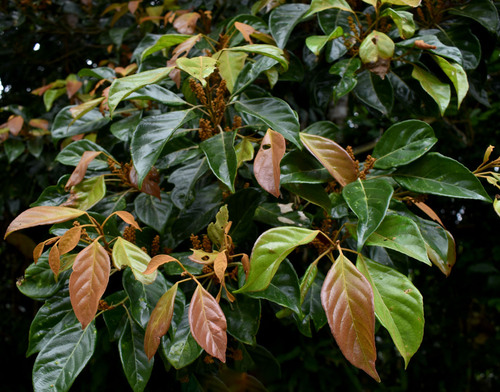
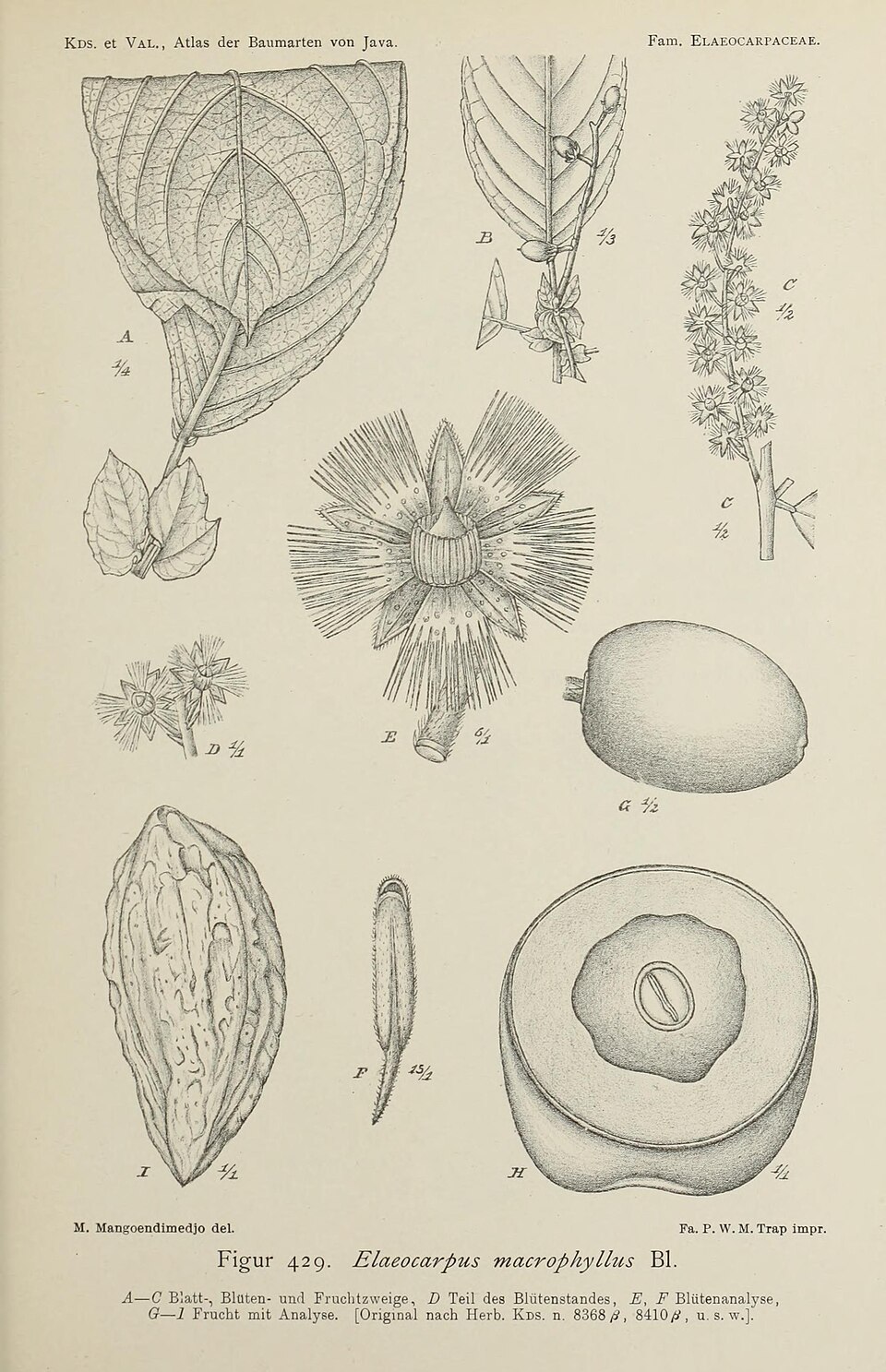
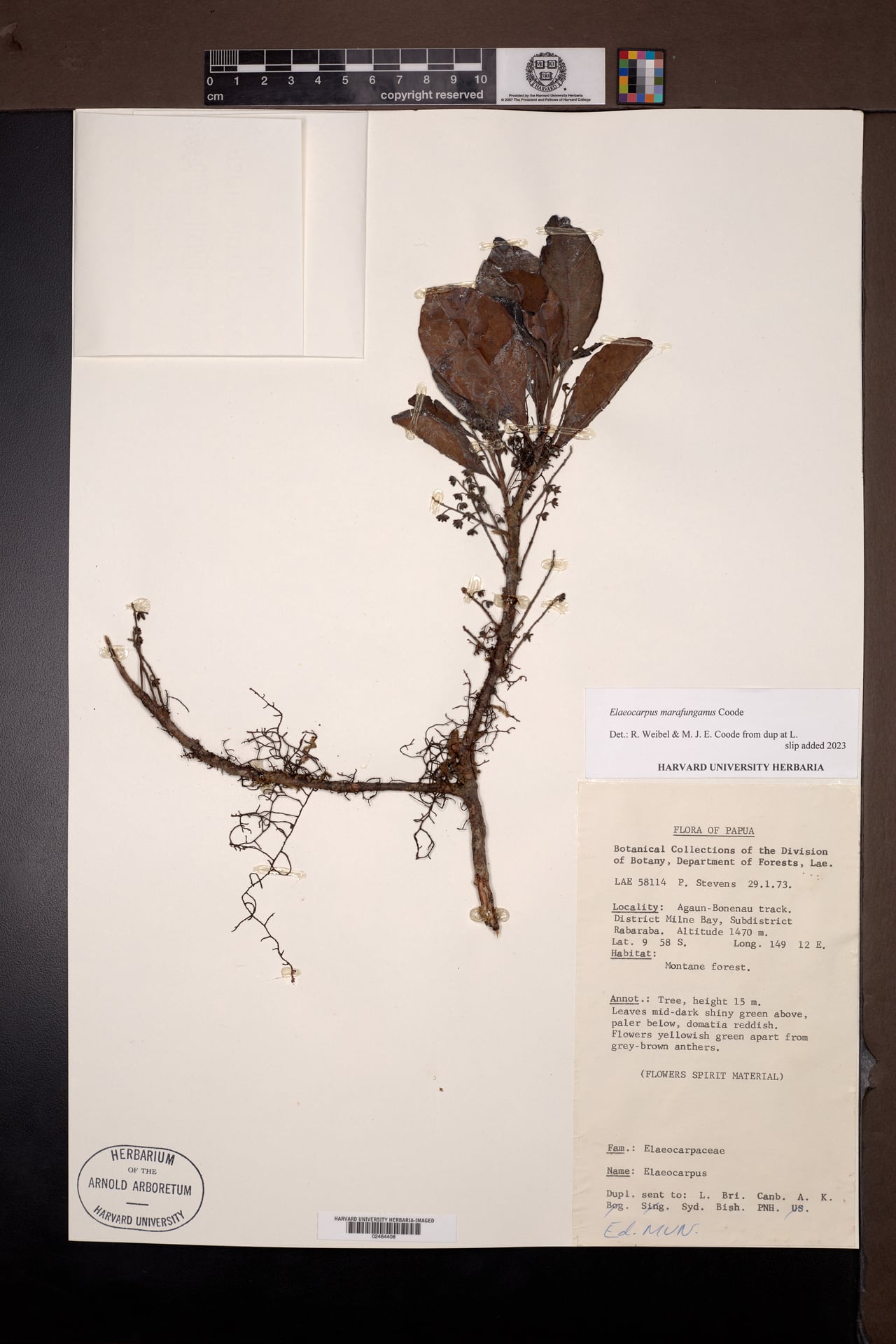
A medium sized tree. It grows up to 10-18 m tall and spreads 5-10 m wide. The young shoots are pink and covered with rusty hairs. The leaves are simple and 8-14 cm long by 1.5-2.5 cm wide. The midrib on the upper side is hairy and underneath there are rusty hairs. There are fine teeth around the leaf edge. The flowering shoot is 4 cm long and the flowers are 0.5 cm long. They are cream and hairy. The fruit is 27-40 mm long by 14-25 mm wide. They hang singly or in bunches. The outer surface of the fruit may have rusty hairs. There is one seed inside. It is up to 30 mm long. The flesh of the fruit is edible.
Edible Uses
The flesh of the fruit is edible, as are the seed kernels and nuts.
Distribution
A tropical plant. It suits tropical and subtropical locations. It grows in highland rainforest in NE Queensland, Australia. It grows between 500-1600 m altitude.
Where It Grows
Australia*,
Cultivation
Plants are grown from seed. Seed do not grow easily. They should have the seed coat broken or be fermented.
Notes
There are about 360 Elaeocarpus species mostly in the tropics.
References (6)
- Cherikoff V. & Isaacs, J., The Bush Food Handbook. How to gather, grow, process and cook Australian Wild Foods. Ti Tree Press, Australia p 199
- Cooper W & Cooper W T, 1994, Fruits of the Rain Forest. RD Press p 106
- Cooper, W. and Cooper, W., 2004, Fruits of the Australian Tropical Rainforest. Nokomis Editions, Victoria, Australia. p 161
- Elliot, W.R., & Jones, D.L., 1984, Encyclopedia of Australian Plants suitable for cultivation. Vol 3. Lothian. p 387
- Jones, D. L., 1986, Ornamental Rainforest Plants in Australia, Reed Books, p 143
Show all 6 references Hide references
- Townsend, K., 1994, Across the Top. Gardening with Australian Plants in the tropics. Society for Growing Australian Plants, Townsville Branch Inc. p 176