Ehretia saligna
R. Br.
Native willow, Peachwood, Peach Wood, False cedar
iNaturalist· cc-by-nc
(c) Bruce McLennan, some rights reserved (CC BY-NC), uploaded by Bruce McLennan
iNaturalist· cc-by-nc
(c) Regent Vale, some rights reserved (CC BY-NC), uploaded by Regent Vale
iNaturalist· cc-by-sa
(c) Greg Tasney, some rights reserved (CC BY-SA), uploaded by Greg Tasney
Summary
Source: WikipediaEhretia saligna, commonly known as peach bush, native willow and peachwood is a species of shrubs or small trees, endemic to Northern Australia. The natural range extends from the Gascoyne, across the Northern Territory throughout northern Queensland and coastal; regions of Southern Queensland and New South Wales. Ehretia saligna grows as a shrub or small tree with a weeping habit and simple narrow leaves. Green-white flowers 1-2mm long are produced in panicles in autumn or spring. The flowers are followed by yellow or red fruit, 1 to 4 mm in diameter, containing two to four large seeds. The fruit is edible to humans and was an important food source for Aboriginal Australians, especially in more arid regions. The fruit is also a food source for many bird species. Ehretia saligna grows in an extremely wide range of environments, from tropical rainforest and marshland to hot desert regions. It shows a similarly large degree of variation in leaf type, flower structure and growth habit. This variability has led to its being described as at least two distinct species: E. membranifolia and E. saligna. These former species are now considered varieties, despite intergrading completely. Ehretia saligna var. membranifolia is restricted to The Northern Territory, North Queensland and coastal regions of Central Queensland southwards to coastal regions of northern New South Wales. It occurs almost exclusively in moister, more heavily wooded environments, including monsoon forest, littoral rainforest and the margins of lowland rainforest. In keeping with its more mesic environment, it has a larger growth form, commonly occurring as a small tree up to 6 metres tall, with relatively broad leaves, approximately 4 times as long as broad. Ehretia saligna var. saligna is largely a plant of more arid regions and open forests and woodlands, although it is occasionally found in monsoon forest. This form has a much wider range than E. saligna var. membranifolia, and occurs in coastal Western Australia, across both arid and coastal arid regions of the Northern Territory and Queensland. Although it can grow to 6 metres in height, it is more commonly encountered as a shrub 2–4 metres tall. Leaves are comparatively narrow, commonly 8-10 times as long as broad. The plant is a moderately important browse species for cattle and sheep, especially in times of drought. In addition to consuming the fruit, Aborigines used a decoction of the wood for pain relief. Although slow growing, it is also occasionally planted as a foliage tree.
Description
A small tree. It grows 3-6 m tall and spreads 2-4 m wide. It loses its leaves in the dry season. Leaves are narrow with a long tip. They are thin textured and bright green above and bluish underneath. They are 5-25 cm long by 2-4 cm wide. The leaves droop downwards. New growth is bright green. The flowers are white or light cream and form tubes at the base. They are 0.4 cm across. The flowers occur in groups. The fruit are small red berries and 0.4 cm across. They turn black with age. There are 4 cells.
Edible Uses
The small red berries can be eaten.
Distribution
It grows in tropical areas in Australia. It is often along stream banks. It grows on stony ridges and sandy forest country. It is best in humus-rich soils in an open sunny position.
Where It Grows
Australia,
Cultivation
Plants can be grown from fresh seed.
Notes
There are about 50 Ehretia species.
Also Known As
Coonta
References (10)
- Bodkin, F., 1991, Encyclopedia Botanica. Cornstalk publishing, p 375
- Elliot, W.R., & Jones, D.L., 1984, Encyclopedia of Australian Plants suitable for cultivation. Vol 3. Lothian. p 382
- Kenneally, K.E., Edinger, D. C., and Willing T., 1996, Broome and Beyond, Plants and People of the Dampier Peninsula, Kimberley, Western Australia. Department of Conservation and Land Management. p 72
- Lazarides, M. & Hince, B., 1993, Handbook of Economic Plants of Australia, CSIRO. p 87
- Milson. J., 2000, Trees and Shrubs of north-west Queensland. DPI p 16
Show all 10 references Hide references
- Paczkowska, G. & Chapman, A.R., 2000, The Western Australian Flora. A Descriptive Catalogue. Western Australian Herbarium. p 181
- Petheram, R.J. and Kok, B., 2003, Plants of the Kimberley Region of Western Australia. UWA Press p 309
- Townsend, K., 1994, Across the Top. Gardening with Australian Plants in the tropics. Society for Growing Australian Plants, Townsville Branch Inc. p 173
- Vigilante, T., et al, 2013, Island country: Aboriginal connections, values and knowledge of the Western Kimberley islands in the context of an island biological survey. Records of the Western Australian Museum Supplement 81: 145-182
- Wheeler, J.R.(ed.), 1992, Flora of the Kimberley Region. CALM, Western Australian Herbarium, p 768
More from Boraginaceae
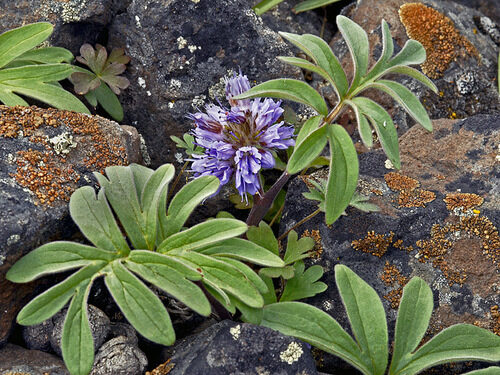
Hydrophyllum capitatum
Cat's Breeches, Ballhead waterleaf, Alpine waterleaf, Thompson's waterleaf
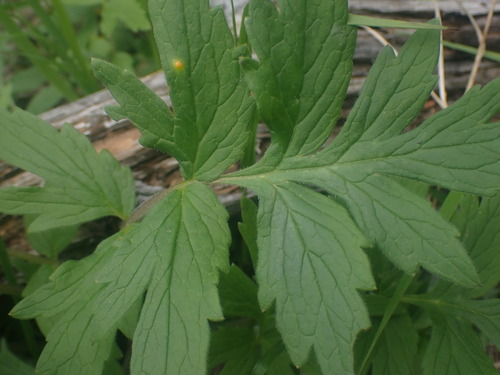
Hydrophyllum fendleri var. albifrons
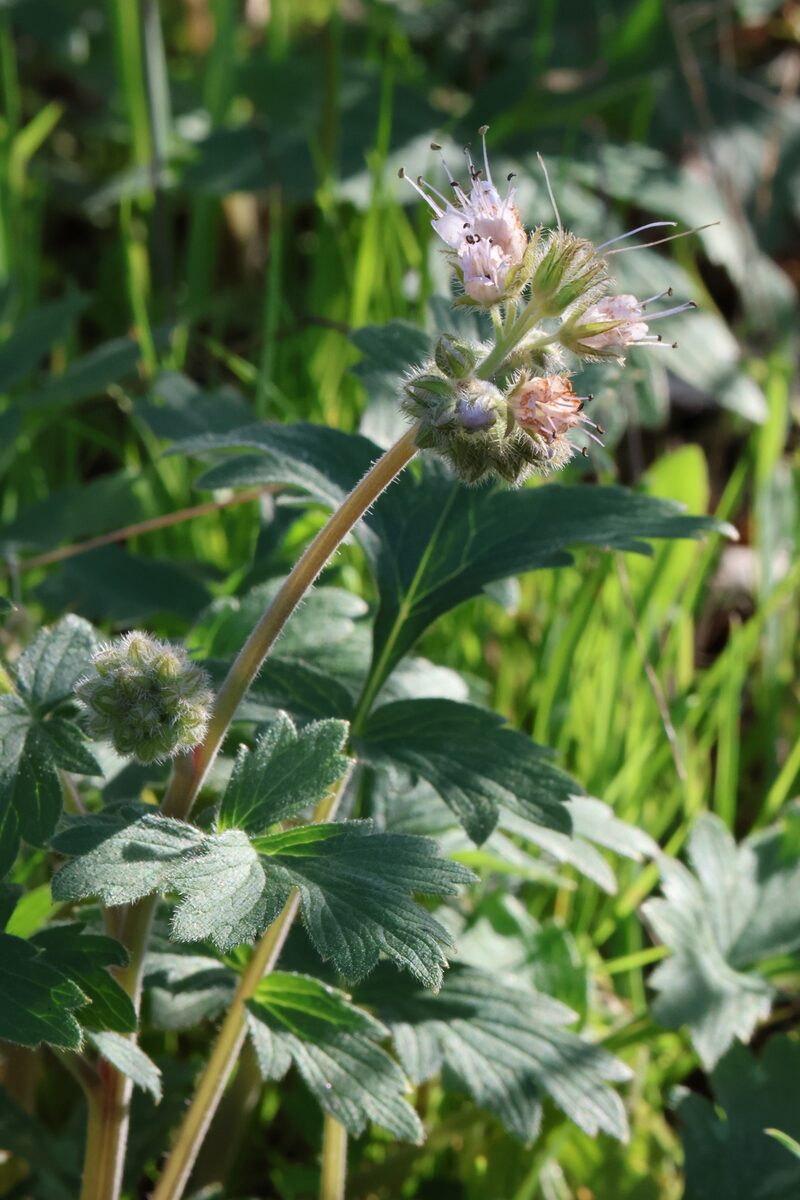
Hydrophyllum occidentale - (Watson.)A.Gray.
Western Waterleaf
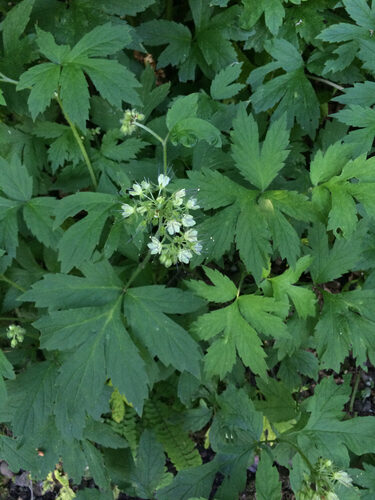
Hydrophyllum tenuipes
Pacific Waterleaf
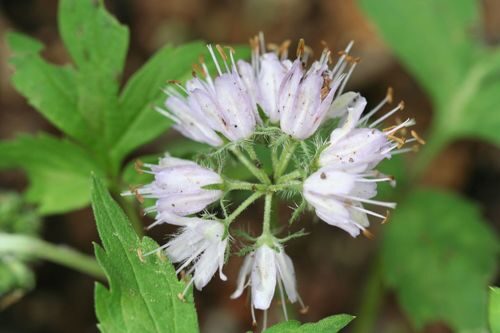
Hydrophyllum virginianum
Virginia Waterleaf, Eastern waterleaf
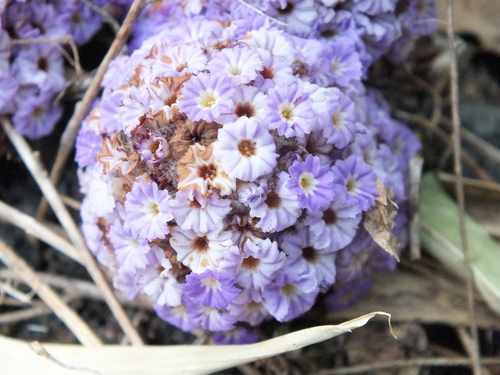
Lennoa madreporoides