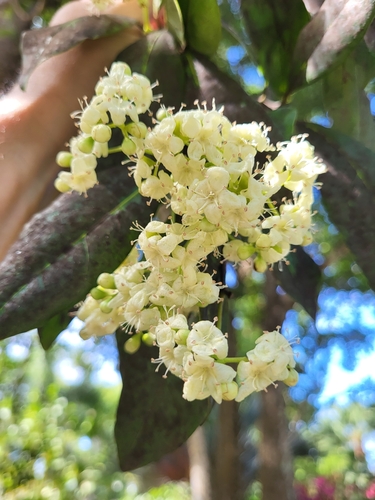
Heliotropium arborescens
L.
Lord Roberts Heliotrope, Garden heliotrope
iNaturalist· cc-by-nc
(c) cchid, some rights reserved (CC BY-NC)
iNaturalist· cc-by-nc
(c) Esteban Maldonado, some rights reserved (CC BY-NC), uploaded by Esteban Maldonado
iNaturalist· cc-by-nc
(c) shelleygodsell, some rights reserved (CC BY-NC)
Summary
Source: WikipediaHeliotropium arborescens, the garden heliotrope or just heliotrope, is a species of flowering plant in the family Heliotropiaceae, native to Bolivia, Colombia, and Peru. Common names also include cherry pie and common heliotrope.
Description
A shrub. It grows 30 cm to 1.3 m high. It can spread 2 m across. The stems are softly hairy. The leaves are oval and 3-8 cm long. The veins pucker the surface. The flowers have a sweet smell. The fruit have 4 nutlets with 1 seed each.
Edible Uses
No edible uses are known for this plant.
Traditional Uses
The leaves and flowers are used for flavouring.
This uses section is brief — help expand it
Medicinal Uses
The plant is used to make a febrifugal tea. A homeopathic remedy prepared from the whole fresh plant is used in the treatment of clergyman's sore throat and uterine displacement.
Known Hazards
The seeds are poisonous. The ASPCA's Animal Poison Control Center article on heliotropes lists them as a substance which is toxic to horses and can induce liver failure in equines. The plant is not very palatable, but will be eaten by animals with no other forage; poisonings typically occur from ingestion of green plant material or material in hay. The toxic components can cause liver failure, referred to as "walking disease" or "sleepy staggers". Signs include weight loss, weakness, sleepiness, yawning, incoordination, yellowish discoloration to mucous membranes (icterus), neurologic problems secondary to liver failure (aimless walking, chewing motions, head pressing). Animals may appear to be normal at first, then become suddenly affected; the syndrome progresses rapidly over a few days to a week. Pyrrolizidine alkaloids often cause upset stomachs and liver damage for humans who ingest any part of the plant. The purple coloration of the flower lent itself to the so-called "heliotrope cyanosis" that was characteristic of severely ill patients in the 1918 flu pandemic.
Distribution
It is a tropical plant. It grows in Hawaii above 650 m altitude. It does well in full sun with constant moisture. Botanic gardens.
Where It Grows
Africa, Andaman Is., Australia, Bolivia, Canada, Colombia, Cuba, Dominican Republic, East Africa, Ecuador, Haiti, Hawaii, Marianas, North America, Pacific, Peru, Puerto Rico, South America*, Tasmania, USA, West Indies, Zimbabwe,
Cultivation
Prefers a rich well-drained soil in full sun. Plants grow best in a sandy loam. Severely damaged by low temperatures, this plant is not hardy in Britain but it can be grown as a half-hardy annual, flowering in its first year from seed. If grown as a shrub, it requires a minimum winter temperature of 5 - 7°c. Plants stop growing when night-time temperatures fall below 5°c and are likely to be killed once the temperature falls below -2°c. The plant turns its leaves and flowers so that it is always facing the sun during the day. The flowers have a most unusual perfume, somewhat like cherries baked in a pie. It is a good butterfly plant. A parent of the cultivated ornamental garden heliotropes, there are many named varieties.
Propagation
Sow seed in early spring in a greenhouse, barely covering it. Germination usually occurs within 2–25 days at 20°C. Prick seedlings out into individual pots once large enough to handle, and plant out after the last expected frosts. Half-ripe wood cuttings of 5–7cm with a heel can be taken in July/August in a frame, with a high success rate; as the plant is not hardy, these must overwinter in a greenhouse before planting out in spring. Young shoot cuttings taken in spring also require greenhouse overwintering before planting out the following spring.
Other Uses
An essential oil obtained from the flowers is used in perfumery. The plant is sometimes used as a low hedge, though it is not reliably hardy enough in Britain for this purpose.
Production
It is fast growing.
Synonyms
References (5)
- Kew Plants of the World Online
- Plants of Haiti Smithsonian Institute http://botany.si.edu/antilles/West Indies
- Seidemann J., 2005, World Spice Plants. Economic Usage, Botany, Taxonomy. Springer. p 174
- Staples, G.W. and Herbst, D.R., 2005, A tropical Garden Flora. Bishop Museum Press, Honolulu, Hawaii. p 199
- Syst. nat. ed. 10, 2:913. 1759