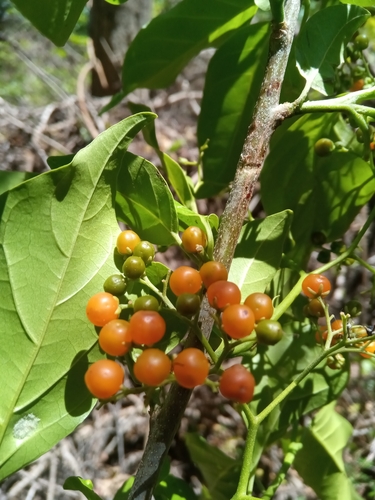
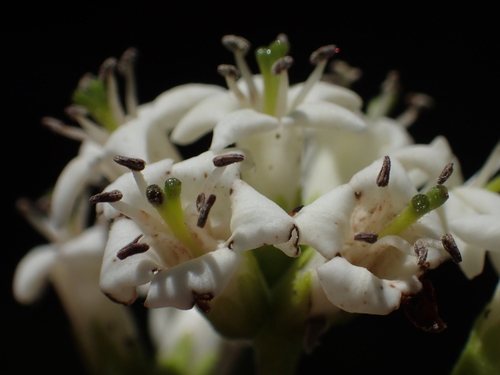
Heliotropium asperrimum
R. Br.
Rough heliotrope
iNaturalist· cc-by-sa
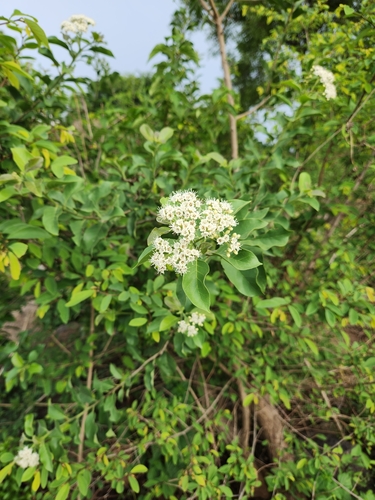
(c) James (Jim) Duggan, some rights reserved (CC BY-SA), uploaded by James (Jim) Duggan
iNaturalist· cc-by-nc
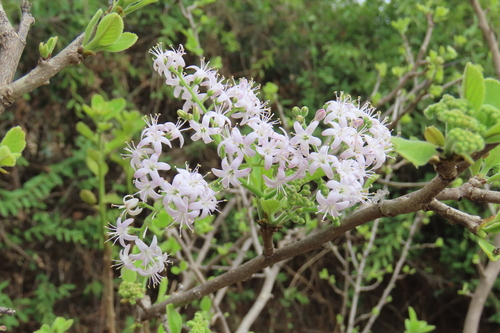
(c) Byron Golledge, some rights reserved (CC BY-NC), uploaded by Byron Golledge
iNaturalist· cc-by-nc
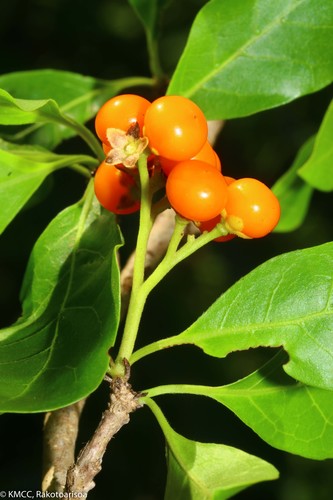
(c) georgetelehin, some rights reserved (CC BY-NC)
Description
A small shrub. It grows 0.3-1 m high and spreads 0.3-1 m wide. The stems are rough and hairy. The leaves are 2.5-9 cm cm long by 0.3-1.8 cm wide. They are stiff and hairy. The edges curl backwards. The tip is blunt. The flowers are 0.6 cm across. They are white. The nut is wrinkled.
Edible Uses
The seeds are ground into a paste and then cooked.
Traditional Uses
The seeds are ground into a paste then cooked.
This uses section is brief — help expand it
Distribution
It grows in Central Australia. It needs an open sunny position. It can tolerate frosts. It can grow in arid places.
Where It Grows
Australia*,
Cultivation
Plants can be grown from seed or cuttings.
Notes
There are about 250 Heliotropium species.
Nutrition
| Part | Moisture | kJ | kcal | Protein | Vit A | Vit C | Iron | Zinc |
|---|---|---|---|---|---|---|---|---|
| Seed | 4.2 | 883 | 211 | 18.4 | — | — | — | — |
References (6)
- Cherikoff V. & Isaacs, J., The Bush Food Handbook. How to gather, grow, process and cook Australian Wild Foods. Ti Tree Press, Australia p 190
- Elliot, W.R., & Jones, D.L., 1990, Encyclopedia of Australian Plants suitable for cultivation. Vol 5. Lothian. p 289
- Latz, P.K., 1996, Bushfires and Bushtucker: Aboriginal plant use in Central Australia. IAD Press Alice Springs p 211
- Lazarides, M. & Hince, B., 1993, Handbook of Economic Plants of Australia, CSIRO. p 130
- Morley, B.D., & Toelken, H.R., (Eds), 1983, Flowering Plants in Australia. Rigby. p 263
Show all 6 references Hide references
- Paczkowska, G. & Chapman, A.R., 2000, The Western Australian Flora. A Descriptive Catalogue. Western Australian Herbarium. p 182