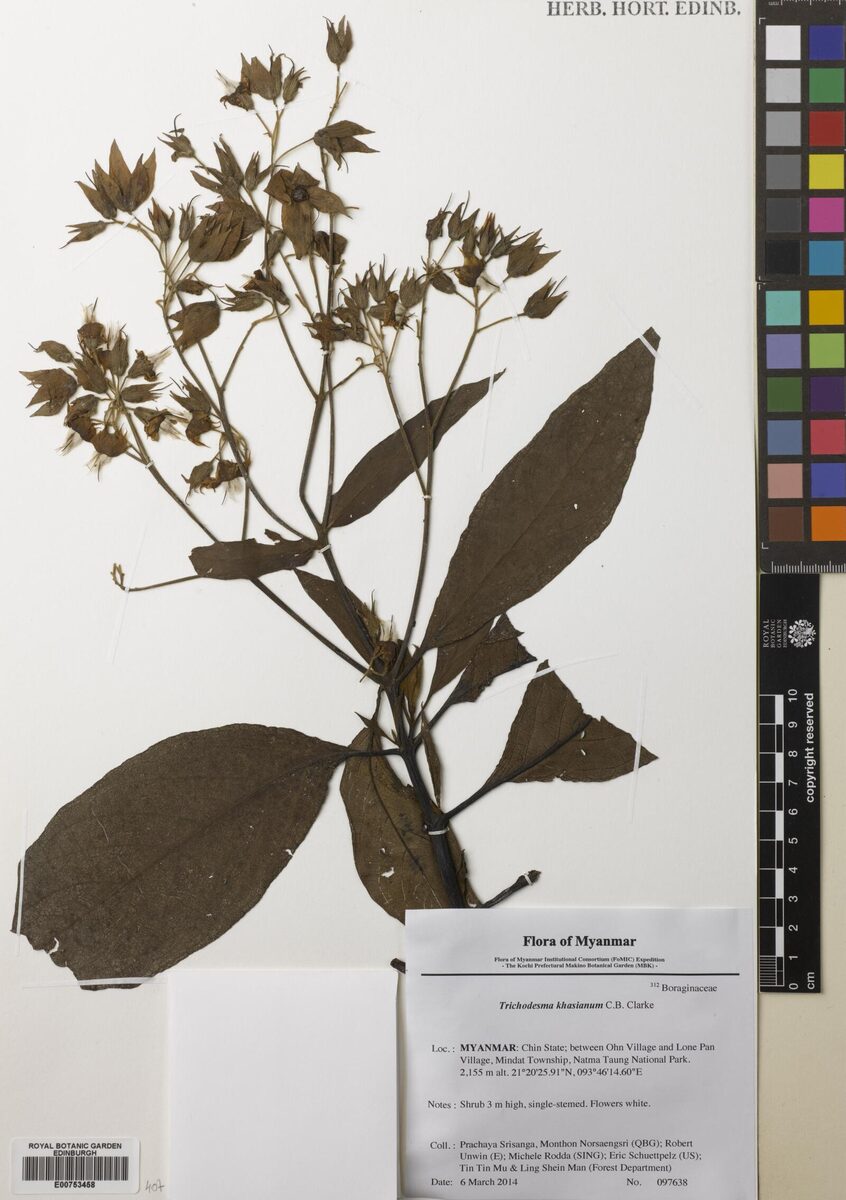
Eriodictyon californicum
(Hook. & Arn.) Torr.
Yerba santa, Mountai balm, Tar weed
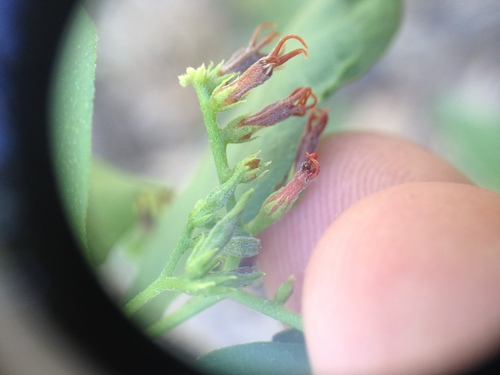
iNaturalist· cc-by-nc
(c) Eric Koberle, some rights reserved (CC BY-NC), uploaded by Eric Koberle
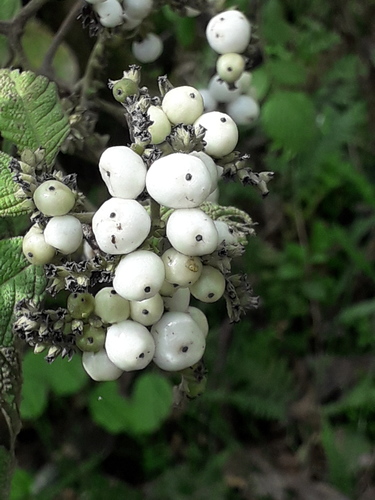
iNaturalist· cc-by
(c) Henrik Kibak, some rights reserved (CC BY)
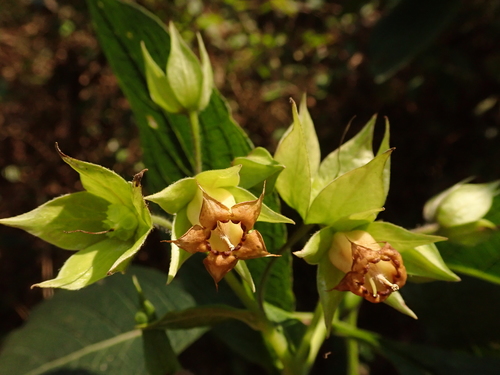
iNaturalist· cc-by-nc
(c) Eric Koberle, some rights reserved (CC BY-NC), uploaded by Eric Koberle
Summary
Source: WikipediaEriodictyon californicum is a species of plant within the family Namaceae. It is also known as yerba santa (sacred herb), mountain balm, bear's weed, gum bush, gum plant, and consumptive weed. Less common names include Herbe des Montagnes, Herbe à Ourse, Herbe Sacrée, Herbe Sainte, Hierba Santa, Holy Herb, and Tarweed.
Description
An evergreen shrub. It grows 2.5 m high and spreads 2 m wide. The leaves are sword shaped and 15 cm long. The leaves are covered with a fragrant resin. They are white and woolly underneath. The edges can be wavy or have teeth. The flowers are funnel shaped with 5 lobes. They are white or lilac. The appear in clusters in summer. The fruit are 4-valved capsules.
Edible Uses
The fresh leaves can be chewed for their refreshing taste and to relieve thirst. Fresh or dried leaves also make an aromatic, sweet-tasting tea. A leaf extract is used as a flavoring in baked goods, sweets, ice cream, and soft drinks.
Traditional Uses
The leaves are chewed to alleviate thirst. They are also used to make tea. An extract from the leaves is used to flavour baked goods, candy, ice cream and soft drinks.
Medicinal Uses
Known by the name Yerba Santa (meaning Holy Weed), this plant is a well-regarded domestic remedy from southwestern North America, particularly valued as an expectorant and ingredient in many patent cough medicines. The leaves are an aromatic, pleasant-tasting tonic herb that reduces spasms, expels phlegm, and lowers fevers. They are especially recommended for chest and respiratory conditions including asthma and hay fever. A bitter leaf tea serves as a tonic and stimulating balsamic expectorant. A steam bath made from the branches and leaves has been used to treat rheumatism, and a leaf decoction can be applied as a wash for sore or painfully fatigued limbs. To make a natural mouthwash, leaves are rolled into balls, dried in the sun, then chewed — initially bitter, the flavor quickly turns sweet when followed by a drink of water. Leaves are harvested in summer and dried for later use. The plant has also been smoked as a remedy for asthma.
Distribution
It is a warm temperate plant. It needs a temperature above 5-7°C.
Where It Grows
Europe, France, Germany, Mexico, North America*, USA,
Cultivation
Plants can be grown from seed or from semi-ripe cuttings off side shoots.
Propagation
Sow seed in spring in a greenhouse. Prick seedlings out into individual pots once large enough to handle. Grow young plants under glass for at least their first winter, then plant out in late spring or early summer. Provide protection from cold for at least the first two winters outdoors.
Other Uses
The leaves have been woven into skirts and aprons. This is considered a scented plant.
Notes
There are 9 Eriodictyon species. It is used in medicine. Also put in the family Hydrophyllaceae.
Also Known As
Hierba santa
References (9)
- Brown, D., 2002, The Royal Horticultural Society encyclopedia of Herbs and their uses. DK Books. p 204
- W. H. Emory, Rep. U.S. Mex. bound. 2(1):148. 1858 ("1859")
- Facciola, S., 1998, Cornucopia 2: a Source Book of Edible Plants. Kampong Publications, p 121
- Kermath, B. M., et al, 2014, Food Plants in the Americas: A survey of the domesticated, cultivated and wild plants used for Human food in North, Central and South America and the Caribbean. On line draft. p 339
- Kiple, K.F. & Ornelas, K.C., (eds), 2000, The Cambridge World History of Food. CUP p 1885
Show all 9 references Hide references
- Moerman, D. F., 2010, Native American Ethnobotany. Timber Press. p 220
- Plants for a Future database, The Field, Penpol, Lostwithiel, Cornwall, PL22 0NG, UK. http://www.scs.leeds.ac.uk/pfaf/
- Wiersema, J. H. & Leon, B., 2013, World Economic Plants. A Standard Reference CRC Press. 2nd Ed. p 280
- World Checklist of Useful Plant Species 2020. Royal Botanic Gardens, Kew