Echium vulgare
L.
Viper's Bugloss
iNaturalist· cc-by-nc
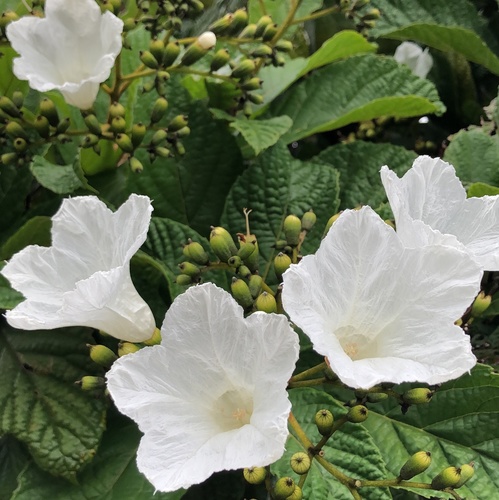
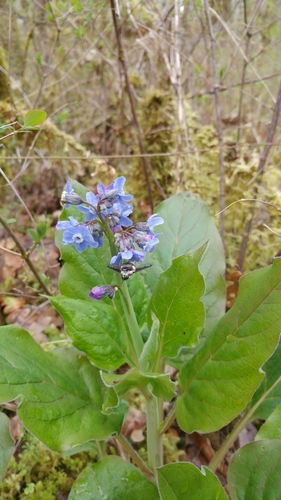
(c) Javisa Hun, some rights reserved (CC BY-NC), uploaded by Javisa Hun
iNaturalist· cc-by-nc
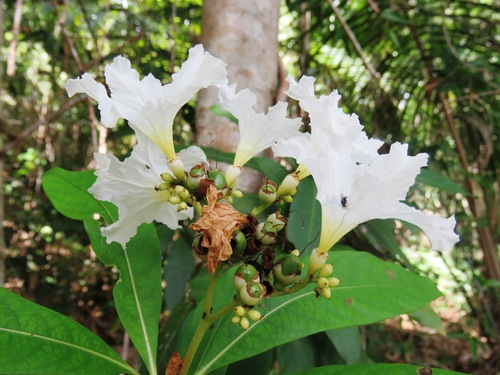
(c) Nikolai Vladimirov, some rights reserved (CC BY-NC), uploaded by Nikolai Vladimirov
iNaturalist· cc-by-nc
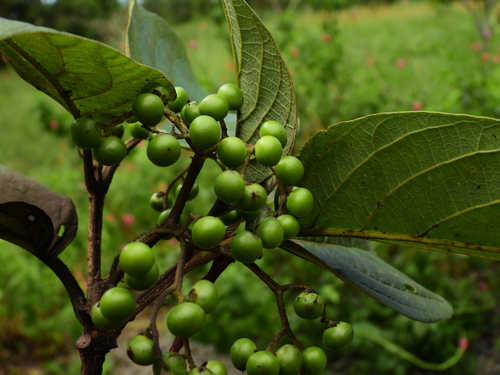
(c) justinreist, some rights reserved (CC BY-NC), uploaded by justinreist
Summary
Source: WikipediaEchium vulgare, known as viper's bugloss and blueweed, is a species of flowering plant in the borage family Boraginaceae. It is native to most of Europe and western and central Asia and it occurs as an introduced species in north-eastern North America, south-western South America and the South and North Island of New Zealand. If eaten, the plant is toxic to horses and cattle through the accumulation of pyrrolizidine alkaloids in the liver. The plant root was used in ancient times as a treatment for snake or viper bites. According to the Doctrine of signatures, plants were thought to have traits (in this case a speckled stem reminiscent of snake skin, and flowers like an open viper's mouth) that mirror the ailment they treat.
Description
Echium vulgare (viper's bugloss) is a biennial or perennial reaching 0.9 m tall with a 0.6 m spread. Spiky flower spires bloom July to October with seed ripening August through October. The self-fertile hermaphrodite plant attracts bees, flies, moths, and butterflies. It requires full sun and tolerates light, medium, or heavy soils with good drainage and poor soil fertility. Adaptable across acidic to alkaline pH ranges, it handles dry or moist conditions and tolerates coastal exposure.
Edible Uses
Young leaves can be eaten raw or cooked and work well as a spinach substitute. They are mild and mucilaginous in flavour. Though somewhat hairy, when chopped finely they make an acceptable addition to a mixed salad. Eating the leaves is said to stimulate sexual desire. Use with caution, as there is an unconfirmed report of toxicity.
Traditional Uses
The blue flowers are crystallised and added to salads. They are also sucked for their nectar. It also yields an attractive honey. It should only be eaten in small amounts due to alkaloids. The leaves are cooked and eaten like spinach. The leaves should be finely chopped. They are used in soups. The leaves have been added to cool drinks.
Medicinal Uses
Viper's bugloss was once considered both a preventative and remedy for viper bites. It is related to borage (Borago officinalis) and shares many of its properties, particularly its sweat-inducing and diuretic effects. In recent times it has fallen out of use, partly due to limited interest in its medicinal potential and partly due to its content of pyrrolizidine alkaloids, which are toxic in isolation. The leaves and flowering stems are antitussive, aphrodisiac, demulcent, diaphoretic, diuretic, pectoral, and vulnerary. An infusion of the plant is taken internally as a diuretic and to treat fevers, headaches, chest conditions, and similar complaints. The juice is an effective emollient for reddened or delicate skin, and can be applied as a poultice or plaster to treat boils and carbuncles. Leaves are harvested in summer and can be dried for later use. The roots contain allantoin, a known healing compound. The plant is also said to be effective against snake bites. Fresh flowering heads, chopped finely, can be made into a poultice for treating whitlows and boils.
Known Hazards
The leaves are poisonous. No cases of poisoning have ever been recorded for this plant. The bristly hairs on the leaves and stems can cause severe dermatitis.
Where It Grows
Leaves, Flowers - nectar, Caution, Flowers - tea,
Cultivation
Succeeds in any good garden soil but flowers best when the soil is not too rich. Requires a sunny position. The plant is very deep rooted. A good bee plant.
Propagation
Sow seed in situ from February to May or from August to November. Germination usually takes place within 2–3 weeks at 15°C. If seed is scarce, it can be sown in pots in a cold frame. Once seedlings are large enough to handle, prick them out into individual pots and plant out during summer.
Other Uses
A red dye is obtained from the root. The plant attracts wildlife.
Other Information
Boraginaceae
Notes
A herb which grows over two years. It reaches to 45-60 cm tall and spreads to 45-60 cm wide. It is rough and hairy. It can have one or several stems. The flowers are 10-19 mm long. Four of the five stamens are longer than the remaining one. The flowers are violet. They are on branching spikes. The flowers are 18 mm across. The fruit are 4 nutlets.
Also Known As
Aguamieles, Blueweed, Bovina, Chupamiel, Edesfu, Honey plant, Lan ji, Lenguaza, Melera, Navadni gadovec, Viperena azzurra
References (27)
- Al-Sodany, Y. M., et al, 2013, Medicinal Plants in Saudi Arabia: I. Sarrwat Mountains at Taif, KSA. Academic Journal of Plant Sciences 6 (4): 134-145
- Biscotti, N. et al, 2018, The traditional food use of wild vegetables in Apulia (Italy) in the light of Italian ethnobotanical literature. Italian Botanist 5:1-24
- Blamey, M and Grey-Wilson, C., 2005, Wild flowers of the Mediterranean. A & C Black London. p 190
- Bodkin, F., 1991, Encyclopedia Botanica. Cornstalk publishing, p 375
- Bremness, L., 1994, Herbs. Collins Eyewitness Handbooks. Harper Collins. p 248
Show all 27 references Hide references
- Cakir, E. A., 2017, Traditional knowledge of wild edible plants of Iğdır Province (East Anatolia, Turkey). Acta Soc Bot Pol. 2017;86(4):3568.
- Cormack, R. G. H., 1967, Wild Flowers of Alberta. Commercial Printers Edmonton, Canada. p 279
- Cundall, P., (ed.), 2004, Gardening Australia: flora: the gardener's bible. ABC Books. p 530
- Curtis, W.M., 1993, The Student's Flora of Tasmania. Part 3 St David's Park Publishing, Tasmania, p 495
- Denes, A., et al, 2012, Wild plants used for food by Hungarian ethnic groups living in the Carpathian Basin. Acta Societatis Botanicorum Poloniae 81 (4): 381-396
- Ertug, F, Yenen Bitkiler. Resimli Türkiye Florası -I- Flora of Turkey - Ethnobotany supplement
- Facciola, S., 1998, Cornucopia 2: a Source Book of Edible Plants. Kampong Publications, p 51
- Gonzalez, J. A., et al, 2011, The consumption of wild and semi-domesticated edible plants in the Arribes del Duero (Salamanca-Zamora, Spain): an analysis of traditional knowledge. Genetic. Resour Crop Evolution 58:991-1006
- Lamp, C & Collet F., 1989, Field Guide to Weeds in Australia. Inkata Press. p 109
- Licata, M., et al, 2016, A survey of wild plant species for food use in Sicily (Italy) – results of a 3-year study in four Regional Parks. Journal of Ethnobiology and Ethnomedicine 12:12
- Lukasz, L., 2016, Wild Edible Plants Traditionally Used in Poland.
- MacKinnon, A., et al, 2009, Edible & Medicinal Plants of Canada. Lone Pine. p 272
- Mattalia, G., et al, 2012, Traditional uses of wild food and medicinal plants among Brigasc, Kye ́, and Provenc ̧al communities on the Western Italian Alps. Genet Resour Crop Evol. Springer
- Morley, B. & Everard, B., 1970, Wild Flowers of the World. Ebury press. Plate 20
- Plants for a Future database, The Field, Penpol, Lostwithiel, Cornwall, PL22 0NG, UK. http://www.scs.leeds.ac.uk/pfaf/
- Rivera, C., et al, 2005, The Ethnobotanical Study of Local Mediterranean Food Plants as Medicinal Resources in Southern Spain. Journal of Physiologyand Pharmacology. 56, Suppl. 1, 97-114
- Rivera, D. et al, 2006, Gathered Mediterranean Food Plants - Ethnobotanical Investigations and Historical Development, in Heinrich M, Müller WE, Galli C (eds): Local Mediterranean Food Plants and Nutraceuticals. Forum Nutr. Basel, Karger, 2006, vol 59, pp 18–74
- Simkova, K. et al, 2014, Ethnobotanical review of wild edible plants used in the Czech Republic. Journal of Applied Botany and Food Quality 88, 49-67
- Sp. pl. 1:139. 1753
- Tasmanian Herbarium Vascular Plants list p 16
- Tardio, J., et al, Ethnobotanical review of wild edible plants in Spain. Botanical J. Linnean Soc. 152 (2006), 27-71
- Zhu Ge-ling; Harald Riedl, Rudolf Kamelin, BORAGINACEAE, Flora of China