Durio graveolens
Becc.
Red-fleshed durian
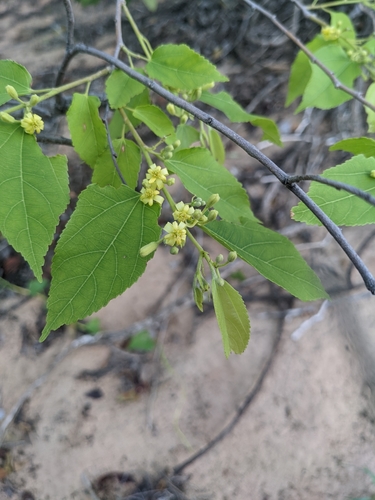
iNaturalist· cc-by-nc
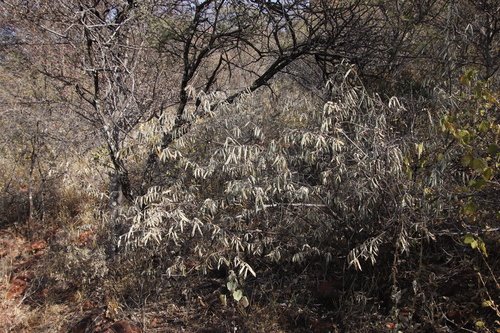
(c) kyosapir, some rights reserved (CC BY-NC)
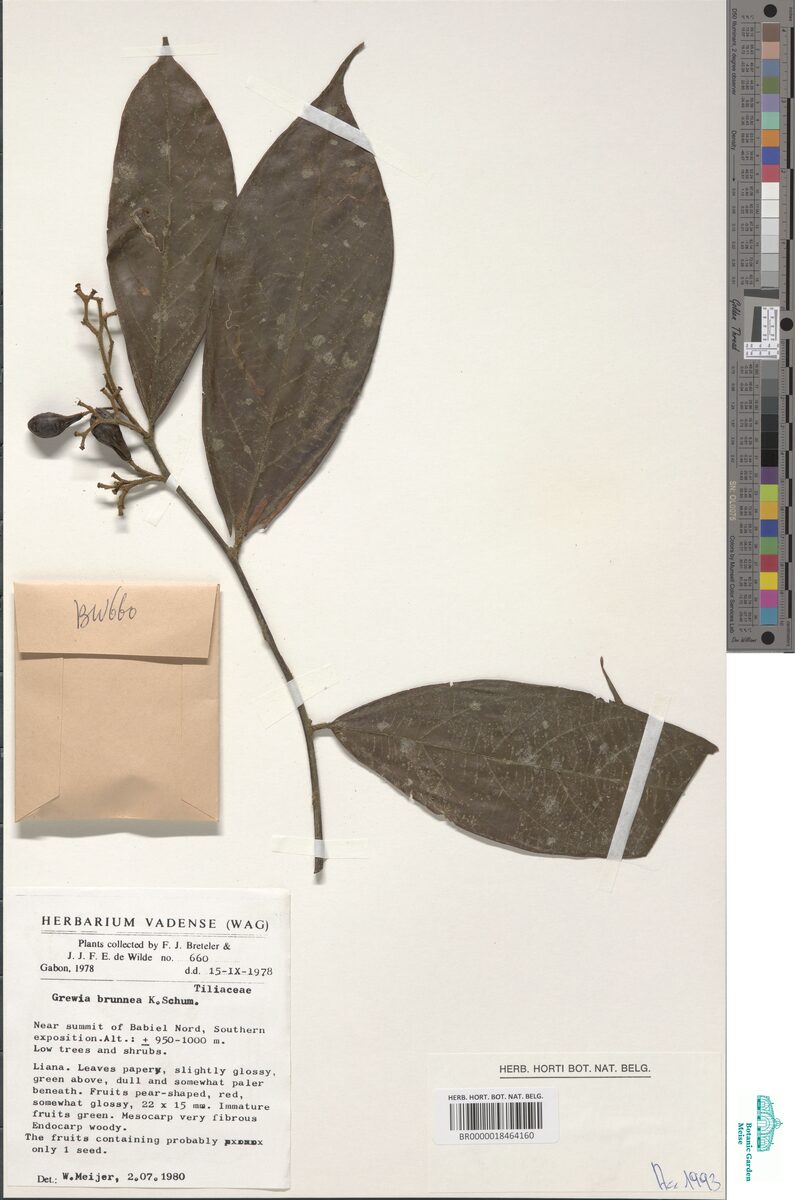
iNaturalist· cc-by-nc-sa
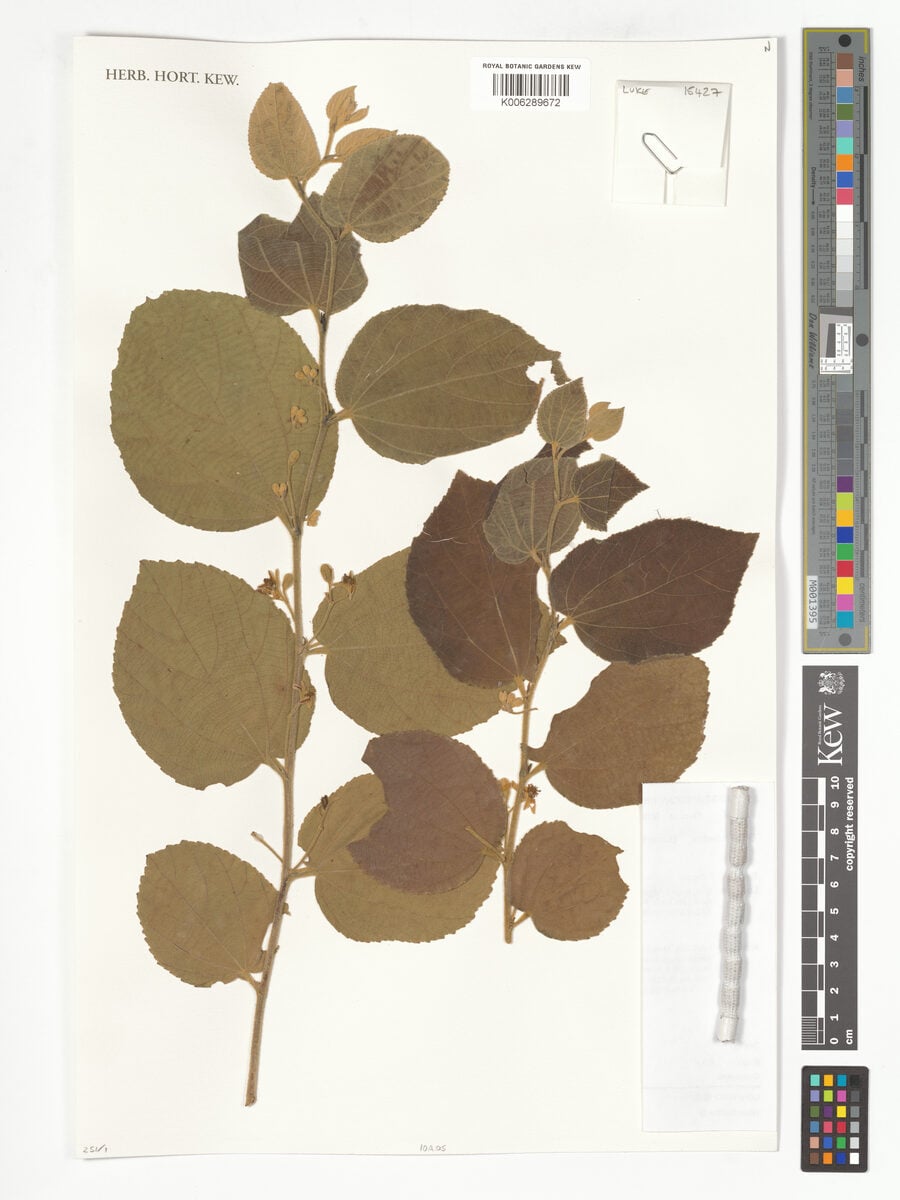
(c) Smithsonian Institution, National Museum of Natural History, Department of Botany, some rights reserved (CC BY-NC-SA)
iNaturalist· cc-by-nc
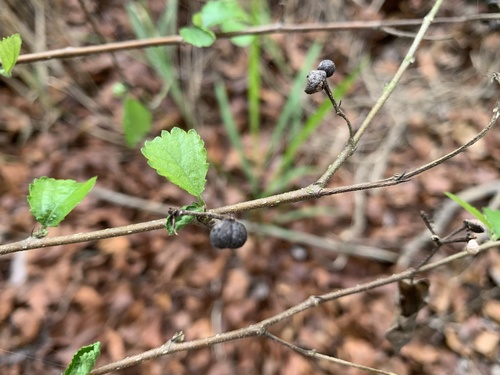
(c) Andre Ronaldo, some rights reserved (CC BY-NC), uploaded by Andre Ronaldo
Summary
Source: WikipediaDurio graveolens, sometimes called the red-fleshed durian, orange-fleshed durian, or yellow durian, is a species of tree in the family Malvaceae. It is one of six species of durian named by Italian naturalist Odoardo Beccari. The specific epithet graveolens ('strong smelling' or 'rank') is due to the odor. Although most species of Durio (most notably Durio dulcis) have a strong scent, the red-fleshed type of D. graveolens has a mild scent. It is native to Southeast Asia. D. graveolens is an edible durian, perhaps the most popular 'wild' species of durian, and it is sold commercially regionally.
Description
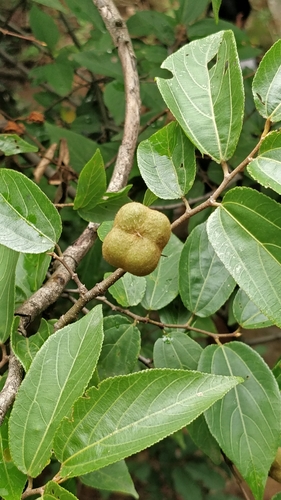
A tree. It grows up to 45 m tall. It has buttresses up to 3 m high at the base. The fruit is round or oval. It can be 10-15 cm across. The fruit is orange-yellow. It has sharp pyramid shaped spines up to 1 cm long. The fruit breaks open into 5 sections. The seeds are oval and 4 cm long by 2 cm wide. The aril or layer around the seeds is dark red.
Edible Uses
The fruit's pulp is typically eaten raw and has the fragrance of roasted almonds or burnt caramel. The taste is described as sweet and cheesy or similar to eating an avocado or pimento cheese. Sometimes, it is fermented into the condiment tempoyak. The red-fleshed type is used with freshwater fish to make a type of sayur (a traditional Indonesian vegetable stew). The seeds can also be ground into flour (tepung biji durian dalit), which then can be used to make, for example, fish crackers. The tree is also harvested for lumber in Sarawak. The Iban people there also bathe day-old infants (especially for preterm birth) in a tisane of mature bark, as they believe it strengthens the skin.
Traditional Uses
The aril or layer around the seeds is eaten. It is used for relish and fish soup.
This uses section is brief — help expand it
Distribution
A tropical plant. It grows in rain forests up to 1300 m altitude. In Cairns Botanical gardens.
Where It Grows
Asia, Australia, Brunei, Indochina, Indonesia, Malaysia, Sarawak, SE Asia, Thailand,
Cultivation
Plants are grown from fresh seeds. Seeds germinate in 5-19 days.
Other Uses
The relatively durable wood is used in interior construction and for making cheaper types of furniture and packing cases. We do not have any more information on the wood of this species. However, a general description of the wood for species in this genus is as follows:- The heartwood is pink-brown, red, or deep red-brown; it is not always sharply demarcated from the white, pale yellow-brown or light reddish-yellow sapwood. The texture is coarse; the grain straight to interlocked; somewhat lustrous; it is reported to have a foetid odour. The wood is not durable, and not resistant to termite attack; the sapwood is prone to powder-post beetle attack. It dries rapidly, but thin boards may tend to cup. The wood saws easily and generally dresses smoothly; nailing qualities are good. It is used for purposes such as furniture components, veneer and plywood, light construction.
Production
Plants flower 6 years after sowing.
Other Information
It is a cultivated fruit tree in Sabah.
Notes
There are about 20 Durio species. Also put in the family Durionaceae. In the subfamily Bombacoideae.
Nutrition
| Part | Moisture | kJ | kcal | Protein | Vit A | Vit C | Iron | Zinc |
|---|---|---|---|---|---|---|---|---|
| Fruit | 66.7 | 635 | 152 | 2.6 | — | 10.4 | 0.6 | 5 |
Also Known As
Alau, Dujen, Durian burung, Durian kuning, Durian mah, Durian rimba, Durio anggang, Isu, Rian isa, Tabela, Tabelak, Taula, Tinambela, Tongkai, Tuola, Tutong
References (24)
- Altschul, S.V.R., 1973, Drugs and Foods from Little-known Plants. Notes in Harvard University Herbaria. Harvard Univ. Press. Massachusetts. no. 2774
- Arora, R. K., 2014, Diversity in Underutilized Plant Species - An Asia-Pacific Perspective. Bioversity International. p 69
- Chai, P. P. K. (Ed), et al, 2000, A checklist of Flora, Fauna, Food and Medicinal Plants. Lanjak Entimau Wildlife Sanctuary, Sarawak. Forestry Malaysia & ITTO. p 166
- Davis, S.D., Heywood, V.H., & Hamilton, A.C. (eds), 1994, Centres of plant Diversity. WWF. Vol 1 or 2. p 363
- Dodo, 2015, Keanekaragaman dan konservasi Tumbuhan Buah Langka Indonesia. Pusat Konservasi Tumbuhan Kebun Raya – LIPI. Warta Kebun Raya 13(2)
Show all 24 references Hide references
- Facciola, S., 1998, Cornucopia 2: a Source Book of Edible Plants. Kampong Publications, p 50
- Hoare, A., 2003, Food use of the Lundayeh SW Sabah. Borneo Research Council.
- Hoe, V. B. & Siong, K. H., 1999, The nutritional value of indigenous fruit and vegetables in Sarawak. Asia Pacific J. Clin. Nutr. 8(1):24-31
- Hoe, V. B. & Siong, K. H., 1999, The nutritional value of indigenous fruit and vegetables in Sarawak. Asia Pacific J. Clin. Nutr. 8(1):24-31
- Kebler, P. J. A., & Kidiyasa, 1994, Trees of the Balikpapan-Samarinda area of East Kalimantan, Indonesia. The Tropenbos Foundation, Wageningen, The Netherlands. p 59
- Malesia 3:242. 1889
- Milow, P., et al, 2013, Malaysian species of plants with edible fruits or seeds and their evaluation. International Journal of Fruit Science. 14:1, 1-27
- PROSEA (Plant Resources of South East Asia) handbook, Volume 2, 1991, Edible fruits and nuts.
- Septiani, Y. & Sidabutar, H., (Eds.) 2015, Biodiversity Survey. In the Sub Watershed Embaloh, Betung Kerihun National Park. ITTO p 82
- Siong, K. H., 2003, Indigenous Fruits of Sarawak. ITTO & Sarawak Forest Department. p 22
- Slik, F., www.asianplant.net
- Tankard, G., 1990, Tropical fruit. An Australian Guide to Growing and using exotic fruit. Viking p 118
- USDA, ARS, National Genetic Resources Program. Germplasm Resources Information Network - (GRIN). [Online Database] National Germplasm Resources Laboratory, Beltsville, Maryland. Available: www.ars-grin.gov/cgi-bin/npgs/html/econ.pl (10 April 2000)
- Verheij, E. W. M. and Coronel, R.E., (Eds.), 1991, Plant Resources of South-East Asia. PROSEA No 2. Edible fruits and nuts. Pudoc Wageningen. p 330
- Wiersema, J. H. & Leon, B., 2013, World Economic Plants. A Standard Reference CRC Press. 2nd Ed. p 259
- World Checklist of Useful Plant Species 2020. Royal Botanic Gardens, Kew
- www.worldagroforestrycentre.org/sea/products/afdbases/af/asp/SpeciesInfo.asp?SpID=18195
- Zawiah, N. & Othaman, H., 2012, 99 Spesies Buah di FRIM. Institut Penyelidikan Perhutanan Malaysia. p 102
- Zeven, A. C. & de West, J. M. J., 1982, Dictionary of cultivated plants and their regions of diversity. Wageningen. p 51