Hibiscus diversifolius
Jacq.
Yellow Hibiscus, Prickly tree hibiscus
iNaturalist· cc-by-nc
(c) Gerhard Malan, some rights reserved (CC BY-NC), uploaded by Gerhard Malan
iNaturalist· cc-by-nc
(c) Ricky Taylor, some rights reserved (CC BY-NC)
iNaturalist· cc-by-nc
(c) Ricky Taylor, some rights reserved (CC BY-NC)
Summary
Source: WikipediaHibiscus diversifolius, the swamp hibiscus, is a widespread species of hibiscus. It grows to between 1 and 2 metres in height, with prickly stems and yellow flowers with a maroon basal spot during spring summer.
Description
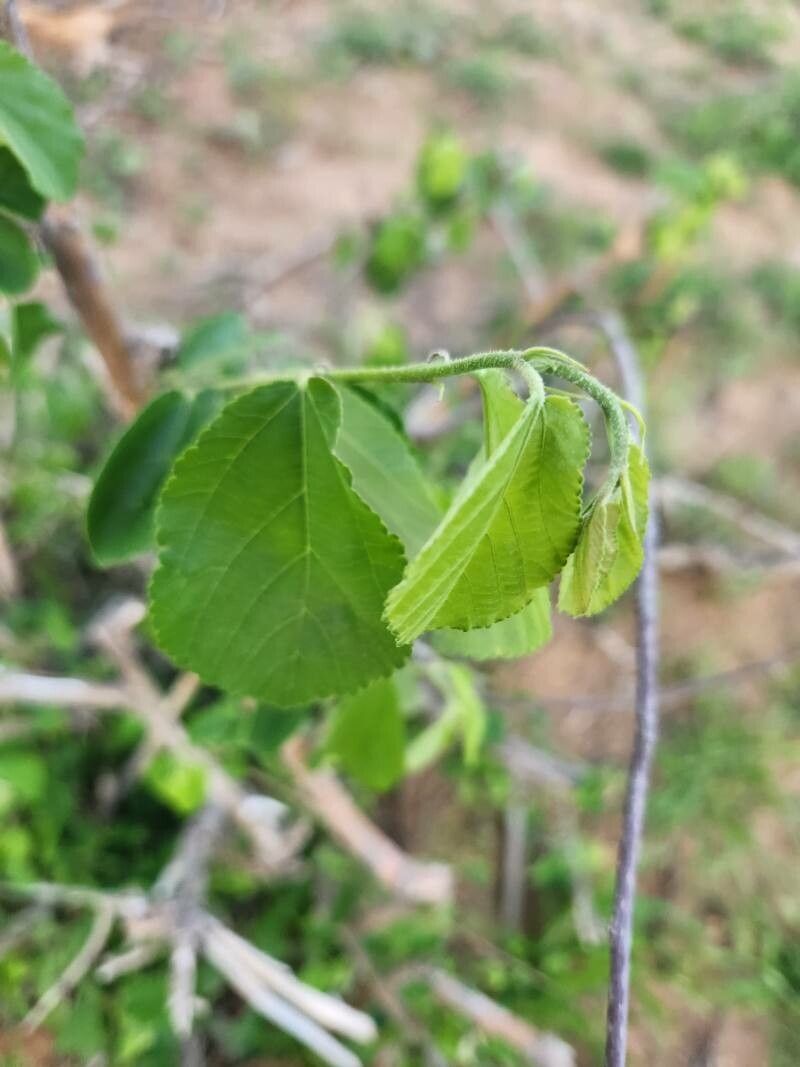
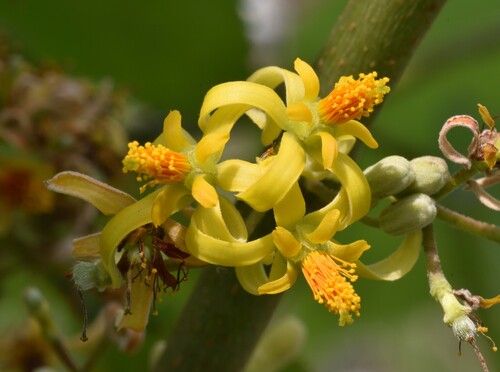
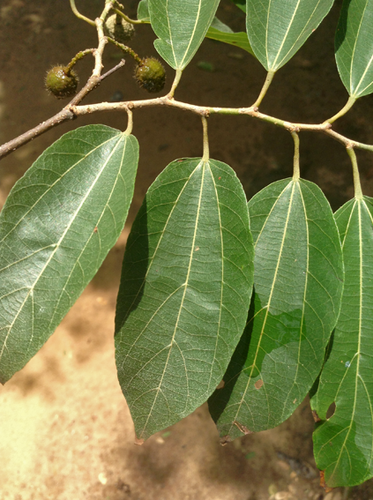
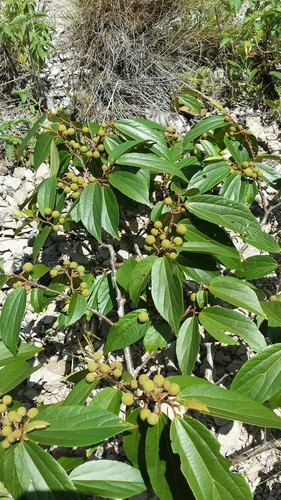
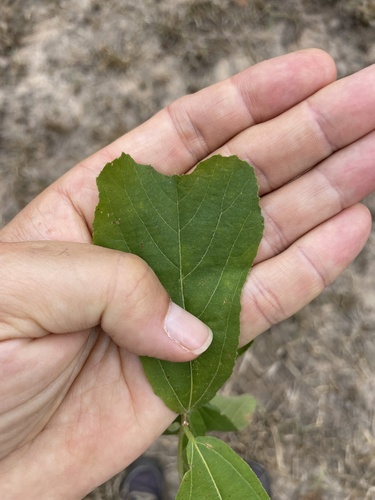
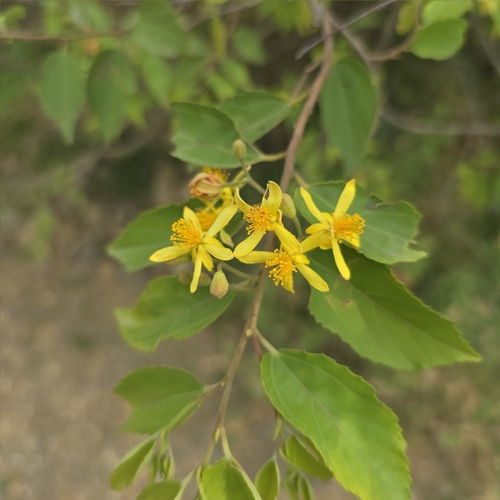
A small shrub. It is often scrambling. It is often 1-2 m high but can be a medium sized tree up to 10 m tall. The bark is brownish-grey. The young branches are hairy and densely covered with prickles. The leaves are oval or round and 16 cm long by 16 cm wide. There are 3-7 distinct lobes. There are hairs on both surfaces, those underneath being longer. The edges of the leaves are irregularly toothed or scalloped. The leaf stalk is 12 cm long and hairy. The flowers are yellow or purplish, with a dark red centre. They are 8 cm long. The flowers occur singly in the axils of leaves. They can appear to be in groups towards the ends of branches. The fruit is an oval capsule. It is 2 cm long. It is sharply pointed. It is densely covered with silky golden hairs.
Edible Uses
Young leaf buds can be eaten raw or cooked and are considered good in both applications. The young leaves are also edible — mild and quite mucilaginous, they make a pleasant addition to salads. Flowers can be eaten raw or cooked with other foods; they have a very mild flavour and are highly mucilaginous, making an acceptable and visually attractive addition to the salad bowl. The root is edible but very fibrous, with a mucilaginous texture and little flavour.
Traditional Uses
The flowers are cooked and eaten. The leaves may have to be used with caution. They are bitter and sour. They are wilted in the sun then chopped and cooked.
Medicinal Uses
The plant is possibly abortifacient.
Known Hazards
Some caution should be observed when using this plant because there is a report that it might be used to procure abortions. We have no further details.
Distribution
It grows in warm temperate regions and can grow in the subtropics. It grows in damp places along rivers and near the edges of lakes. The soil needs to be well drained but wet. It can stand light frosts. In Tanzania it grows from sea level to 1,800 m above sea level. It grows in areas with a rainfall between 1,400-2,100 mm. It grows well in deep clay soils with permanent moisture. It suits hardiness zones 10-12. Adelaide Botanical Gardens.
Where It Grows
Africa, Angola, Australia, Botswana, Brazil, Burkina Faso, Central Africa, East Africa, Ethiopia, Fiji, Madagascar, Malawi, Mauritius, Mozambique, Myanmar, New Caledonia, New Zealand, Norfolk Island, Pacific, Papua New Guinea, PNG, Rwanda, SE Asia, South Africa, Southern Africa, South America, St Helena, Sudan, Tanzania, Uganda, Zambia, Zimbabwe,
Cultivation
Prefers a well-drained humus rich fertile soil in full sun. A frost-tender shrub, it can be grown as an annual in temperate climates where it can flower and set seed in its first year of growth. Plants can also be overwintered in a cold greenhouse if the winter is fairly mild. As the specific name of this plant suggests, the leaves vary widely in shape. The first leaves to be produced are semi-circular in shape, but later leaves are distinctly three-lobed. Plants are self-fertile.
Propagation
Sow seed in spring in a greenhouse. Germination occurs within 2 weeks; pot seedlings into individual pots as soon as they are large enough to handle. Grow on quickly in a fairly rich compost and plant out in late spring after the last expected frosts. Take half-ripe cuttings in July or August in a frame, though these will be difficult to overwinter without a heated environment.
Other Uses
None known.
Production
Leaves are collected from swamps in the dry season.
Other Information
It is not popular but used during famines and when other vegetables are in short supply.
Notes
There are about 220 Hibiscus species.
Nutrition
| Part | Moisture | kJ | kcal | Protein | Vit A | Vit C | Iron | Zinc |
|---|---|---|---|---|---|---|---|---|
| Flower | 81.1 | 109 | 26 | 0.4 | — | — | 2.5 | 0.5 |
| Leaves | — | — | — | — | — | — | — | — |
Synonyms
Also Known As
Chatata, Hibisco-do-banhado, Ihirene, Khuluza, Malakwang, Muhangana, Muvava, Native Hibiscus, Swamp hibiscus
References (36)
- Acipa, A. et al, 2013, Nutritional Profile of some Selected Food Plants of Otwal and Ngai Counties, Oyam District, Northern Uganda. African Journal or Food, Agriculture, Nutrition and Development. 13(2)
- Andabati, B., & Muyonga, J., 2014, Phenolic content and antioxidant activity of selected Ugandian traditional medicinal foods. African Journal of Food Science. 8(8), pp 427-434
- Bodkin, F., 1991, Encyclopedia Botanica. Cornstalk publishing, p 557
- Collectanea 2:307. 1789 ("1788"); Icon. pl. rar. 3: t. 551. 1792 ("1786-1793")
- Cooper, W. and Cooper, W., 2004, Fruits of the Australian Tropical Rainforest. Nokomis Editions, Victoria, Australia. p 277
Show all 36 references Hide references
- Cronin, L., 1989, The Concise Australian Flora. Reed. p 94
- Cundall, P., (ed.), 2004, Gardening Australia: flora: the gardener's bible. ABC Books. p 701
- Elliot, W.R., & Jones, D.L., 1990, Encyclopedia of Australian Plants suitable for cultivation. Vol 5. Lothian. p 356
- Etherington, K., & Imwold, D., (Eds), 2001, Botanica's Trees & Shrubs. The illustrated A-Z of over 8500 trees and shrubs. Random House, Australia. p 378
- Flora of Australia Volume 49, Oceanic Islands 1, Australian Government Publishing Service, Canberra. (1994) p 116
- Fowler, D. G., 2007, Zambian Plants: Their Vernacular Names and Uses. Kew. p 45
- Fox, F. W. & Young, M. E. N., 1982, Food from the Veld. Delta Books. p 262
- Franklin, J., Keppel, G., & Whistler, W., 2008, The vegetation and flora of Lakeba, Nayau and Aiwa Islands, Central Lau Group, Fiji. Micronesica 40(1/2): 169–225, 2008
- Grubben, G. J. H. and Denton, O. A. (eds), 2004, Plant Resources of Tropical Africa 2. Vegetables. PROTA, Wageningen, Netherlands. p 562
- Hussey, B.M.J., Keighery, G.J., Cousens, R.D., Dodd, J., Lloyd, S.G., 1997, Western Weeds. A guide to the weeds of Western Australia. Plant Protection Society of Western Australia. p 174
- INFOODSUpdatedFGU-list.xls
- Jardin, C., 1970, List of Foods Used In Africa, FAO Nutrition Information Document Series No 2.p 81
- Kinupp, V. F., 2007, Plantas alimenticias nao-convencionais da regiao metropolitana de Porto Alegre, RS, Brazil p 81
- Kinupp, V. F. & Bergman, I., 2008, Protein and minerals of native species, potential vegetables and fruits. Cienc.Tecnol. Aliment. Vol. 28 No. 4 Campinas Oct/Dec.
- Lim, T. K., 2015, Edible Medicinal and Non Medicinal Plants. Volume 9, Modified Stems, Roots, Bulbs. Springer p 46
- Lord, E.E., & Willis, J.H., 1999, Shrubs and Trees for Australian gardens. Lothian. p 175
- Matthews, J., 1987, New Zealand Native Plants for your Garden. Pacific Publishers, p 58
- Melzer, R. & Plumb, J., 2011, Plants of Capricornia. Belgamba, Rockhampton. p 169
- Molyneux, B. and Forrester, S., 1997, The Austraflora A-Z of Australian Plants. Reed. p 123
- Paczkowska, G. & Chapman, A.R., 2000, The Western Australian Flora. A Descriptive Catalogue. Western Australian Herbarium. p 289
- Palgrave, K.C., 1996, Trees of Southern Africa. Struik Publishers. p 584
- Peters, C. R., O'Brien, E. M., and Drummond, R.B., 1992, Edible Wild plants of Sub-saharan Africa. Kew. p 144
- Plants for a Future database, The Field, Penpol, Lostwithiel, Cornwall, PL22 0NG, UK. http://www.scs.leeds.ac.uk/pfaf/
- Recher, P, 2001, Fruit Spirit Botanical Gardens Plant Index. www.nrg.com.au/~recher/ seedlist.html p 6
- Ruffo, C. K., Birnie, A. & Tengnas, B., 2002, Edible Wild Plants of Tanzania. RELMA p 376
- Ruiters-Welcome, A. K., 2019, Food plants of southern Africa. Ph.D. thesis. Univ. of Johannesburg p 76
- Ryan, M. (Ed.), 2003, Wild Plants of Greater Brisbane. Queensland Museum. p 175
- Smith, A.C., 1981, Flora Vitiensis Nova, Lawaii, Kuai, Hawaii, Volume 2 p 419
- Welcome, A. K. & Van Wyk, B.-E., 2019, An inventory and analysis of the food plants of southern Africa. South African Journal of Botany 122 (2019) 136–179
- Williamson, J., 2005, Useful Plants of Malawi. 3rd. Edition. Mdadzi Book Trust. p 132
- World Checklist of Useful Plant Species 2020. Royal Botanic Gardens, Kew