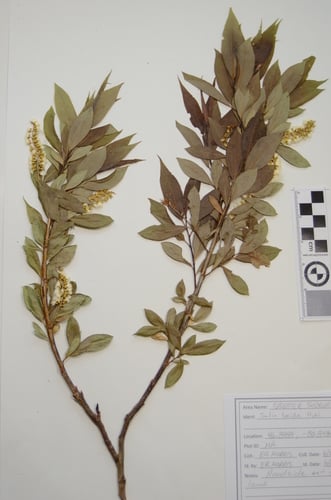
Dovyalis hispidula
Wild.
Bristly dovyalis, Bristly sourberry
iNaturalist· cc-by-nc
(c) ashley_m_gee, some rights reserved (CC BY-NC), uploaded by ashley_m_gee
iNaturalist· cc-by-nc
(c) graemewolfaard, some rights reserved (CC BY-NC)
Description
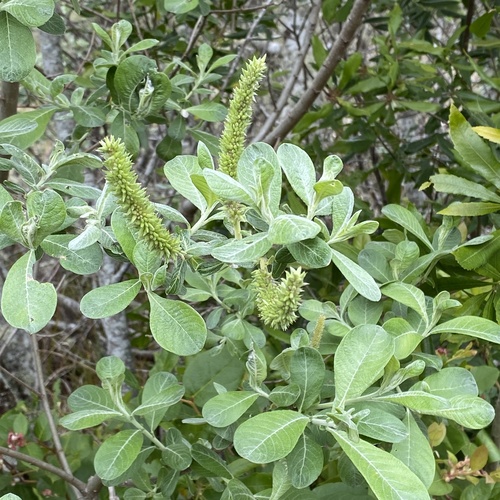
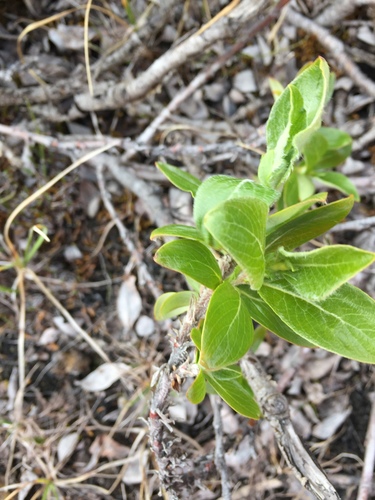
A shrub or small tree. It grows 2-4 m tall. The bark is grey. There are usually many spines at the base. The spines in the axils of the leaves can be 7-8 cm long. The leaves are small and oval They are 0.8-3.5 cm long by 0.6-2.3 cm wide. The are dull green and hairy. The flowers are small and green. They occur in the axils of leaves. They can be single or in clusters of 2-4. The fruit are almost round and fleshy. They are 1-2 cm across. They are bright red when mature.
Edible Uses
The fruit are eaten fresh.
Distribution
A tropical plant. It grows at low altitude in mixed woodland. It can grow in arid places. In Zimbabwe it grows up to 500 m above sea level.
Where It Grows
Africa, East Africa, Mozambique, Southern Africa, Zimbabwe,
Notes
There are about 22 Dovyalis species. Also put in the Flacourtiaceae family.
Also Known As
Mutumbo-tumbo, Taperaje
References (4)
- Fox, F. W. & Young, M. E. N., 1982, Food from the Veld. Delta Books. p 230
- Palgrave, K.C., 1996, Trees of Southern Africa. Struik Publishers. p 637
- Royal Botanic Gardens, Kew (1999). Survey of Economic Plants for Arid and Semi-Arid Lands (SEPASAL) database. Published on the Internet; http://www.rbgkew.org.uk/ceb/sepasal/internet [Accessed 16th April 2011]
- World Checklist of Useful Plant Species 2020. Royal Botanic Gardens, Kew