Disporum trachycarpum
(Watson) Benth. & Hook.
Fairybells, Rough-fruited Fairybell
iNaturalist· cc-by-nc
(c) little_blue_heron, some rights reserved (CC BY-NC)
iNaturalist· cc-by-nc
(c) Yifei, some rights reserved (CC BY-NC)
iNaturalist· cc-by-nc
(c) Yifei, some rights reserved (CC BY-NC)
Summary
A perennial herb reaching 0.5 m tall, hardy to UK zone 5. Hermaphroditic flowers present. Tolerates light sandy, medium loamy, and heavy clay soils with mildly acidic to basic pH. Grows in full shade (deep woodland) or semi-shade with preference for moist conditions.
Description
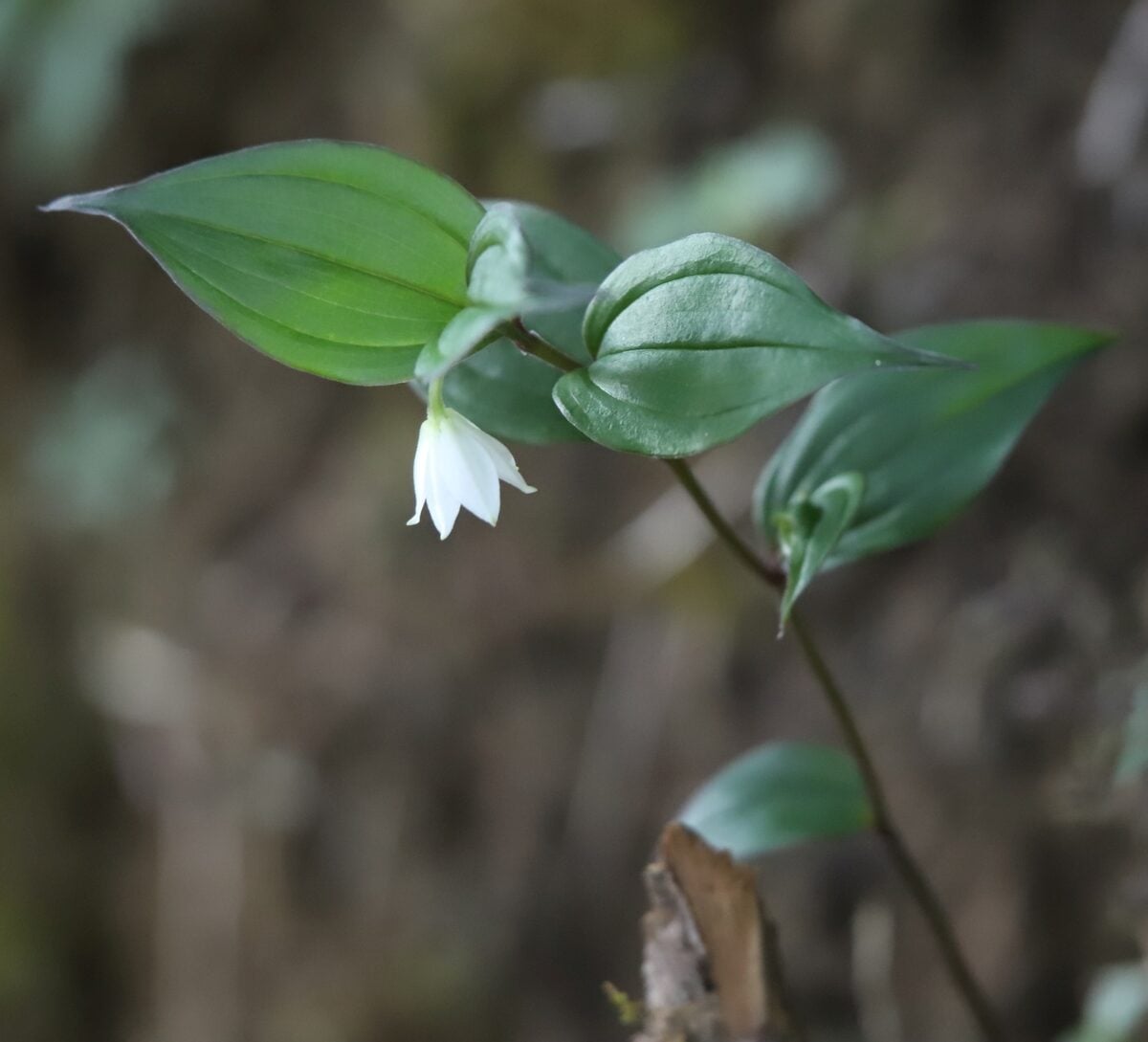
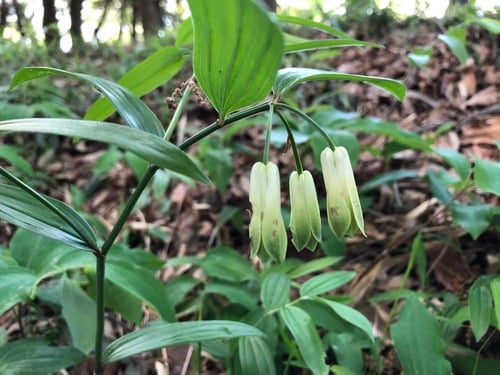
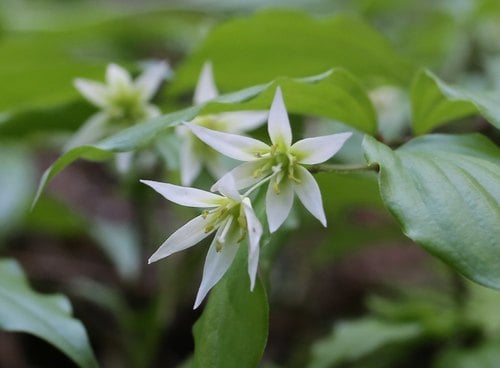
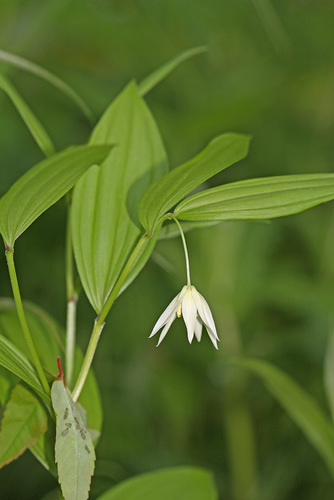
A small herb. It grows 25-80 cm high. There are several leaves on weak spreading stalks. The leaves are oval and clasp the stalk. The flowers are white or greenish-yellow. They occur as 1-4 together drooping from slender stalks at the ends of the leafy stems. Each flower in lily like and 12-20 mm long. The fruit are large, soft, orange-red berries.
Edible Uses
The fruit is eaten raw and has a sweet flavour. It reaches up to 10mm in diameter and is leathery rather than pulpy in texture.
Traditional Uses
The fruit are eaten raw or cooked.
This uses section is brief — help expand it
Medicinal Uses
The seed has been used to remove foreign objects from the eye: a fresh seed was inserted, the eye closed and rubbed until the seed was watered out with the object clinging to it. Seeds were also placed in the eye overnight, and an infusion of the bark used as an eyewash to treat snow-blindness. An infusion of the leaves has been applied as a wash for wounds, and a poultice of dampened, bruised leaves has been used on bleeding wounds.
Known Hazards
None noted
Distribution
It is a temperate plant. It grows in moist, shady places in forests.
Where It Grows
Canada, North America, USA,
Propagation
Sow seed in a cold frame as soon as it is ripe, using lime-free compost kept consistently moist. Stored seed requires 6 weeks of cold stratification and should be sown as early in the year as possible. Germination generally takes 3–6 months or more at 15°C. Prick seedlings into individual pots once large enough to handle and grow on under glass through at least their first winter. Plant out into permanent positions in late spring or early summer, after the last expected frosts. Division can be carried out in spring.
Other Uses
None known.
Notes
There are 20 Disporum species.
Synonyms
References (6)
- Beckstrom-Sternberg, Stephen M., and James A. Duke. "The Foodplant Database." http://probe.nalusda.gov:8300/cgi-bin/browse/foodplantdb.(ACEDB version 4.0 - data version July 1994)
- Cormack, R. G. H., 1967, Wild Flowers of Alberta. Commercial Printers Edmonton, Canada. p 35
- MacKinnon, A., et al, 2009, Edible & Medicinal Plants of Canada. Lone Pine. p 172
- Plants for a Future database, The Field, Penpol, Lostwithiel, Cornwall, PL22 0NG, UK. http://www.scs.leeds.ac.uk/pfaf/
- Scotter, G. W., & Flygare, H., 1993, Wildflowers of the Canadian Rockies. Hurtig. p 4
Show all 6 references Hide references
- Turner, N., 1997, Food Plants of Interior First Peoples. Royal BC Museum Handbook p 166