Uvularia perfoliata
L.
Mealy Bellwort, Perfoliate bellwort
iNaturalist· cc-by-nc
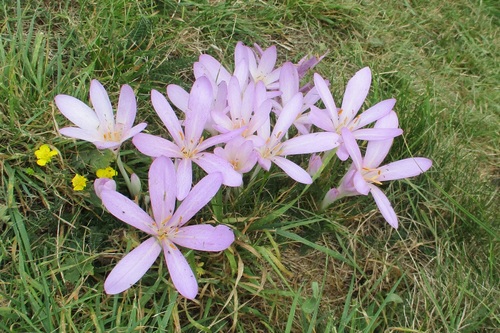
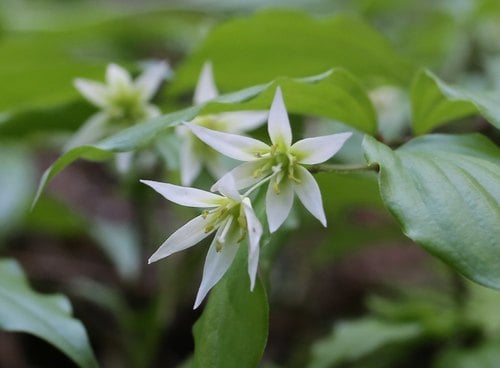
(c) Susan Elliott, some rights reserved (CC BY-NC), uploaded by Susan Elliott
iNaturalist· cc-by-nc-sa
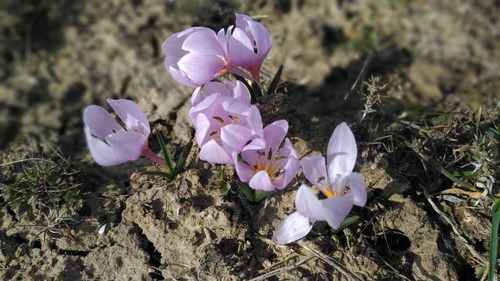
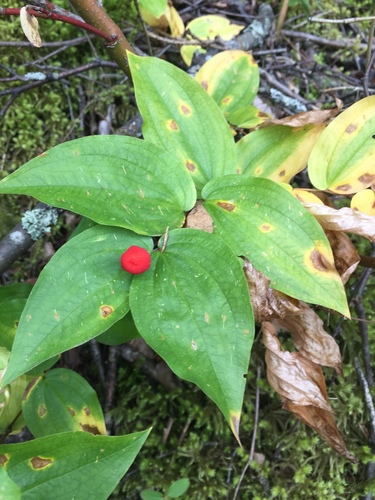
(c) zen Sutherland, some rights reserved (CC BY-NC-SA)
iNaturalist· cc-by-sa
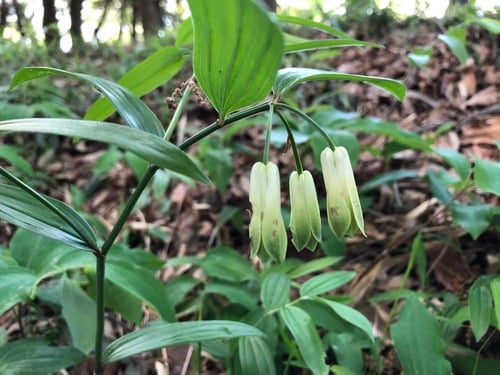
(c) Douglas Goldman, some rights reserved (CC BY-SA), uploaded by Douglas Goldman
Summary
Source: WikipediaUvularia perfoliata, the perfoliate bellwort, is a perennial forb native to the eastern United States and Canada, which produces pale yellow flowers in spring.
Description
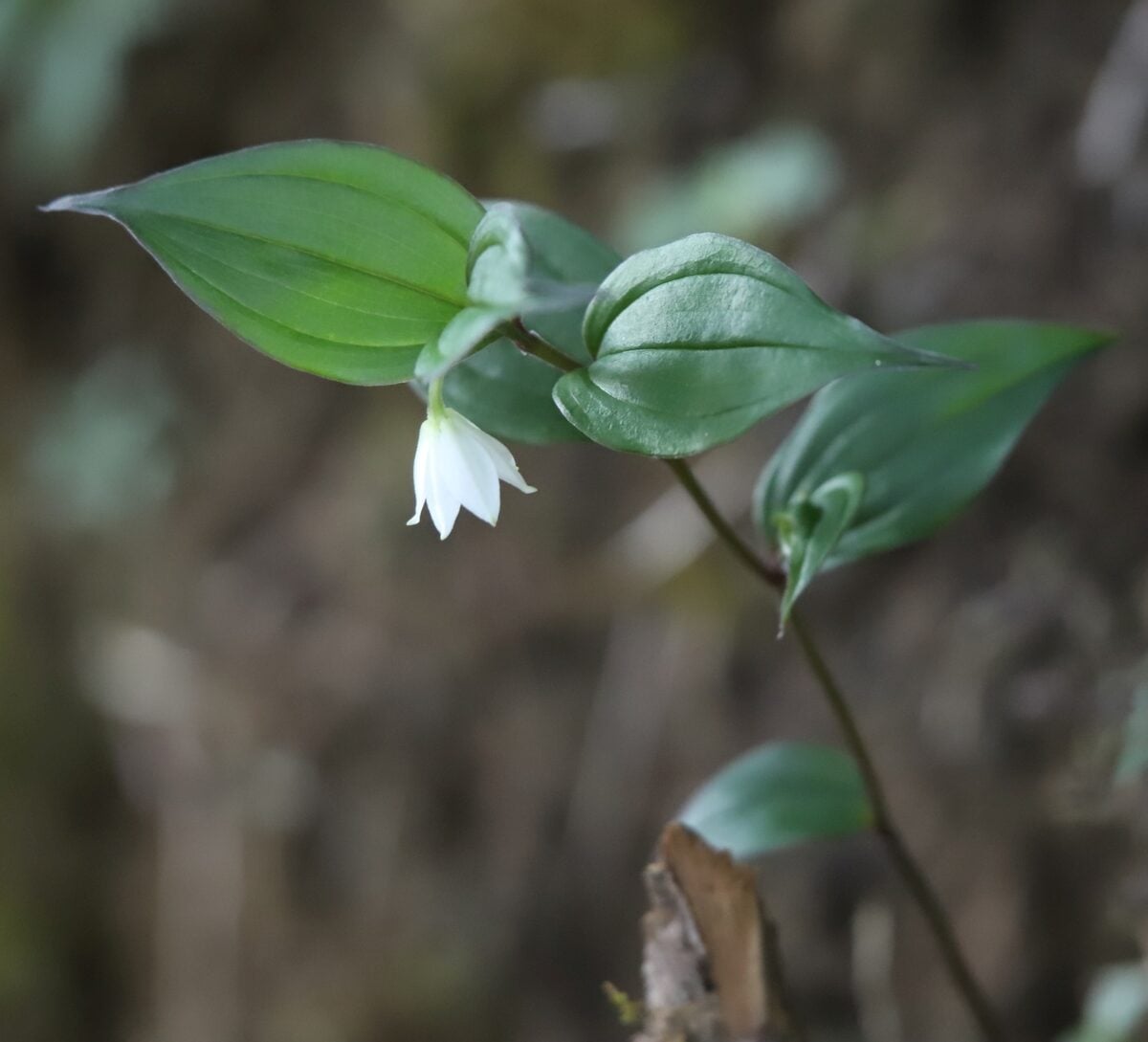
A herb. It keeps growing from year to year. The stems arch over. It grows about 50-90 cm high. It spreads 30-40 cm wide. It has a creeping rhizome. The stems are upright with angular forks. There are only a few leaves. There are 1-4 flowers and they hang down. The flowers are pale yellow. The flowers are bell shaped. They are 3-5 cm long.
Edible Uses
Young shoots are cooked and make an excellent asparagus substitute. The root is also edible when cooked.
Traditional Uses
The roots are cooked and eaten. They can be boiled, stewed or fried. The young shoots are a substitute for asparagus.
This uses section is brief — help expand it
Medicinal Uses
The root is applied as a poultice or salve to treat boils, wounds, and ulcers. A tea made from the roots is used for coughs, sore mouths and throats, inflamed gums, and snakebites, and is considered suitable for children. An infusion of crushed roots can be used as a wash for sore eyes.
Distribution
It is a temperate plant. It grows best on acid soils. It suits hardiness zones 3-9.
Where It Grows
Australia, Canada, North America, USA*,
Cultivation
Requires a cool moist shady position and a light sandy soil. Likes plenty of humus in the soil. Grows well in a woodland garden and in the rock garden. Plants grow much taller in rich soils and then succeed in the herbaceous border. A very hardy plant, tolerating temperatures down to about -20°c.
Propagation
Seed is best sown in a cold frame as soon as it is ripe in summer. Stored seed should be sown in late winter in a cold frame. Prick seedlings out into individual pots once large enough to handle and grow on in a greenhouse for at least their first winter. Plant out into permanent positions in late spring or early summer, after the last expected frosts. Division can be done after the plants die down in late summer, though early spring before flowering is preferred. Larger divisions can go directly into permanent positions; smaller ones are best potted up and grown on in light shade in a greenhouse or cold frame until established, then planted out the following spring.
Other Uses
None known.
Notes
There are 5 Uvularia species.
Also Known As
Straw bell, Wood merrybells
References (9)
- Beckstrom-Sternberg, Stephen M., and James A. Duke. "The Foodplant Database." http://probe.nalusda.gov:8300/cgi-bin/browse/foodplantdb.(ACEDB version 4.0 - data version July 1994)
- Cundall, P., (ed.), 2004, Gardening Australia: flora: the gardener's bible. ABC Books. p 1452
- Duke, J.A., 1992, Handbook of Edible Weeds. CRC Press. p 206
- Esperanca, M. J., 1988. Surviving in the wild. A glance at the wild plants and their uses. Vol. 2. p 86
- Hedrick, U.P., 1919, (Ed.), Sturtevant's edible plants of the world. p 666
Show all 9 references Hide references
- Moerman, D. F., 2010, Native American Ethnobotany. Timber Press. p 582
- Morley, B. & Everard, B., 1970, Wild Flowers of the World. Ebury press. Plate 167
- Plants for a Future database, The Field, Penpol, Lostwithiel, Cornwall, PL22 0NG, UK. http://www.scs.leeds.ac.uk/pfaf/
- Sp. pl. 1:304. 1753, nom. cons.