Diospyros whyteana
(Hiern) F. White
Bladder nut
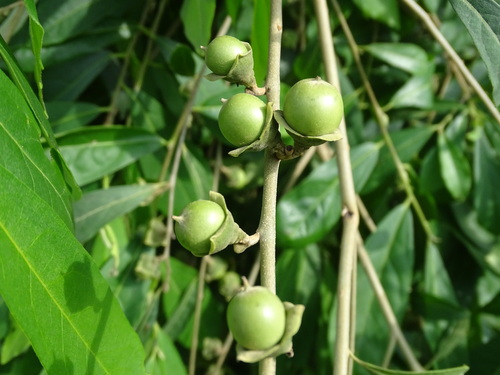
iNaturalist· cc-by-nc
(c) jennilombard, some rights reserved (CC BY-NC)
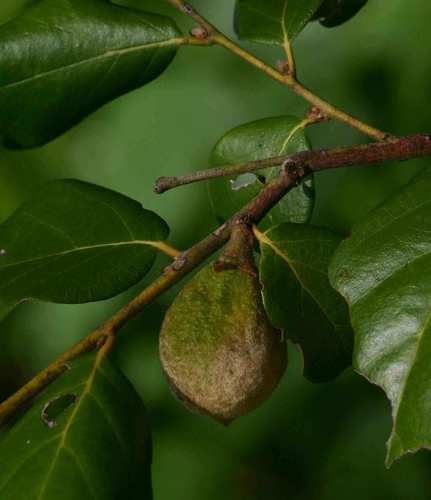
iNaturalist· cc-by-nc
(c) chrisjacksongeo, some rights reserved (CC BY-NC)
Summary
Source: WikipediaDiospyros whyteana (also known as the bladdernut, swartbas, wild coffee or umTenatane) is a small African tree of the ebony family. Bearing dark green, strikingly glossy leaves and creamy fragrant flowers, it is increasingly cultivated in Southern African gardens as an attractive and strong ornamental tree. It can attain a height of up to 6 m.
Description
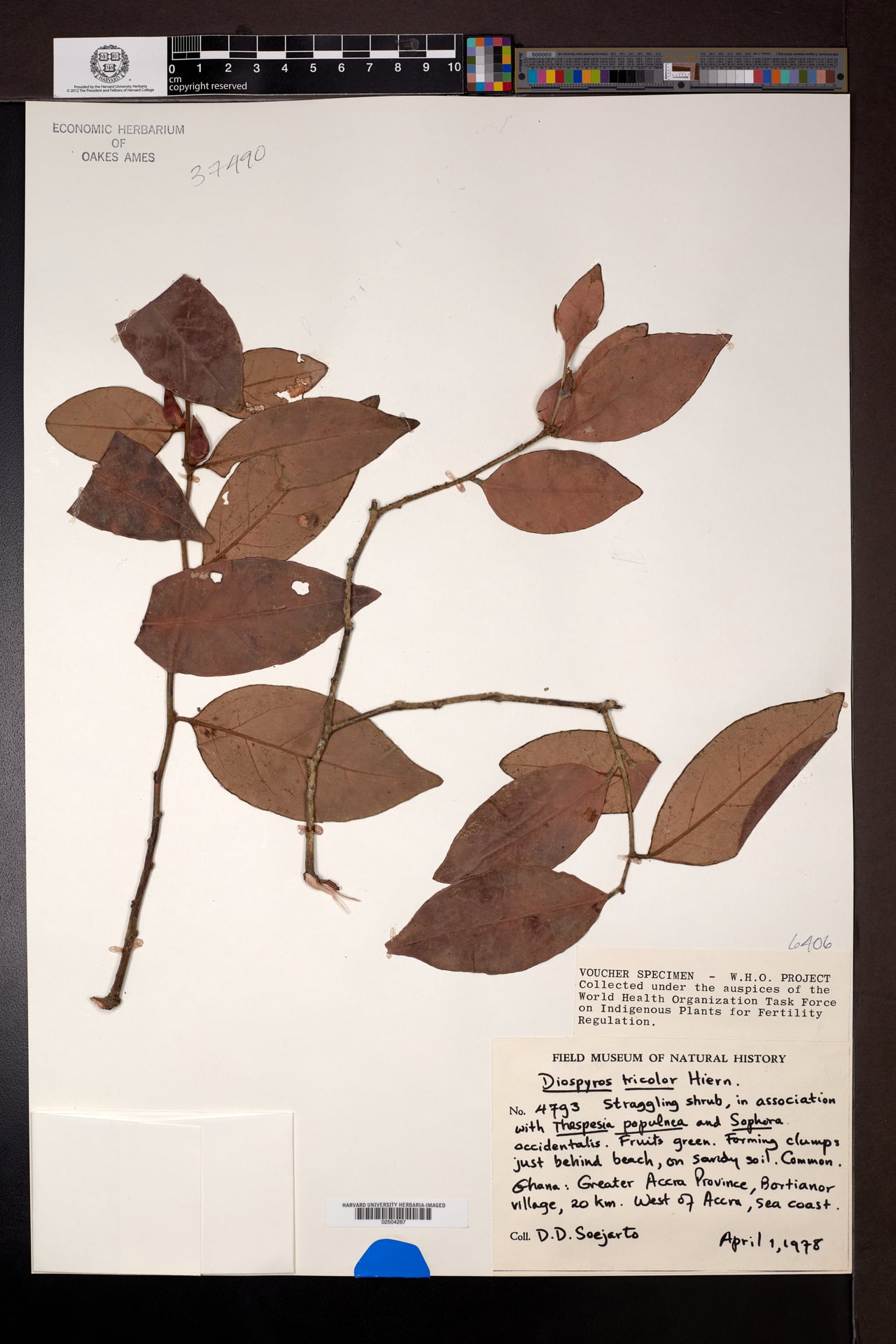
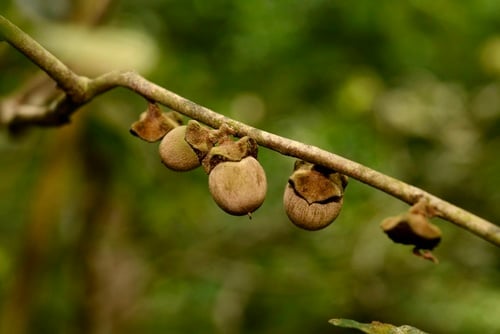
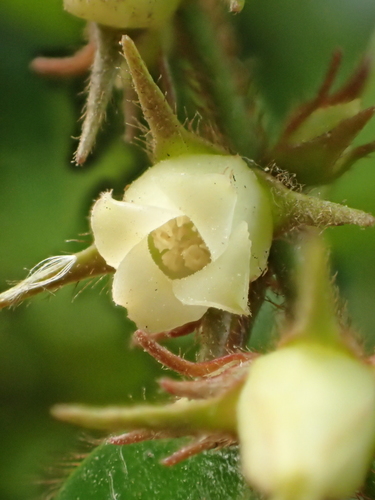
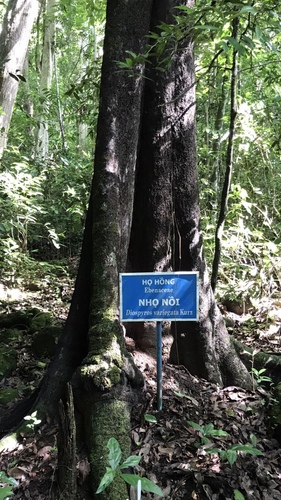
A small evergreen tree. It grows up to 12 m high. It can have one or several stems. The crown is rounded and shiny green. The bark is smooth and dark grey. The young twigs are yellow-green and have fine hairs. The leaves are alternate and in 2 ranks. They are simple and narrowly oval. They are very shiny dark green. Some leaves can be orange or red. The leaves are pale green underneath. The flowers are pale pink or white. They are in short racemes in the axils of leaves. Male and female flowers are on different plants. The fruit are almost hollow. They are a round berry. They have 4 or 5 lobes. The fruit are red to purple when ripe.
Edible Uses
Fruit. Somewhat bitter and so not so very tasty. The red, subglobose fruit is up to 2cm in diameter and is enclosed in an inflated papery calyx. The roasted seeds can be used as a coffee substitute.
Traditional Uses
The fruit are eaten. They have little flavour. The seeds are used as a coffee substitute.
This uses section is brief — help expand it
Medicinal Uses
Bark extracts are administered as enemas for treating menstrual pain, impotency and infertility. A leaf and root infusion can be used to treat rashes. The roots are used as a treatment for snake-bites.
Distribution
A tropical plant. Young plants need frost protection. It is tolerant to drought once established. In Wittunga Botanical Gardens Adelaide. It suits hardiness zones 10-11. Melbourne Botanical gardens.
Where It Grows
Africa, Australia, East Africa, Eswatini, Ethiopia, Lesotho, Malawi, Mozambique, South Africa, Southern Africa, Swaziland, Tanzania, Zambia, Zimbabwe,
Cultivation
Plants can be grown from seeds. Seeds are collected from fruit of the tree and dried in the shade. The seeds should be soaked in hot water and allowed to stand overnight.
Propagation
Seed - best sown as soon as it is ripe. The seed should first be scarified by abrading the surface to allow water to enter more easily (being careful not to damage the embryo). Fresh seed usually germinates freely within 4 - 8 weeks. As a rule fresh seeds have a high percentage of fertility. The seedlings develop long taproots at an early stage, often before any appreciable elongation of the shoot takes place. The growth of the seedling is decidedly slow .
Other Uses
The stems are used for tooth-brushes. The bark is used as a lip-stick and for dyeing mats. The wood is variable in colour, mainly whitish with brown to purple stripe. It is dense, evenly grained and strong. Suitable for making furniture, although large logs are often not available. Smaller diameter stems are used for making implement handles and spoons. The wood is used for fuel. The tree responds well to clipping and is an outstanding plant to grow as a hedge.
Production
It is fairly fast growing.
Other Information
The fruit don't have much flavour.
Notes
There are about 485 species of Diospyros mostly in the tropics.
Synonyms
Also Known As
Nyapahuro, Nyatsipa, Santinyana, Silevusembuti
References (19)
- Bothalia 7:458. 1961
- Etherington, K., & Imwold, D., (Eds), 2001, Botanica's Trees & Shrubs. The illustrated A-Z of over 8500 trees and shrubs. Random House, Australia. p 264
- Facciola, S., 1998, Cornucopia 2: a Source Book of Edible Plants. Kampong Publications, p 92
- Fox, F. W. & Young, M. E. N., 1982, Food from the Veld. Delta Books. p 185
- https://growwild.co.za Edible Indigenous plants
Show all 19 references Hide references
- Joffe, P., 2007, Creative Gardening with Indigenous Plants. A South African Guide. Briza. p 55
- Long, C., 2005, Swaziland's Flora - siSwati names and Uses http://www.sntc.org.sz/flora/
- Plowes, N. J. & Taylor, F. W., 1997, The Processing of Indigenous Fruits and other Wildfoods of Southern Africa. in Smartt, L. & Haq. (Eds) Domestication, Production and Utilization of New Crops. ICUC p 190
- Ruiters-Welcome, A. K., 2019, Food plants of southern Africa. Ph.D. thesis. Univ. of Johannesburg p 53
- Schmidt, E., Lotter, M., & McCleland, W., 2007, Trees and shrubs of Mpumalanga and Kruger National Park. Jacana Media p 518
- Tredgold, M.H., 1986, Food Plants of Zimbabwe. Mambo Press. p 99
- van Wyk, B, van Wyk, P, and van Wyk B., 2000, Photographic guide to Trees of Southern Africa. Briza. p 120
- Venter, F & J., 2009, Making the most of Indigenous Trees. Briza. p 130
- von Breitenbach, F., 1985, Southern Cape Tree Guide. Department of Environment Affairs, Forestry Branch. Pamphlet 360 Pretoria p 26
- Welcome, A. K. & Van Wyk, B.-E., 2019, An inventory and analysis of the food plants of southern Africa. South African Journal of Botany 122 (2019) 136–179
- White, F., Dowsett-Lemaire, F. and Chapman, J. D., 2001, Evergreen Forest Flora of Malawi. Kew. p 227
- World Checklist of Useful Plant Species 2020. Royal Botanic Gardens, Kew
- www.tradewindsfruit.com
- www.zimbabweflora.co.zw 2011