Diospyros lotus
L.
Lotus persimmon, Date plum, Dateplum persimmon
iNaturalist· cc-by
(c) francis renaud, some rights reserved (CC BY)
iNaturalist· cc-by-nc
(c) Shane Hanofee, some rights reserved (CC BY-NC)
iNaturalist· cc-by-nc
(c) Shane Hanofee, some rights reserved (CC BY-NC)
Summary
Source: WikipediaDeciduous tree growing to 9m tall and 6m wide at medium rate. Hardy to UK zone 5, not frost-tender. Flowers in July with seeds ripening October to November. Dioecious and not self-fertile; both sexes required for seed production. Attracts wildlife. Grows in light, medium, or heavy soils with good drainage; tolerates mildly acid, neutral, or mildly alkaline pH. Thrives in semi-shade or full sun and prefers moist soil.
Description
A deciduous tree. It grows up to 15-30 m tall. It can spread to 8 m wide. The bark is furrowed. Young twigs are hairy. The leaf blade is oval and 5-13 cm long by 2.5-6 cm wide. The flowers are reddish or greenish-white. They are bell shaped. The male flowers are in clusters of 2-3 and the female flowers usually occur singly. The fruit are brown or yellow berries. They turn dark purple when ripe. They are 2 cm across.
Edible Uses
The fruit can be eaten raw or cooked, with an exquisitely rich flavour when fully ripe — almost at the point of spoiling — but very harsh and astringent before then. It may not ripen fully during a cool summer, though frosting typically brings out a very good flavour. The fruit can be dried, at which point it takes on a date-like flavour, or it can be harvested in autumn — preferably after a frost — and bletted (kept in a cool place and eaten only when very soft and nearly rotten). Fruit on trees in a fairly sunny position at Kew ripens on the tree in most years and produces fertile seed. The fruit is about 20mm in diameter, roughly the size of a large cherry, turning from yellow to blue-black when fully ripe. Nutritional composition: approximately 1.9% protein, 0.2% fat, 47.7% carbohydrate, and 1% ash.
Traditional Uses
The fruit are eaten raw or preserved and used in wine and vinegar. The fruit are astringent and usually need special treatment. They need to be very ripe. The fruit can be dried.
Medicinal Uses
The fruit is febrifuge and is also used to promote secretions. The seed is regarded in China as being sedative.
Distribution
It is a temperate plant. It is native to S.W. Asia and Northern Iran. It grows between 500-2500 m altitude in southern China. They grow between 1,180-2,000 m altitude in Kashmir. It is very cold hardy. It does not tolerate acidic soils. It suits hardiness zones 5-9. In Sichuan and Yunnan. Arboretum Tasmania. National Arboretum Canberra.
Where It Grows
Afghanistan, Armenia, Asia, Australia, Azerbaijan, Balkans, Bhutan, Britain, Caucasus, Central Asia, China, Colombia, Cuba, Europe, Georgia, Greece, Himalayas, India, Indochina, Iran, Italy, Japan, Korea, Laos, Macedonia, Mediterranean, Middle East, Myanmar, Nepal, NW India, Pakistan, Russia, SE Asia, Slovenia, Tajikistan, Tasmania, Tibet, Turkey, Türkiye, Turkmenistan, Uzbekistan, Vietnam, West Indies,
Cultivation
Requires a good deep loamy soil in sun or light shade. When being grown for its fruit, the tree should be given a warm, sheltered, sunny position. It dislikes very acid or wet and poorly drained soils. Dormant plants are very cold-hardy, but the young growth in spring, even on mature plants, is frost-tender and so it is best to grow the plants in a position sheltered from the early morning sun. Dioecious, but the female tree can produce seedless fruits in the absence of a pollinator. It is likely that unfertilized fruits are more astringent than fertilized fruits since this is the case with D. kaki. Plants have a long tap root and are difficult to transplant, it is best to plant them out in their permanent position as soon as possible and to give protection overwinter for the first year or two. This species is sometimes cultivated for its edible fruit in Italy and E. Asia, there are some named varieties. Persimmons are typically harvested in autumn, depending on the species and climate. Persimmons usually flower in late spring to early summer. Persimmon trees grow at a moderate rate, typically reaching maturity in 3 to 5 years, with a full height of 15 to 25 feet (4.5 to 7.6 meters) depending on the species and growing conditions. Some species of Diospyros, like Diospyros virginiana (American persimmon), are self-fertile, while others may require cross-pollination to produce fruit effectively.
Propagation
Seed is best sown in a cold frame as soon as it is ripe. Stored seed requires cold stratification and should be sown as early in the year as possible. Germination usually occurs within 1–6 months at 15°C. Pot up seedlings into fairly deep pots as soon as they are large enough to handle, and plant out into permanent positions in early summer. Provide some protection from winter cold for the first year or two. Cuttings of half-ripe wood can be taken in July or August in a frame. Layering can be done in spring.
Other Uses
Persimmon trees suit agroforestry systems, offering edible fruit for wildlife and human consumption, shade, and improved soil structure. This species is sometimes used as a rootstock for D. kaki. The wood is durable, pliable, and rot-resistant, and is used in construction and general carpentry. Flowers are rich in nectar and pollen and attract pollinators, especially bees. The fruit is a valuable food source for birds, mammals, and insects; the foliage provides shelter, and older trees may offer nesting or roosting sites for birds. Bark, leaf litter, and decaying matter at the base provide overwintering and shelter sites for invertebrates.
Other Information
The fruit are sold in markets. It is widely cultivated for its edible fruit in Iran.
Notes
There are about 485 species of Diospyros mostly in the tropics.
Synonyms
Also Known As
Amblook, Amlok, Amlook, Amlot, A-mu-dong-ba-shing, Asian lotus plum, Caucasian persimmon, False lote-tree, Hirnik, Hpunmang, Jun qian zi, Junqianzi, Kawo amlok, Keshen amalok, Khveulebrivi khurma, Lotosni ebenovec, Palo santo, Shishu, Tazhi, Tazhu, Thi bi, Thi sen, Toor amlock, Ziar amluk
References (61)
- Afzal, S., et al, 2009, Ethno-botanical Studies from Northern Pakistan. J. Ayub Med Coll Abbottabad 21(1)
- Ahmad, I., et al, 2011, Ethnobotanical Study of Tehsil Kabal, Swat District, KPK, Pakistan. Hindawi Publishing Corporation Journal of Botany Volume 2011, Article ID 368572, 9 pages
- Ali, H., et al, 2011, Ethnobotanical profile of some plant resources in Malam Jabba valley of Swat, Pakistan. Journal of Medicinal Plants Research Vol. 5(18), pp 4676-4687
- Ambasta, S.P. (Ed.), 2000, The Useful Plants of India. CSIR India. p 177
- Amin, M., et al, 2023, Edible wild plant species used by different linguistic groups of Kohistan Upper Khyber Pakhtunkhwa (KP), Pakistan. Journal of Ethnobiology and Ethnomedicine 19:6 p 9
Show all 61 references Hide references
- Arora, R. K., 2014, Diversity in Underutilized Plant Species - An Asia-Pacific Perspective. Bioversity International. p 67
- Awan, M. R., et al, 2011, Studies on traditional knowledge of economically important plants of Kaghan Valley, Mansehra District, Pakistan. Journal of Medicinal Plants Research Vol. 5(16), pp. 3958-3967
- Bhatia, H., et al, 2018, Traditionally used wild edible plants of district Udhampur, J&K, India. Journal of Ethnobiology and Ethnomedicine (2018) 14:73
- Blamey, M and Grey-Wilson, C., 2005, Wild flowers of the Mediterranean. A & C Black London. p 172
- Bodkin, F., 1991, Encyclopedia Botanica. Cornstalk publishing, p 346
- Brickell, C. (Ed.), 1999, The Royal Horticultural Society A-Z Encyclopedia of Garden Plants. Convent Garden Books. p 370
- Brouk, B., 1975, Plants Consumed by Man. Academic Press, London. p
- Bussman, R. W., et al, 2016, A comparative ethnobotany of Khevsureti, Samtskhe-Javakheti, Tusheti, Svaneti, and Racha-Lechkhumi, Republic of Georgia (Sakartvelo), Caucasus. Journal of Ethnobiology and Ethnomedicine (2016) 12:4
- Bussman, R. W., et al, 2021, Unity in diversity—food plants and fungi of Sakartvelo (Republic of Georgia), Caucasus. Journal of Ethnobiology and Ethnomedicine (2021) 17:72 p 9
- Coombes, A.J., 2000, Trees. Dorling Kindersley Handbooks. p 139
- Cundall, P., (ed.), 2004, Gardening Australia: flora: the gardener's bible. ABC Books. p 503
- Dobriyal, M. J. R. & Dobriyal, R., 2014, Non Wood Forest Produce an Option for Ethnic Food and Nutritional Security in India. Int. J. of Usuf. Mngt. 15(1):17-37
- Ertug, F, Yenen Bitkiler. Resimli Türkiye Florası -I- Flora of Turkey - Ethnobotany supplement
- Etherington, K., & Imwold, D., (Eds), 2001, Botanica's Trees & Shrubs. The illustrated A-Z of over 8500 trees and shrubs. Random House, Australia. p 264
- Ethnobotanical Study of Tehsil Kabal, Swat District, KPK, Pakistan, Table 1
- Facciola, S., 1998, Cornucopia 2: a Source Book of Edible Plants. Kampong Publications, p 92
- Flora of Pakistan www.eFloras.org
- Geng, Y., et al, 2016, Traditional knowledge and its transmission of wild edibles used by the Naxi in Baidi Village, northwest Yunnan province. Journal of Ethnobiology and Ethnomedicine. 12:10
- Gouldstone, S., 1983, Growing your own Food-bearing Plants in Australia. Macmillan p 122
- Haj, F., et al, 2012, Species Diversity and Ethno Botanical Classes of the Flora of Allai Valley District Battagram Pakistan. International Journal of Plant Research 2012, 2(4): 111-123
- Hamayun, M., Ethnobotanical Studies of some Useful Shrubs and Trees of District Buner, NWFP, Pakistan
- Hedrick, U.P., 1919, (Ed.), Sturtevant's edible plants of the world. p 277
- Heywood, V.H., Brummitt, R.K., Culham, A., and Seberg, O. 2007, Flowering Plant Families of the World. Royal Botanical Gardens, Kew. p 135
- Hu, Shiu-ying, 2005, Food Plants of China. The Chinese University Press. p 624
- Hwang, HS, et al, 2014, Distribution characteristics of plant in the Ungseokbong Mountain, Gyeongsangnam-do, Korea. Journal of Asia-Pacific Biodiversity. 7(2014) e164-e178
- Jayaraman, U., & Singh, V., 1987, A Census of Edible Species of Diospyros L. in India. J. Econ. Tax. Bot. Vol. 10 No. 2 pp 416-419
- John, L., & Stevenson, V., 1979, The Complete Book of Fruit. Angus & Robertson p 227
- Ju, Y., et al, 2013, Eating from the wild: diversity of wild edible plants used by Tibetans in Shangri-la region, Yunnan, China, Journal of Ethnobiology and Ethno medicine 9:28
- Kang, Y., et al, 2012, Wild food plants and wild edible fungi in two valleys on the Qinling Mountains (Shaanxi, central China) Journal of Ethnobiology and Ethnomedicine; 9:26
- Khan, A. H., et al, 2023, Traditional foraging for ecological transition? Wild food ethnobotany among three ethnic groups in the highlands of the eastern Hindukush, North Pakistan. Journal of Ethnobiology and Ethnomedicine 19:9
- Khan, W., et al, Ethnomedicinal plants of Kakul Hills, District Abbottabad, KPK, Pakistan.
- Li, S., et al, 2020, Monpa, memory, and change: an ethnobotanical study of plant use in Mêdog County, South-east Tibet, China. Journal of Ethnobiology and Ethnomedicine. (2020) 16:5 p 17
- Luo, B., et al, 2019, Wild edible plants collected by Hani from terraced rice paddy agroecosystem in Honghe Prefecture, Yunnan, China. Journal of Ethnobiology and Ethnomedicine 15:56 (As var. mollissima)
- Lyle, S., 2006, Discovering fruit and nuts. Land Links. p 185
- Miguel, E., et al, 1989, A checklist of the cultivated plants of Cuba. Kulturpflanze 37. 1989, 211-357
- Pemberton, R. W. & Lee, N. S., 1996, Wild Food Plants in South Korea: Market Presence, New Crops, and Exports to the United States. Economic Botany, Vol. 50, No. 1, pp. 57-70
- Pham-Hoang Ho, 1999, An Illustrated Flora of Vietnam. Nha Xuat Ban Tre. p 650
- Plants for a Future database, The Field, Penpol, Lostwithiel, Cornwall, PL22 0NG, UK. http://www.scs.leeds.ac.uk/pfaf/
- Rashid, A., Anand, V.K. & Serwar, J., 2008, Less Known Wild Plants Used by the Gujjar Tribe of District Rajouri, Jammu and Kashmir State. International Journal of Botany 4(2):219-244
- Recher, P, 2001, Fruit Spirit Botanical Gardens Plant Index. www.nrg.com.au/~recher/ seedlist.html p 2
- Rivera, D. et al, 2006, Gathered Mediterranean Food Plants - Ethnobotanical Investigations and Historical Development, in Heinrich M, Müller WE, Galli C (eds): Local Mediterranean Food Plants and Nutraceuticals. Forum Nutr. Basel, Karger, 2006, vol 59, pp 18–74
- Sfikas, G., 1984, Trees and shrubs of Greece. Efstathiadis Group. Athens. p 174
- Sher, H. et al, 2011, Ethnobotanical and Economic Observations of Some Plant Resources from the Northern Parts of Pakistan. Ethnobotany research & Applications 9:027-041
- Shu-kang, L., Gilbert, M.G., & White, F., Ebenaceae. Flora of China.
- Singh, H.B., Arora R.K.,1978, Wild edible Plants of India. Indian Council of Agricultural Research, New Delhi. p 55
- Sp. pl. 2:1057. 1753
- USDA, ARS, National Genetic Resources Program. Germplasm Resources Information Network - (GRIN). [Online Database] National Germplasm Resources Laboratory, Beltsville, Maryland. Available: www.ars-grin.gov/cgi-bin/npgs/html/econ.pl (10 April 2000)
- Valder, P., 1999, The Garden Plants of China. Florilegium. p 281
- van Wyk, B., 2005, Food Plants of the World. An illustrated guide. Timber press. p 179
- Wang, J. et al, 2013, A Study on the Utilization of Wild Plants for Food in Liangshan Yi Autonomous Prefecture. Plant Diversity and Resources. 35(4): 416-471
- Wang, J., et al, 2020, An ethnobotanical survey of wild edible plants used by the Yi people of Liangshan Prefecture, Sichuan Province, China. Journal of Ethnobiology and Ethnomedicine 16:10 p 7
- Weckerle, C. S., et al, 2006, Plant Knowledge of the Shuhi in the Hengduan Mountains, Southwest China. Economic Botany 60(1):2-23
- Wiersema, J. H. & Leon, B., 2013, World Economic Plants. A Standard Reference CRC Press. 2nd Ed. p 249
- World Checklist of Useful Plant Species 2020. Royal Botanic Gardens, Kew
- Yeshi, K. et al, 2017, Taxonomical Identification of Himalayan Edible Medicinal Plants in Bhutan and the Phenolic Contents and Antioxidant Activity of Selected Plants. TBAP 7 (2) 2017 pp 89 - 106
- Zeven, A. C. & de West, J. M. J., 1982, Dictionary of cultivated plants and their regions of diversity. Wageningen. p 36, 82
More from Ebenaceae
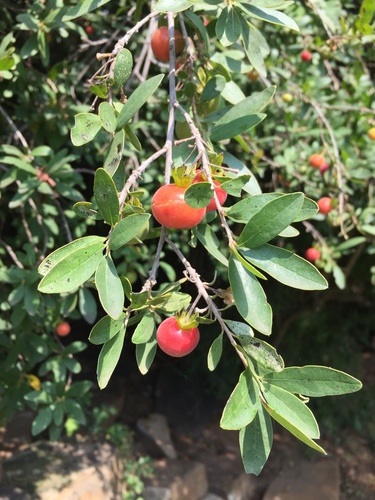
Diospyros lycioides subsp. sericea
Kalahari star-apple, Blue bush, Monkey-plum
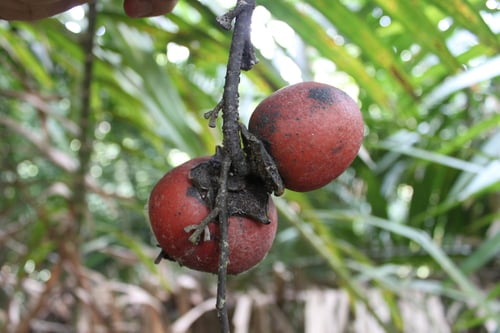
Diospyros macrophylla
Red ebony tree
Diospyros major
Fijian persimmon
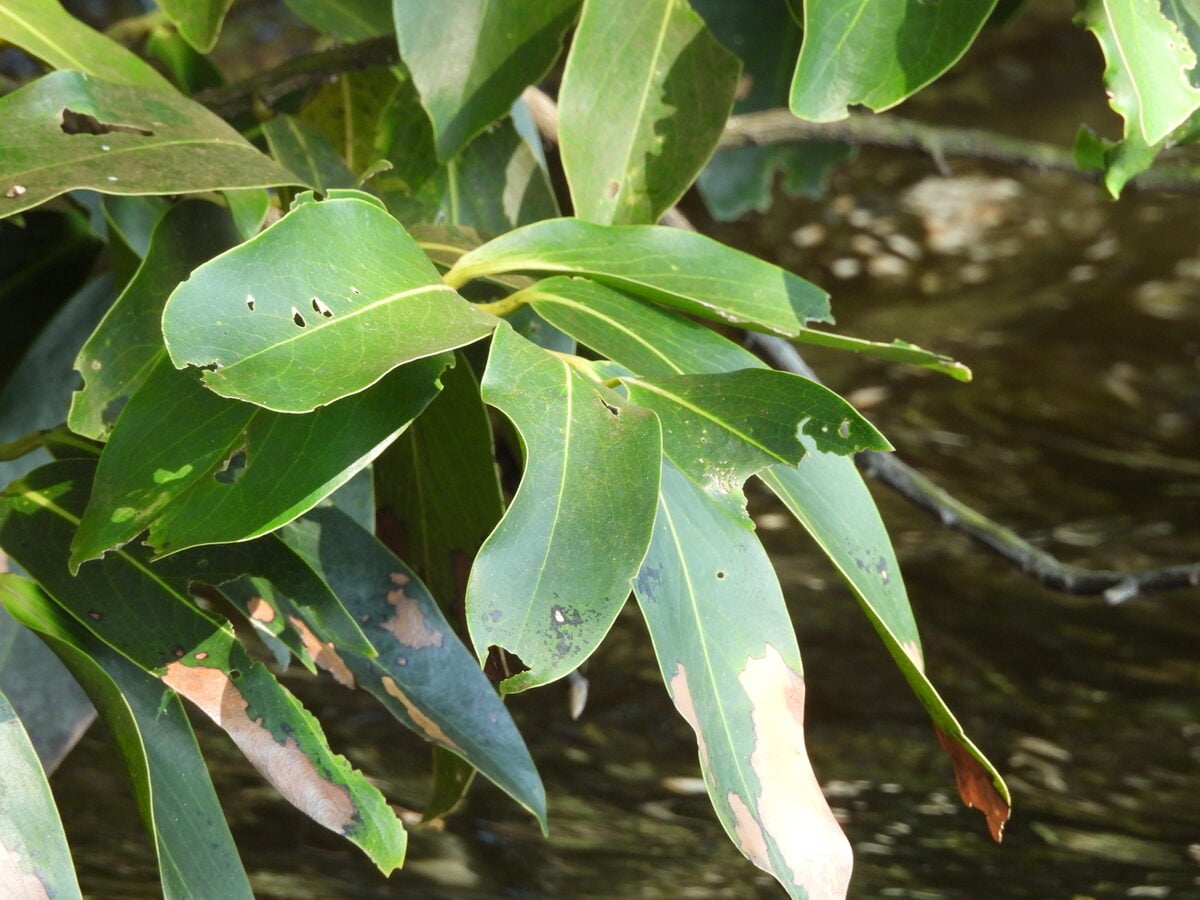
Diospyros malabarica - (Desr.) Kostel.
Indian Persimmon, Gaub, Timbiri, Mountain ebony
Diospyros mannii
Zevelu
Diospyros maritima
Broad-leafed ebony, Malaysian persimmon