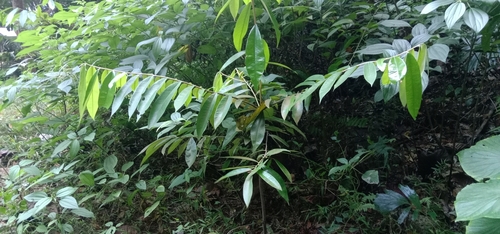
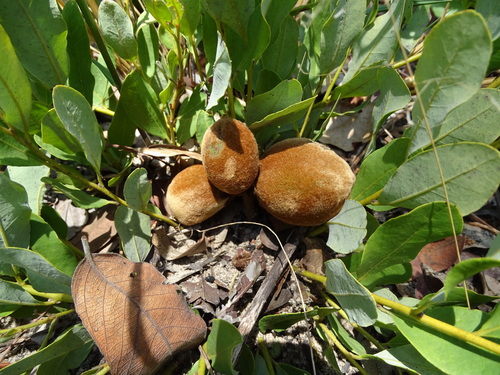
Diospyros texana
Scheele
Texas persimmon
iNaturalist· cc-by-nc-sa
(c) Gravitywave, some rights reserved (CC BY-NC-SA)
iNaturalist· cc-by-nc-sa
(c) Gravitywave, some rights reserved (CC BY-NC-SA)
iNaturalist· cc-by-nc-sa
(c) Gravitywave, some rights reserved (CC BY-NC-SA)
Summary
Source: WikipediaDiospyros texana is a species of persimmon that is native to central, south and west Texas and southwest Oklahoma in the United States, and eastern Chihuahua, Coahuila, Nuevo León, and Tamaulipas in northeastern Mexico. Common names include Texas persimmon, Mexican persimmon and the more ambiguous "black persimmon". It is known in Spanish as chapote, chapote manzano, or chapote prieto, all of which are derived from the Nahuatl word tzapotl. That word also refers to several other fruit-bearing trees.
Description
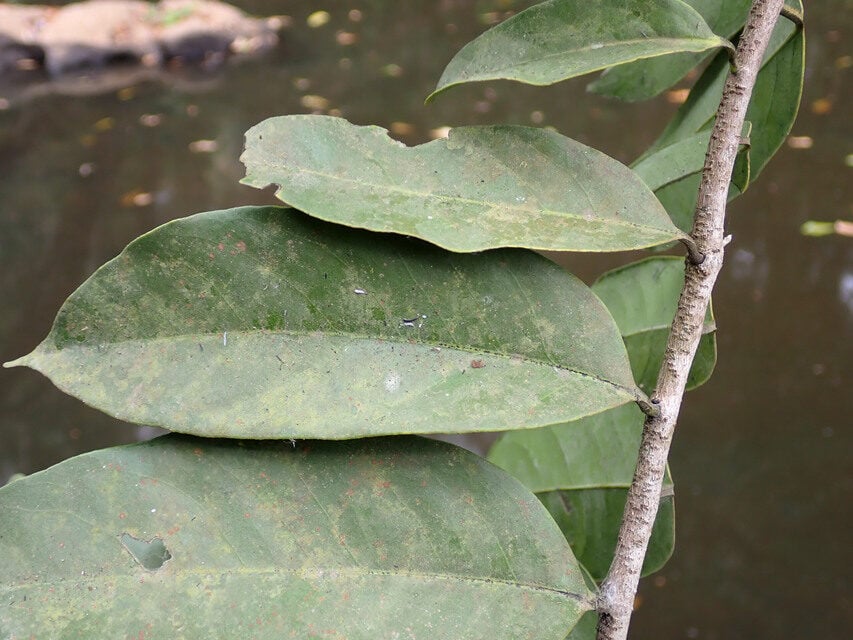
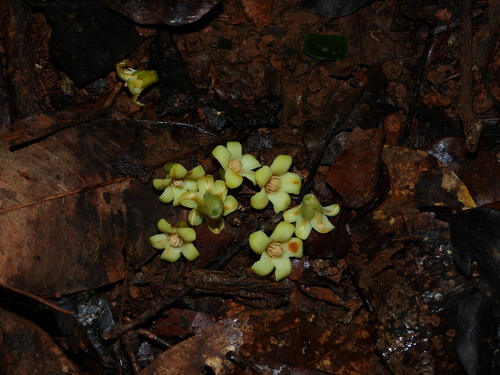
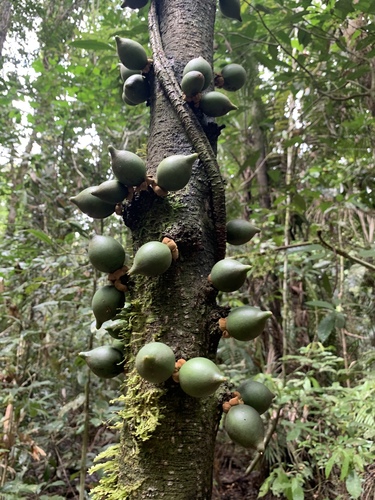
A deciduous shrub or tree. It grows 8-12 m high. The trunk is short. It is 30 cm across. The crown is narrow. The leaves are rounded or oblong and leathery. They are 2-4 cm long by 10-19 mm wide. They are rounded or have a notch at the tip and taper to the base. They are widest above the middle. They are dull green above and paler underneath. The flowers are white and fragrant. They are bell shaped and 6 mm long and wide. Male and female flowers are on separate trees. There are 1-3 male flowers together and female flowers occur singly. The fruit are cherry-like and yellow to red or black. They are 19 mm wide and have a black, juicy, sweet pulp. There are 3-8 seeds.
Edible Uses
The sapwood of Texas persimmon is clear yellow, while the heartwood, found only in very large trees, is black (ebony), like that of the related D. ebenum. The heartwood is hard and dense and takes a high polish. It is used to make engraving blocks, artwork, and tools. The fleshy berries are edible and sweet when ripe and are used in puddings and custards; they are also relished by many species of birds and mammals. However, they are astringent when unripe. They were traditionally used by Native Americans to make a black dye for animal hides and are still used for this purpose in Mexico. The small size, peeling bark, intricate branching, and drought tolerance of D. texana make it useful as an ornamental.
Traditional Uses
The fruit can be eaten fresh or dried.
This uses section is brief — help expand it
Distribution
It grows in dry rocky uplands. In Texas it can grow to 1220 m altitude. It is frost hardy. It can tolerate drought and pollution. It can grow on a range of soils. It can tolerate a range of pH values from acidic to alkaline. It suits hardiness zones 7-9.
Where It Grows
Central America, Mexico, North America, USA,
Production
A slow growing tree.
Notes
There are about 485 species of Diospyros mostly in the tropics.
Synonyms
Also Known As
Black persimmon, Chapote prieto, Mexican persimmon
References (18)
- Desert Survivors Online Plant Database
- Elias, T.S. & Dykeman P.A., 1990, Edible Wild Plants. A North American Field guide. Sterling, New York p 238
- Etherington, K., & Imwold, D., (Eds), 2001, Botanica's Trees & Shrubs. The illustrated A-Z of over 8500 trees and shrubs. Random House, Australia. p 264
- Facciola, S., 1998, Cornucopia 2: a Source Book of Edible Plants. Kampong Publications, p 92
- Gouldstone, S., 1983, Growing your own Food-bearing Plants in Australia. Macmillan p 122
Show all 18 references Hide references
- Grandtner, M. M., 2008, World Dictionary of Trees. Wood and Forest Science Department. Laval University, Quebec, Qc Canada. (Internet database http://www.WDT.QC.ca)
- Hedrick, U.P., 1919, (Ed.), Sturtevant's edible plants of the world. p 278
- Kermath, B. M., et al, 2014, Food Plants in the Americas: A survey of the domesticated, cultivated and wild plants used for Human food in North, Central and South America and the Caribbean. On line draft. p 313
- Linnaea 22:145. 1849
- Little, E.L., 1980, National Audubon Society Field Guide to North American Trees. Alfred A. Knopf. p 634
- Lyle, S., 2006, Discovering fruit and nuts. Land Links. p 185
- Martin, F. W., et al, 1987, Perennial Edible Fruits of the Tropics. USDA Handbook 642 p 92
- Piedra-Malagón, E. M. et al, 2022, Edible native plants of the Gulf of Mexico Province. Biodiversity Data Journal 10: e80565 p 18
- Segura, S., et al, 2018, The edible fruit species in Mexico. Genet Resour Crop Evol (2018) 65:1767–1793
- USDA, ARS, National Genetic Resources Program. Germplasm Resources Information Network - (GRIN). [Online Database] National Germplasm Resources Laboratory, Beltsville, Maryland. Available: www.ars-grin.gov/cgi-bin/npgs/html/econ.pl (10 April 2000)
- Wiersema, J. H. & Leon, B., 2013, World Economic Plants. A Standard Reference CRC Press. 2nd Ed. p 250
- World Checklist of Useful Plant Species 2020. Royal Botanic Gardens, Kew
- www.desert-tropicals.com