Diospyros hasseltii
Zoll.
gbif· cc0
Royal Botanic Garden Edinburgh
gbif· cc-by
Royal Botanic Gardens, Kew
Description
A tree up to 20 m high. It can be a shrub 2-4 m tall. The leaves are narrowly oval and 12-35 cm long by 4-15 cm wide. The flowers have 4 or 5 flower parts. Trees can have one or both sexes. The fruit is a berry. They are about 2-3.5 cm across. They have black hairs pressed against the fruit near the base. They are on long fruit stalks. The seeds are flattened oblong shape. They are 1.5-2 cm long by 0.7-1 cm wide and 0.2-0.3 cm thick.
Edible Uses
Seeds - raw. They are sweet and slightly astringent. The brown seeds are transparent and gelatinous. They are 15 - 20mm long x 7 - 10mm wide x 2 - 3mm thick. Ripe fruits are inodorous and astringent, they are eaten by bats and birds. The fruit is a globose to ovoid berry, 15 - 35mm in diameter. The above report about the seed being edible does seem a little strange to me. The description of being transparent and gelatinous seems more relevant to the fruit.
Traditional Uses
The seeds are sweet with a slightly sharp taste.
This uses section is brief — help expand it
Distribution
A tropical plant. They grow in forests on limestone hills. In Yunnan.
Where It Grows
Asia, Cambodia, Indochina, Indonesia, Laos, Malaysia, Myanmar, SE Asia, Thailand, Vietnam,
Cultivation
Plants can be either monoecious or dioecious. If dioecious forms are grown, then both male and female forms need to be grown if fruit and seed are required.
Propagation
Seed - in general the seed of Diospyros species has a very short viability and so should be sown as soon as possible. The flesh should be removed since this contains germination inhibitors. Sow the seed in a shady position in a nursery seedbed. The sowing media for ebony uses soil and fine sand at the ratio 3:1. The seed is planted horizontally or vertically with the radicle end down, with a sowing depth of 1 - 1½ times the thickness of seed. Distance between the seeds is 3 - 5cm. Seeds are very sensitive to desiccation during germination and early growth, so must be regularly watered at this time. Normally the seed will germinate after one week. As a rule fresh seeds have a high percentage of fertility. The seedlings develop long taproots at an early stage, often before any appreciable elongation of the shoot takes place. The growth of the seedling is decidedly slow .
Other Uses
The juice of the fruits is used as a varnish. The wood is good and durable but usually of too small dimensions to be of much use.
Production
Plants flower in October to December and fruit in March to May.
Notes
There are about 485 species of Diospyros mostly in the tropics.
Synonyms
Also Known As
Baneng, Hei mao shi, Kasemak, Merangat, Semak, Tako-chan, Tako, Thi hasselt, Tubloab prey
References (6)
- Milow, P., et al, 2013, Malaysian species of plants with edible fruits or seeds and their evaluation. International Journal of Fruit Science. 14:1, 1-27
- Pham-Hoang Ho, 1999, An Illustrated Flora of Vietnam. Nha Xuat Ban Tre. p 648
- Shu-kang, L., Gilbert, M.G., & White, F., Ebenaceae. Flora of China.
- Thorng, R., et al, 2015, Roles of Wild Food Plants in Ethnic Group Communities in Mondulkiri Province, Northeastern Cambodia. Journal of Mekong Societies Vol.11 No.2 May-August 2015 pp. 1-17
- Verheij, E. W. M. and Coronel, R.E., (Eds.), 1991, Plant Resources of South-East Asia. PROSEA No 2. Edible fruits and nuts. Pudoc Wageningen. p 328
Show all 6 references Hide references
- World Checklist of Useful Plant Species 2020. Royal Botanic Gardens, Kew
More from Ebenaceae
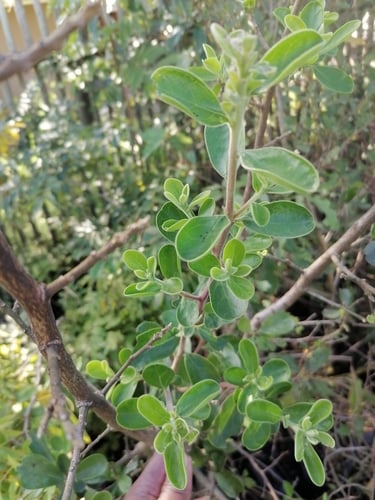
Diospyros lycioides
Red star apple, Bluebush star-apple, Quilted bluebush, Karoo blue bush
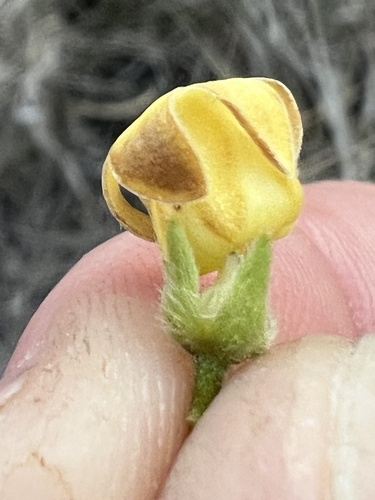
Diospyros lycioides subsp. guerkei
Quilted bluebush
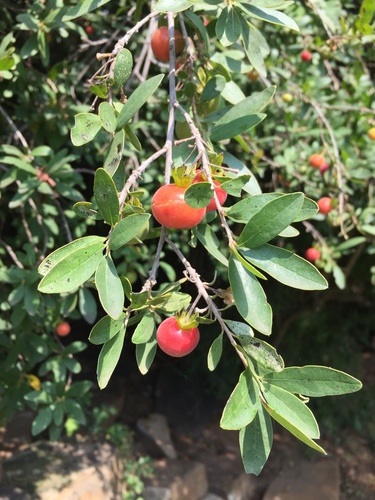
Diospyros lycioides subsp. sericea
Kalahari star-apple, Blue bush, Monkey-plum
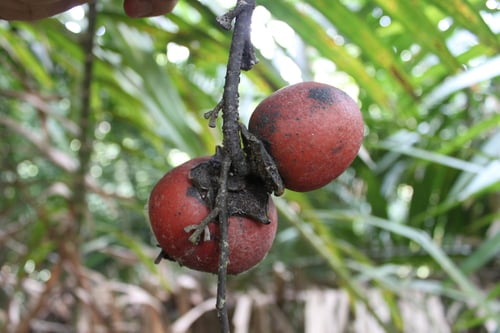
Diospyros macrophylla
Red ebony tree
Diospyros major
Fijian persimmon
Diospyros malabarica - (Desr.) Kostel.
Indian Persimmon, Gaub, Timbiri, Mountain ebony