Diospyros guianensis
(Aubl.) Gurke
Barrabarra
iNaturalist· cc-by-nc
(c) Hervé GALLIFFET, some rights reserved (CC BY-NC), uploaded by Hervé GALLIFFET
iNaturalist· cc-by-nc
(c) Hervé GALLIFFET, some rights reserved (CC BY-NC), uploaded by Hervé GALLIFFET
iNaturalist· cc-by-nc
(c) Hervé GALLIFFET, some rights reserved (CC BY-NC), uploaded by Hervé GALLIFFET
Description
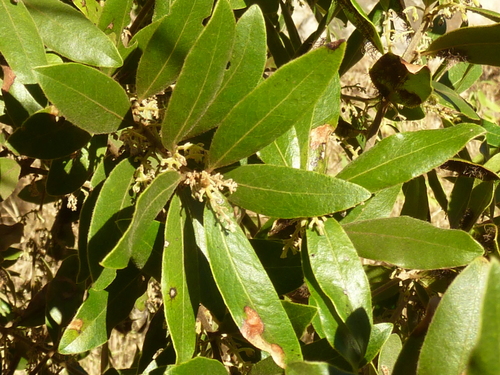
A tree. It grows 25 m tall. The bark is dark brown and the inner bark is yellow. The leaves are simple and alternate. They have rusty hairs when young. The flower petals are green and folded. The fruit is leathery.
Edible Uses
The fruit pulp is occasionally eaten. The fruit is a shiny black, globose berry around 20mm in diameter, containing 6 - 7 large seeds.
Medicinal Uses
The bark is febrifuge. A decoction of the bark is used as a wash for fevers. The leaves are crushed in a little oil and the juice is applied to certain eczematous dermatoses. The stem-bark contains a naphthaquinone, which alleviates certain dermal lesions, as well as the terpenes lupeol, betulinol and betulinic acid.
Distribution
It is a tropical plant. It grows in swamp forest.
Where It Grows
Guyana, South America,
Other Uses
The heartwood is dark brown; it is clearly defined from the yellowish-white sapwood. The texture is medium; the grain straight; lustre is medium; there is no distinctive taste or aroma. The wood is of low durability, being susceptible to blue stain and the attack of insects. It is easy to work and finishes well. It is used for purposes such as carpentry, cabinet work, furniture. The wood is sometimes sawn into boards or used to make cricket bats and balls.
Other Information
Fruit are occasionally eaten.
Synonyms
Also Known As
Barabara
References (1)
- van Andel, T., 2000, Useful plants of Guyana. Non-Timber Forest Products of the North-West District of Guyana Part 2. p 364
More from Ebenaceae
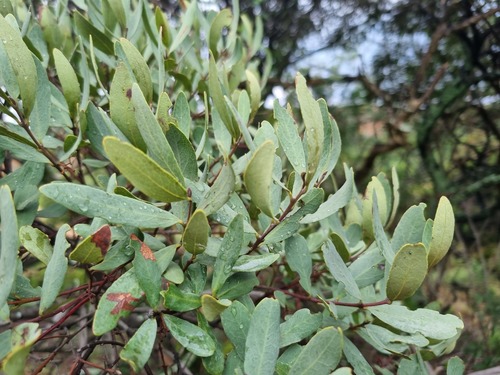
Euclea crispa
Blue guarri, Blue-leaved euclea
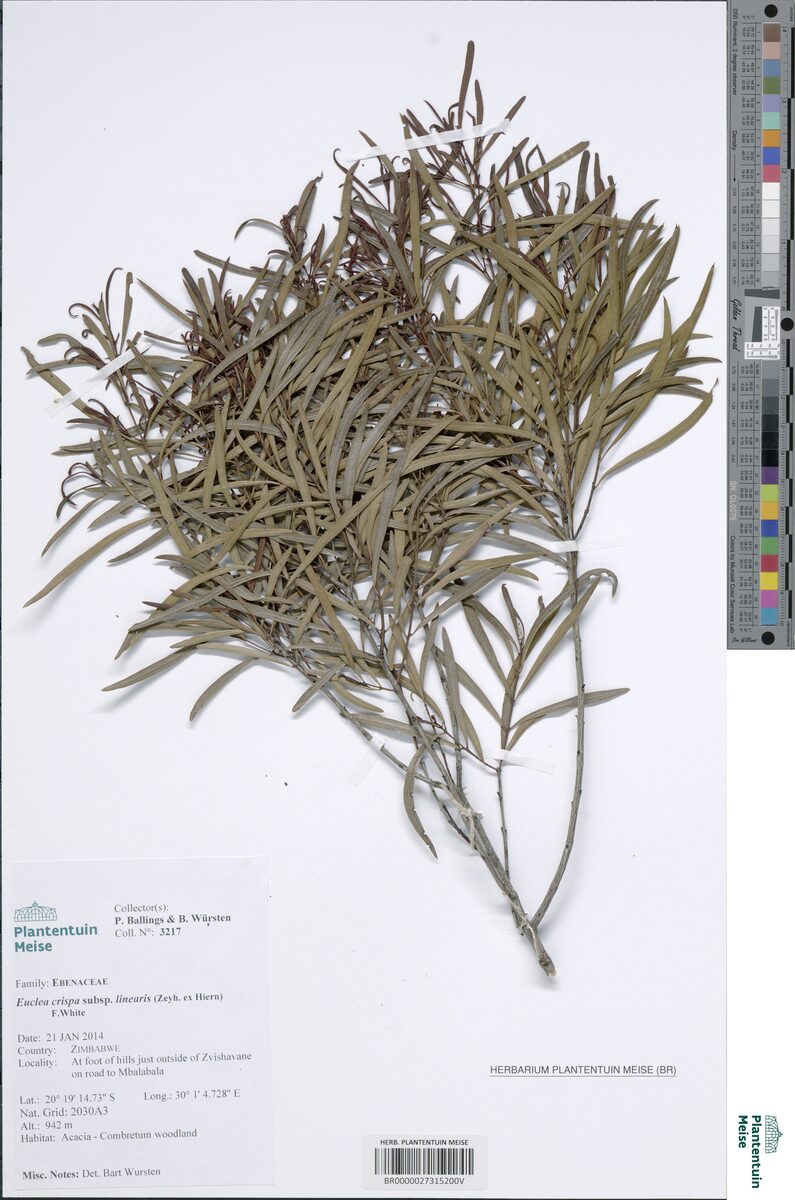
Euclea crispa subsp. linearis
Asbestos bush
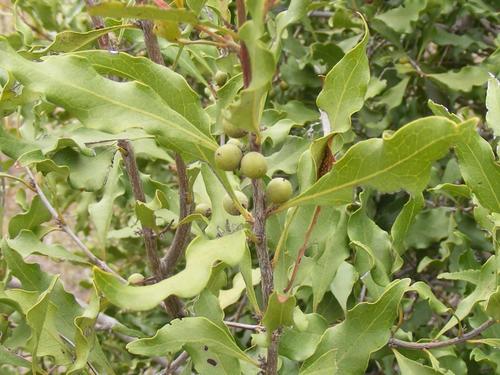
Euclea divinorum
Diamond-leaved euclea
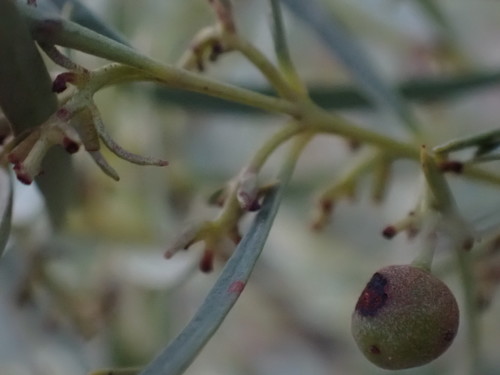
Euclea linearis
Lance-leaf guarri, Lance-leaved euclea
Euclea natalensis
Natal ebony, Large-leaved euclea, Hairyleaved guarri
Euclea pseudebenus
Black ebony, Cape ebony, Ebony tree