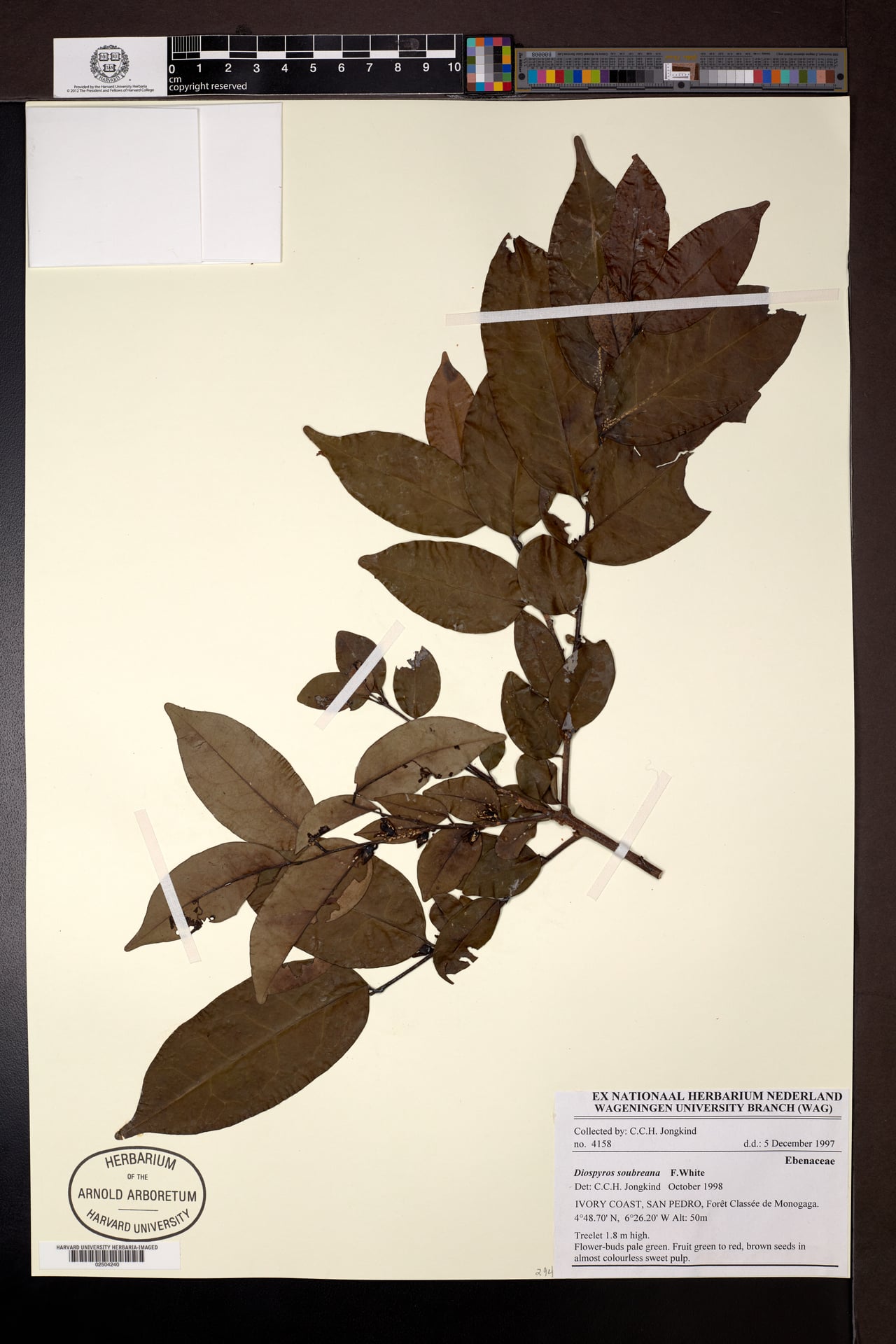
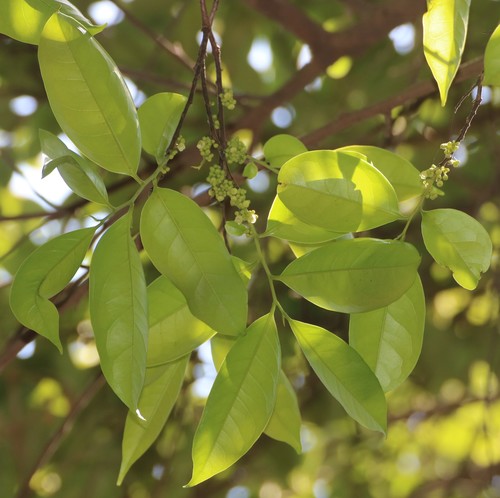
Diospyros mespiliformis
Hochst. ex A. DC.
African ebony
iNaturalist· cc-by-nc
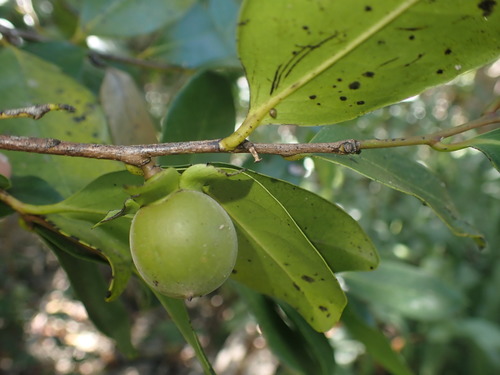
(c) Udo Lange, some rights reserved (CC BY-NC), uploaded by Udo Lange
iNaturalist· cc-by-nc
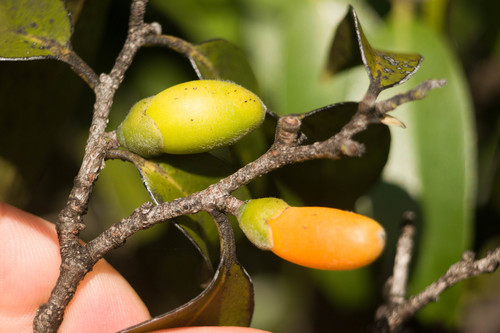
(c) Troos van der Merwe, some rights reserved (CC BY-NC), uploaded by Troos van der Merwe
iNaturalist· cc-by-nc
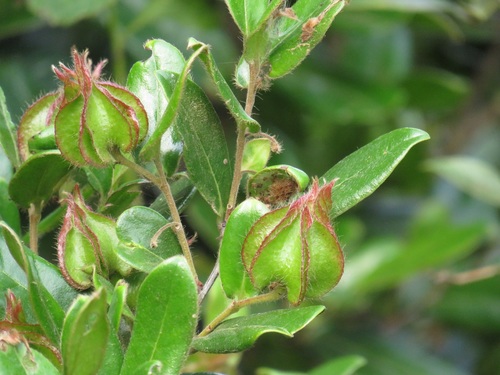
(c) Allen Birdcam, some rights reserved (CC BY-NC), uploaded by Allen Birdcam
Summary
Source: WikipediaDiospyros mespiliformis, the jackalberry (also known as African ebony and by its Afrikaans name jakkalsbessie), is a large dioecious evergreen tree found mostly in the savannas of Africa. Jackals are fond of the fruit, hence the common names. It is a member of the family Ebenaceae, and is related to the true ebony (D. ebenum) and edible persimmon (D. kaki).
Description
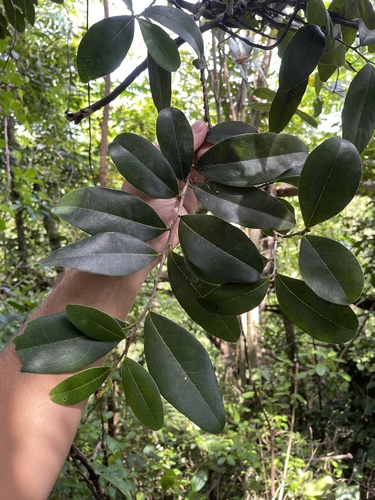
An evergreen tree. It grows up to 15-20 m tall. It can grow to 45 m tall in forests. It has a dense wide spreading round crown. The trunk sometimes has buttresses. Young branches have soft hairs. The bark is dark grey. The bark is smooth in young trees and becomes rough in older trees. The small twigs are pink. The leaves are simple. They are 4-17 cm long and 1.5-5.5 cm wide. The midrib is sunken on top and prominent underneath. The flowers occur as male and female flowers on separate trees. The male flowers occur in clusters and the female flowers occur singly. The fruit are round and 3 cm across. They have sweet edible pulp. The fruit are green and with hairs when young and become yellow or purple when ripe. They contain 4-6 seeds. The seeds are brown. They are oblong and flattened.
Edible Uses
The fruit can be eaten raw, cooked, dried, or fermented into beverages. It has a sweet flavour similar to persimmon (D. kaki). A kind of soft toffee can be made from the fruits, which — along with similar fruits such as figs and dates — are known as lubiya. The globose, yellow fruit is up to 25mm in diameter. The leaves are sometimes eaten. Chemical composition of a Sudan sample (dry weight): Crude protein 3.0%, Fat 0.9%, Crude fibre 16.5%, Ash 4.5%; Soluble carbohydrates — Starch 6.1%, Sucrose 0%, D-Glucose 7.61%, F-Fructose 9.9%. Amino acids (g per 16g N): Aspartic acid 5.7g, Threonine 3.0g, Serine 3.3g, Glutamic acid 6.6g, Proline 7.6g, Glycine 4.0g, Alanine 3.3g, Valine 4.3g, Cysteine 1.0g, Methionine 1.0g, Isoleucine 3.7g, Leucine 5.0g, Tyrosine 2.0g, Phenylalanine 3.3g, Lysine 4.0g, Histidine 2.3g, Arginine 4.0g. Minerals: Sulphur 0.05%, Phosphorus 0.11%, Magnesium 0.08%, Calcium 0.37%, Sodium 0.01%, Potassium 1.51%; Zinc 5mg/kg, Iron 192mg/kg, Manganese 5mg/kg, Copper 1mg/kg.
Traditional Uses
The fruit are eaten fresh or dried. They are also made into a porridge. The fruit can be dried and stored. The seeds are also edible. The fruit are also used to make beer, or wine. The fruit can be used for jam, and sweets.
Medicinal Uses
The plant is widely used in traditional African medicine, and a number of medically active constituents have been isolated. The principal active compound appears to be plumbagin, found in the root-bark at a concentration of 0.9% (with only a trace in the leaves), and shown to have antibiotic, antihaemorrhagic, and fungistatic properties. Tannin, saponin, and a substance likely identical to scopolamine are also present, along with a high fluoride content. The leaves are astringent, febrifuge, haemostatic, mildly laxative, stimulant, and vermifuge, and this plant is often prescribed alone in traditional practice. A leaf infusion is used for fevers, infectious fevers, dysentery, pneumonia, syphilis, leprosy, and yaws. A decoction of leafy twigs is taken as a poison antidote. Leaves and fruit are used internally for menorrhoea and dysenteriform diarrhoea, and externally for headaches, arthritis, and dermal conditions. Leaves and fruit are chewed or applied as an infusion to treat gingivitis, toothache, cuts, and wounds, and to prevent infection. Sap is instilled into the ear for otitis. A bark infusion treats stomach aches and is applied externally as a wash for sores and ulcers. Wood shavings combined with pods of Acacia nilotica and roots of Borassus spp. are pounded in water and boiled for about two hours; the resulting liquid is used in Nigeria as a mouth rinse for toothache. Sap from freshly felled trees, water from holes in the tree, or an infusion of the black heartwood are used similarly.
Known Hazards
Sawdust of this species, as also of most Diospyros spp., causes dermatitis after continuous contact.
Distribution
A tropical plant. It can grow in the tropical lowlands. It occurs in tropical Africa south of the Sahara. It grows in the Sahel. It grows in semi arid woodland. In occurs where the mean temperatures are between 16°C and 27°C. In Tanzania it grows between 350-1250 m altitude. It is more common where rainfall is 500-1270 mm per year. It does best on heavy soils. It often grows near streams and freshwater. It can grow on termite mounds. It can grow in arid places. It grows in Miombo woodland in Africa.
Where It Grows
Africa*, Angola, Asia, Australia, Benin, Botswana, Burkina Faso, Burundi, Cameroon, Central Africa, Congo, Côte d'Ivoire, Cuba, East Africa, Eritrea, Eswatini, Ethiopia, Gambia, Ghana, Guinea, Guinée, Indonesia, Ivory Coast, Kenya, Malawi, Mali, Mauritania, Middle East, Mozambique, Namibia, Niger, Nigeria, Sahel, SE Asia, Senegal, Sierra Leone, South Africa, Southern Africa, South Sudan, Sudan, Swaziland, Tanzania, Togo, Uganda, West Africa, West Indies, Yemen, Zambia, Zimbabwe,
Cultivation
Plants are grown from seed. Seeds take about one month to germinate. Seeds can be covered in boiling water and left to soak overnight before planting. They can also be grown by coppicing and by root suckers. They can be grown by cuttings. Seeds need plenty of moisture to germinate well. Fruit are often collected from the ground but can be picked from the tree.
Propagation
Pre-soak seed overnight in hot water, allowed to cool, to break dormancy. Sow in flat seed trays filled with river sand. Under ideal conditions, seeds germinate within 50 days. Transplant seedlings at the 3-leaf stage, as leaving them longer risks damaging the taproot during transplanting. Growth is rather slow initially but speeds up considerably after the first year. Young trees do not transplant easily. Seed storage behaviour is orthodox — viability can be maintained for one season in open storage, or for several years in hermetic storage at 3°C with 5–6% moisture content. The plant can also be propagated from root suckers.
Other Uses
This species is considered suitable for reforestation, with good natural regeneration. The bark yields a dark-coloured gum used to mend broken pottery. Bark is also used to dye mats red. Fruit pulp is applied to pottery as a glaze and varnish. The wood is used as chew-sticks. The heartwood is black, very hard, and appears only in older trees above a certain girth; it is clearly demarcated from the 5–12cm wide band of creamy to reddish-yellow sapwood, which produces bands of black. Freshly cut wood is light pinkish-brown, slightly darker toward the centre. Blackening of the heartwood develops only after felling and appears to depend on growing conditions — trees from savannah situations blacken while those from more heavily forested areas do not. Blackening is possibly a pathological process and burying is said to accelerate it. The texture is fine, the grain straight or slightly interlocked. The wood is heavy, very hard, and strong, and is very durable — resistant to fungi, dry wood borers, and termites. It seasons slowly with a high risk of checking or distortion; once dry it is poorly stable in service. It is difficult to saw and work with serious dulling effect on blades — stellite-tipped and tungsten carbide tools are recommended. Surfaces take an excellent polish, though interlocked or curly grain may cause picking up during planing, requiring a reduced cutting angle. It has a tendency to split on nailing, so pre-boring is advised; gluing properties are satisfactory and slicing is possible but requires powerful machines. The heartwood is valued for black-wood cabinetry, furniture, and high-class carpentry, as well as heavy flooring, interior trim, shipbuilding, vehicle bodies, musical instruments (especially piano black keys and guitar fingerboards), precision equipment, turnery, carvings, knife handles, and brush backs. The sapwood — and sometimes the heartwood — is used for poles, posts, vehicle bodies, agricultural implements, toys, novelties, sporting goods, combs, ladders, boxes, crates, crossbows, veneer, and plywood. The wood also makes good fuel and charcoal.
Production
Small plants are slow growing but they grow taller after a few months. Flowering occurs during the rainy season and fruiting during the dry season. It is about 6-8 months from flowering to mature fruit. Fruit mature faster in hot dry places.
Other Information
It is a commonly used food plant in West Africa.
Notes
There are about 485 species of Diospyros mostly in the tropics. Chemical composition (Sudan sample, after Abdelmuti): Protein (crude) = 3.0% (dry). Fat = 0.9% )(dry). Fibre (crude) = 16.5% (dry). Ash = 4.5% (dry). Carbohydrate (soluble): Starch = 6.1% (dry). Sucrose = 0% (dry). D-Glucose = 7.61% (dry). F-Fructose = 9.9% (dry). Amino acids (g [16g N]-1): Aspartic acid = 5.7g. Threonine = 3.0g. Serine = 3.3g. Glutamic acid = 6.6g. Proline = 7.6g. Glycine = 4.0g. Alanine = 3.3g. Valine = 4.3g. Cysteine = 1.0g. Methionine = 1.0g. Isoleucine = 3.7g. Leucine = 5.0g. Tyrosine = 2.0g. Phenylalanine = 3.3g. Lysine = 4.0g. Histidine = 2.3g. Arginine = 4.0g. Minerals: Sulphur = 0.05% (dry). Phosphorus = 0.11% (dry). Magnesium = 0.08% (dry). Calcium = 0.37% (dry). Na = 0.01% (dry). K = 1.51% (dry). Zinc = 5 mg/kg-1 (dry). Iron = 192 mg/kg-1 (dry). Manganese = 5 kg/kg-1 (dry). Copper = 1 mg/kg-1 (dry).
Nutrition
| Part | Moisture | kJ | kcal | Protein | Vit A | Vit C | Iron | Zinc |
|---|---|---|---|---|---|---|---|---|
| Fruit | 64.5 | 523 | 125 | 1.1 | — | — | 2 | — |
Synonyms
Also Known As
Betre musie, Chuma, Cum, Cumu, Ekumi, Ekumoit, Gaa, Gar, Gughan, Houang, Jackal berry, M'cheng, Maumwa, Mchenya, Mkululu, Mokutshumo, Msumwa, mu -Koro, Mucula, Mukengia, Muqueue, Murriparipa, Mutona, Nana, Nyelenje, Omwandi, Rhodesian ebony, Swamp ebony, Toma, Umtfoma, Umtoma
References (112)
- Agbahoungba, S., et al, 2016, Ecological diversity and conservation of wild edible fruit trees species in the Lama Forest Reserve in Benin. Bois et Forets des Tropiques 2016, No. 329(3)
- andELMUTI,
- Ambe, G., 2001, Les fruits sauvages comestibles des savanes guinéennes de Côte-d’Ivoire : état de la connaissance par une population locale, les Malinké. Biotechnol. Agron. Soc. Environ. 5(1), 43-48
- Asfaw, Z. and Tadesse, M., 2001, Prospects for Sustainable Use and Development of Wild Food Plants in Ethiopia. Economic Botany, Vol. 55, No. 1, pp. 47-62
- Assefa, A. & Abebe, T., 2010, Wild Edible Trees and Shrubs in the Semi-arid Lowlands of Southern Ethiopia. Journal of Science and Development 1 (1) 2010
Show all 112 references Hide references
- Assogbadjo, A. E. et al, 2013, Specific Richness and Cultural Importance of Wild Edible Trees in Benin. Acta Hort. 979, ISHS 2013
- Atato, A., et al, 2010, Diversity of Edible Wild Fruit Tree Species of Togo. Global Science Books.
- Awas, T., 1997, A Study on the Ecology and Ethnobotany of Non-cultivated Food Plants and Wild Relatives of Cultivated crops in Gambella Region, Southwestern Ethiopia. Addis Ababa University. p 47
- Awodoyin, R.O., Olubode, O.S., Ogbu, J.U., Balogun, R.B., Nwawuisi, J.U. and Orji, K.O., 2015, Indigenous Fruit Trees of Tropical Africa: Status, Opportunity for Development and Biodiversity Management. Agricultural Sciences, 6, 31-41
- Ballal, M. E., et al, 2014, Ethno-botany of Natural Forests of Nuba Mountains, South Kordofan State, Sudan. Journal of Forest Poducts & Industries. 3(1):13-19
- Bekele-Tesemma A., Birnie, A., & Tengnas, B., 1993, Useful Trees and Shrubs for Ethiopia. Regional Soil Conservation Unit. Technical Handbook No 5. p 190
- Belem, B., et al, 2007, Use of Non Wood Forest Products by local people bordering the “Parc National Kaboré Tambi”, Burkina Faso. The Journal of Transdisciplinary Environmental Studies vol. 6, no. 1 p 9
- Belem, M., et al, 2017, Strategy of Conservation and Protection of Wild Edible Plants Diversity in Burkina Faso. ANADOLU 27 (2) 2017, 82- 90
- Berihun, T. & Molla, E., 2017, Study on the Diversity and Use of Wild Edible Plants in Bullen District Northwest Ethiopia. Hindawi Journal of Botany. Article ID 8383468
- Bernholt, H. et al, 2009, Plant species richness and diversity in urban and peri-urban gardens of Niamey, Niger. Agroforestry Systems 77:159-179
- Boedecker, J., et al, 2014, Dietary contribution of Wild Edible Plants to women’s diets in the buffer zone around the Lama forest, Benin – an underutilized potential. Food Sec. 6:833–849
- Bonou, A., et al, 2013, Valeur economique des Produits Forestiers Non Ligneux (PFNL) au Benin. Editions Universitaires Europeennes p 88
- Brotein and nitrogen-to-protein conversion factors for some uncultivated tropical plant seeds. Food Chemistry 78:105-109
- Bruschi, P., et al, 2014, Traditional use of plants in a rural community of Mozambique and possible links with Miombo degradation and harvesting sustainability. Journal of Ethnobiology and Ethnomedicine. 2014, 10:59
- Codjia, J. T. C., et al, 2003, Diversity and local valorisation of vegetal edible products in Benin. Cahiers Agricultures 12:1-12
- Dale, I. R. and Greenway, P. J., 1961, Kenya Trees and Shrubs. Nairobi. p 172
- Diarra, N. et al, 2016, Etude ethnobotanique des plantes alimentaires utilisées en période de soudure dans les régions Sud du Mali. Int. J. Biol. Chem. Sci. 10(1): 184-197
- Duguma, H. T., 2020, Wild Edible Plant Nutritional Contribution and Consumer Perception in Ethiopia. Hindawi International Journal of Food Science Volume 2020, Article ID 2958623, 16 pages
- Facciola, S., 1998, Cornucopia 2: a Source Book of Edible Plants. Kampong Publications, p 92
- FAO. 1983, Food and fruit-bearing forest species 1: Examples from Eastern Africa. FAO Food and Forestry Paper 44/1 p 43
- FAO, 1988, Traditional Food Plants, FAO Food and Nutrition Paper 42. FAO Rome p 246
- Food Composition Tables for use in Africa FAO http://www.fao.org/infoods/directory No. 750, 1010
- Fowler, D. G., 2007, Zambian Plants: Their Vernacular Names and Uses. Kew. p 24
- Fox, F. W. & Young, M. E. N., 1982, Food from the Veld. Delta Books. p 183
- Gallagher, D. E., 2010, Farming beyond the escarpment: Society, Environment, and Mobility in Precolonial Southeastern Burkina Faso. PhD University of Michigan.
- Gilbert, T., et al, 2017, Diversity and local transformation of indigenous edible fruits in sahelian domain of Cameroon. Journal of Animal & Plant Sciences Vol. 26 (2): 5289-5300
- Glover et al, 1969,
- Goode, P., 1989, Edible Plants of Uganda. FAO p 30
- Goode, P., 1989, Edible Plants of Uganda. FAO p 37
- Goode, P., 1989, Edible Plants of Uganda. FAO p 40
- Gouldstone, S., 1983, Growing your own Food-bearing Plants in Australia. Macmillan p 122
- Grivetti, L. E., 1980, Agricultural development: present and potential role of edible wild plants. Part 2: Sub-Saharan Africa, Report to the Department of State Agency for International Development. p 43, 66, 72
- Grubben, G. J. H. and Denton, O. A. (eds), 2004, Plant Resources of Tropical Africa 2. Vegetables. PROTA, Wageningen, Netherlands. p 561
- Guinko, S. & Pasgo, L. J., Harvesting and marketing of edible products from local woody species in Zitenga, Burkina Faso. Unasylva - No. 168
- Hanawa, Y., 2013, Wild edible plants used by Guiziga people of far north region of Cameroon. Int. J. Med. Arom. Plants. Vol 3 (2) : 136-143
- Hines, D. A. & Eckman, K., 1993, Indigenous multipurpose trees of Tanzania: Uses and economic benefits for people. FAO Forestry Department. p 139
- Ibrahim, H. A., et al, 2012, Ethnobotanical Survey of the Wild Edible Food Plants Consumption among Local Communities in Kano State, North-Western, Nigeria, International Journal of Science and Technology. Vol. 2. No. 10 p 716
- INFOODS:FAO/INFOODS Databases
- Jardin, C., 1970, List of Foods Used In Africa, FAO Nutrition Information Document Series No 2.p 42, 133
- Joffe, P., 2007, Creative Gardening with Indigenous Plants. A South African Guide. Briza. p 129
- Katende, A.B., Birnie, A & Tengnas B., 1995, Useful Trees and Shrubs for Uganda. Identification, Propagation and Management for Agricultural and Pastoral Communities. Technical handbook No 10. Regional Soil Conservation Unit, Nairobi, Kenya. p 234
- Keay, R.W.J., 1989, Trees of Nigeria. Clarendon Press, Oxford. p 382
- Kidane, B., et al, 2014, Ethnobotany of Wild and Semi-wild Edible Fruit Species used by Maale and Ari Ethnic Communities in South Ethiopia. Ethnobotany Research and Applications. Vol. 12, 1546-3465-12-455
- Kristensen, M and Lykke, A. M., 2003, Informant-Based Valuation of Use and Conservation Preferences of Savanna Trees in Burkina Faso. Economic Botany, Vol 57, No. 2, pp. 203-271
- Lamien-Meda, A., et al, 2008, Polyphenol Content and Antioxidant Activity of Fourteen Wild Edible Fruits from Burkina Faso. Molecules 2008,13, 581-594
- Larson, T. J., 1970, Hambukushu Ethno-botany. Botswana Notes and Records. Vol 13.
- Le Houerou, H. N., (Ed.), 1980, Browse in Africa. The current state of knowledge. International Livestock Centre for Africa, Ethiopia. p 162
- Long, C., 2005, Swaziland's Flora - siSwati names and Uses http://www.sntc.org.sz/flora/
- Lovett, J. C. et al, Field Guide to the Moist Forest Trees of Tanzania. p 43
- Lulekal, E., et al, 2011, Wild edible plants in Ethiopia: a review on their potential to combat food insecurity. Afrika Focus - Vol. 24, No 2. pp 71-121
- Lykke, A. M., Mertz, O, and Ganaba, S., 2002, Food Consumption in Rural Burkina Faso, Ecology of Food and Nutrition, 41:119-152
- Magwede, K., van Wyk, B.-E., & van Wyk, A. E., 2019, An inventory of Vhavenḓa useful plants. South African Journal of Botany 122 (2019) 57–89
- Malaisse, F., 1997, Se nourrir en floret claire africaine. Approche ecologique et nutritionnelle. CTA., p 61
- Mannheimer, C. A. & Curtis. B.A. (eds), 2009, Le Roux and Muller's Field Guide to the Trees and Shrubs of Namibia. Windhoek: Macmillan Education Namibia. p 390
- Maroyi, A., 2011, The Gathering and Consumption of Wild Edible Plants in Nhema Communal Area, Midlands Province, Zimbabwe. Ecology of Food and Nutrition 50:6, 506-525
- Maroyi, A. & Cheikhyoussef, A., 2017, Traditional knowledge of wild edible fruit in southern Africa: A comparative use patterns in Namibia and Zimbabwe. Indian Journal of Traditional Knowledge. 16(3): 385-392
- Martin, F. W., et al, 1987, Perennial Edible Fruits of the Tropics. USDA Handbook 642 p 25
- Mashile, S. P., et al, 2019, Indigenous fruit plants species of the Mapulana of Ehlanzeni district in Mpumalanga province, South Africa. South African Journal of Botany 122 (2019) 180–183
- Masters, T., 2021, Traditional food plants of the upper Aswa River catchment of northern Uganda—a cultural crossroads. Journal of Ethnobiology and Ethnomedicine (2021) 17:24
- Maundu, P. et al, 1999, Traditional Food Plants of Kenya. National Museum of Kenya. 288p
- Maydell, H. von, 1990, Trees and shrubs of the Sahel: their characteristics and uses. Margraf. p 255
- Mbuya, L.P., Msanga, H.P., Ruffo, C.K., Birnie, A & Tengnas, B., 1994, Useful Trees and Shrubs for Tanzania. Regional Soil Conservation Unit. Technical Handbook No 6. p 234
- Mertz, O., Lykke, A. M., and Reenberg, A., 2001, Importance and Seasonality of Vegetable Consumption and Marketing in Burkina Faso. Economic Botany, 55(2):276-289
- Mengistu, F. & Hager, H., 2008, Wild Edible Fruit Species Cultural Domain, Informant Species Competence and Preference in Three Districts of Amhara Region, Ethiopia. Ethnobotany Research & Applications 6:487-502
- Mpasiwakomu, R. A., 2017, The Diversity and Utilization of Wild Edible and Medicinal Plant Species found in Uvinza Miombo Woodlands, Tanzania. M. Sc. thesis University of Tanzania.
- Msuya, T. S., et al, 2010, Availability, Preference and Consumption of Indigenous Foods in the Eastern Arc Mountains, Tanzania, Ecology of Food and Nutrition, 49:3, 208-227
- Mutie, F. G., 2020, Conservation of Wild Food Plants and Their Potential for Combatting Food Insecurity in Kenya as Exemplified by the Drylands of Kitui County. Plants 2020, 9, 1017
- Mutie, F. M., et al, 2023, Important Medicinal and Food Taxa (Orders and Families) in Kenya, Based on Three Quantitative Approaches. Plants 2023, 12, 1145
- Neelo, J., et al, 2015, Ethnobotanical Survey of Woody Plants in Shorobe and Xobe Villages, Northwest Region of Botswana. Ethnobotany Research & Applications 14:367-379
- Neudeck, L. et al, 2012, The Contribution of Edible Wild Plants to Food Security, Dietary Diversity and Income of Households in Shorobe Village, Northern Botswana. Ethnobotany Research & Applications 10:449-462
- Ojelel, S. & Kakudidi, E. K., 2015, Wild edible plant species utilized by a subsistence farming community in the Obalanga sub-county, Amuria district, Uganda. Journal of Ethnobiology and Ethnomedicine. 11:7
- Ojelel, S., et al, 2019, Wild edible plants used by communities in and around selected forest reserves of Teso-Karamoja region, Uganda. Journal of Ethnobiology and Ethnomedicine (2019) 15:3
- Oryema, C., et al, 2013, Edible wild fruit species of Gulu District, Uganda. International Journal of Biology and Biological Sciences Vol 2(4) pp 068-082
- Palgrave, K.C., 1996, Trees of Southern Africa. Struik Publishers. p 748
- Palmer, E and Pitman, N., 1972, Trees of Southern Africa. Vol. 3. A.A. Balkema, Cape Town p 1793
- Peters, C. R., O'Brien, E. M., and Drummond, R.B., 1992, Edible Wild plants of Sub-saharan Africa. Kew. p 105
- Plowes, N. J. & Taylor, F. W., 1997, The Processing of Indigenous Fruits and other Wildfoods of Southern Africa. in Smartt, L. & Haq. (Eds) Domestication, Production and Utilization of New Crops. ICUC p 190
- Prins, H. & Maghembe, J. A., 1994, Germination studies on seed of fruit trees indigenous to Malawi. Forest Ecology and Management 64:111-125
- Prodr. 8:672. 1844
- RILEY & BROKENSHA,
- Rodin, 1985,
- Roodt, V., 1998, Trees & Shrubs of the Okavango Delta. Medicinal Uses and Nutritional value. The Shell Field Guide Series: Part 1. Shell Botswana. p 39
- Royal Botanic Gardens, Kew (1999). Survey of Economic Plants for Arid and Semi-Arid Lands (SEPASAL) database. Published on the Internet; http://www.rbgkew.org.uk/ceb/sepasal/internet [Accessed 16th April 2011]
- Ruffo, C. K., Birnie, A. & Tengnas, B., 2002, Edible Wild Plants of Tanzania. RELMA p 282
- Salih, N. K. M., & Ali, A. H., 2014, Wild food trees in Eastern Nuba Mountain, Sudan: Use, diversity, and threatening factors. Journal of Agriculture and Rural Development in the Tropics and Subtropics Vol. 115 No. 1 pp 1-7
- Sambou, A., et al, 2016, The contribution of trees and palms to a blanced diet in three rural villages of the Fatick Province, Senegal. FORESTS, TREES AND LIVELIHOODS, 2016 VOL. 25, NO. 3, 212–225
- Schmidt, E., Lotter, M., & McCleland, W., 2007, Trees and shrubs of Mpumalanga and Kruger National Park. Jacana Media p 514
- Scudder, 1962, 1971,
- Segnon, A. C. & Achigan-Dako, E. G., 2014, Comparative analysis of diversity and utilization of edible plants in arid and semi-arid areas in Benin. Journal of Ethnobiology and Ethnomedicine 2014, 10:80
- Shumsky, S., et al, 2014, Institutional factors affecting wild edible plant (WEP) harvest and consumption in semi-arid Kenya. Land Use Policy 38(2014) 48-69
- Sambou, A., et al, 2016, The contribution of trees and palms to a blanced diet in three rural villages of the Fatick Province, Senegal. FORESTS, TREES AND LIVELIHOODS, 2016 VOL. 25, NO. 3, 212–225
- Sukarya, D. G., (Ed.) 2013, 3,500 Plant Species of the Botanic Gardens of Indonesia. LIPI p 240
- Swaziland's Flora Database http://www.sntc.org.sz/flora
- Tebkew, M. et al, 2014, Underutilized wild edible plants in the Chilga District, northwestern Ethiopia: focus on wild woody plants. Agriculture & Food Security 3:12
- Tredgold, M.H., 1986, Food Plants of Zimbabwe. Mambo Press. p 98
- van Wyk, Be., & Gericke, N., 2007, People's plants. A Guide to Useful Plants of Southern Africa. Briza. p 40
- van Wyk, Br., van Wyk, P, and van Wyk B., 2000, Photographic guide to Trees of Southern Africa. Briza. p 10, 119
- van Wyk, B-E., 2011, The potential of South African plants in the development of new food and beverage products. South African Journal of Botany 77 (2011) 857–868
- Venter, F & J., 2009, Making the most of Indigenous Trees. Briza. p 128
- Vivien, J., & Faure, J.J., 1996, Fruitiers Sauvages d'Afrique. Especes du Cameroun. CTA p 144
- Welcome, A. K. & Van Wyk, B.-E., 2019, An inventory and analysis of the food plants of southern Africa. South African Journal of Botany 122 (2019) 136–179
- White, F., Dowsett-Lemaire, F. and Chapman, J. D., 2001, Evergreen Forest Flora of Malawi. Kew. p 225
- Williamson, J., 2005, Useful Plants of Malawi. 3rd. Edition. Mdadzi Book Trust. p 99
- World Checklist of Useful Plant Species 2020. Royal Botanic Gardens, Kew
- www.worldagroforestrycentre.org/sea/products/afdbases/af/asp/SpeciesInfo.asp?SpID=691
- Yaradua, S. S. & El-Ghani, M. A., 2015, Ethnobotanical Survey of Edible Plants Sold in Katsina Metropolis Markets.International Journal of Science and Research (IJSR). 4(12)
- Zika, A., et al, 2015, Traditional plant use in Burkina Faso (West Africa): a national-scale analysis with focus on traditional medicine. Journal of Ethnobiology and Ethnomedicine 2015, 11:9