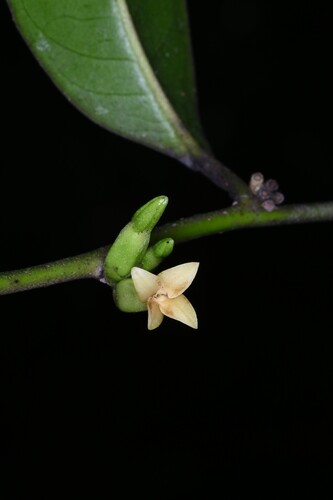
Diospyros diepenhorstii
Miq.
Barrel ebony tree
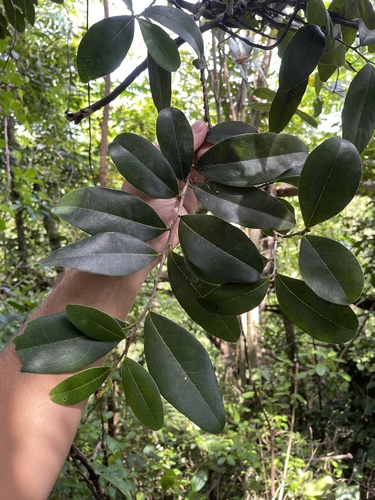
iNaturalist· cc-by-nc
(c) Akmal Idham, some rights reserved (CC BY-NC)
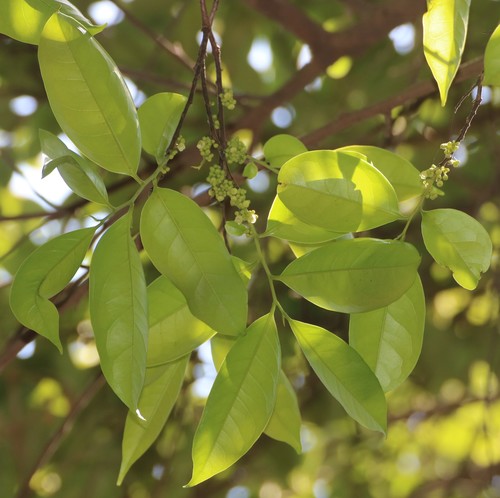
iNaturalist· cc-by-nc
(c) Cheongweei Gan, some rights reserved (CC BY-NC)
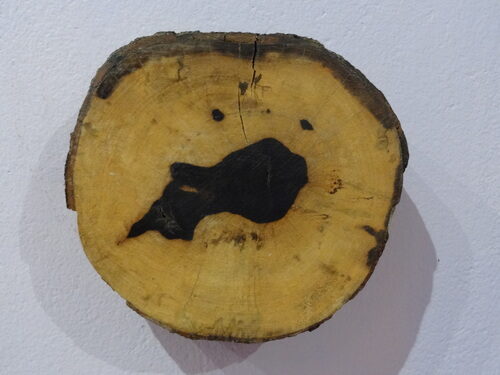
iNaturalist· cc-by-nc
(c) Cheongweei Gan, some rights reserved (CC BY-NC)
Summary
Source: WikipediaDiospyros diepenhorstii is a tree in the family Ebenaceae. It grows up to 30 metres (100 ft) tall. Twigs are brownish to blackish. The fruits are obovoid to oblong-ellipsoid, up to 10 cm (4 in) long. The tree is named for Dutch botanist H. Diepenhorst. Habitat is forests from sea-level to 1,800 metres (6,000 ft) altitude. D. diepenhorstii is found in Peninsular Thailand and from west Malesia to the Philippines.
Description
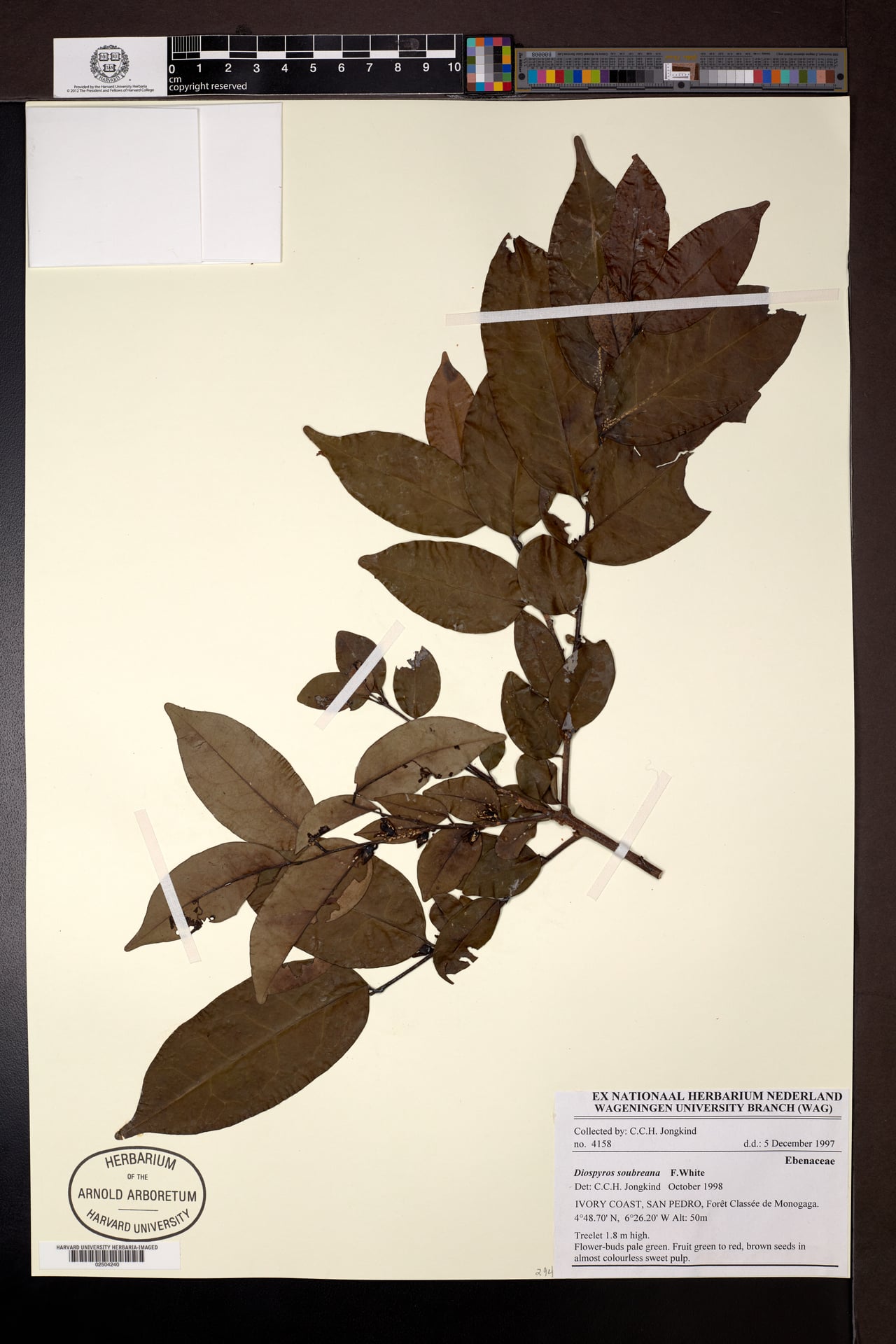
A tree. It grows up to 10-25 m high. It has slender branches. The outside branches either go out horizontal or hang down. The leaves are alternate, oblong and scattered. The leaves are narrowly oblong and 10-40 cm long by 3-12 cm wide. The flowers are usually clustered on the stem. The fruit are compressed hard, shiny and green. The fruit is oval or pear shaped. It is 6-10 cm long by 5-6 cm wide. There are 8-16 seeds.
Edible Uses
The juicy portion of the fruit is eaten raw, though the fruit is acidic.
Traditional Uses
The juicy portion of the fruit is eaten raw. They are acidic.
This uses section is brief — help expand it
Distribution
A tropical plant. It grows in lowland forests. It occurs in the Philippines only in the forest adjoining Laguna and Manila Bay. It grows up to 700 m above sea level.
Where It Grows
Asia, Cambodia, Indochina, Indonesia, Malaysia, Pacific, Philippines, SE Asia, Singapore, Thailand, Vietnam,
Cultivation
The tree sometimes flowers and fruits all year round. A dioecious species, both male and female forms need to be grown if fruit and seed are required.
Propagation
Seed - in general the seed of Diospyros species has a very short viability and so should be sown as soon as possible. The flesh should be removed since this contains germination inhibitors. Sow the seed in a shady position in a nursery seedbed. The sowing media for ebony uses soil and fine sand at the ratio 3:1. The seed is planted horizontally or vertically with the radicle end down, with a sowing depth of 1 - 1½ times the thickness of seed. Distance between the seeds is 3 - 5cm. Seeds are very sensitive to desiccation during germination and early growth, so must be regularly watered at this time. Normally the seed will germinate after one week. As a rule fresh seeds have a high percentage of fertility. The seedlings develop long taproots at an early stage, often before any appreciable elongation of the shoot takes place. The growth of the seedling is decidedly slow .
Other Uses
The heartwood is streaked and mottled, sometimes nearly dead black; it is clearly demarcated from the up to 20cm wide band of reddish or pinkish sapwood. The sapwood sometimes stains more or less to a dull gray. We do not have any more specific information for this species. However, though varying widely in the relative proportion and the colouring of sapwood and heartwood, all the woods of the genus Diospyros are practically indistinguishable as regards their structure, as described below:- Whether or not a given species produces heartwood depends largely on the size the tree has attained, but evidently also on other conditions, as there is a wide variation in the relative amounts of sapwood and heartwood even in individuals of the same species. When produced, the heartwood can be black with rosy, yellowish, brownish, or ashy streaks, sometimes it is nearly or totally black; it is generally sharply demarcated from the thin to very wide band of whitish, yellowish, or red sapwood. The texture is fine, smooth and (especially in the heartwood) very dense; the grain is generally very straight. The wood is hard to very hard; heavy to very heavy; the sapwood is tough and flexible whilst the heartwood is brittle; the heartwood is very durable, the sapwood moderately so. It is difficult to season well, logs almost invariably checking in several directions from the heart outward, while sawn lumber must be stacked carefully and weighted to prevent warping; once thoroughly dried, however, it becomes very stable. Its density makes it difficult to work, but it takes a beautiful surface under sharp tools. Small trees containing little or no heartwood are used locally for posts, beams, joists, rafters, window sills, parts of agricultural implements, etc.; also, in lumbering, small poles are used for skids on account of their hardness, toughness and smooth wearing qualities. The heartwood (or sometimes sap and heart together) is used for scabbards, canes, hilts, tool handles, gunstocks, saw frames, etc.; it is a favorite for musical instruments, especially finger boards and keys of guitars; furniture, cabinetwork, inlaying; paper weights, inkstands and similar desk supplies; the sapwood, which is almost as hard as the heartwood and very much tougher, is an excellent material for T-squares and other drawing instruments, for shuttles, bobbins, spindles, golf-club heads and shafts, axe, pick, and hammer handles, etc.
Production
It flowers and fruits most of the year.
Notes
There are about 485 species of Diospyros mostly in the tropics.
Synonyms
Also Known As
Arang, Balarowin, Belimbing utan, Buey, Jambu dipo, Pohon eben gentong, Thi rapenhorst
References (8)
- Fern, K., 2012, Tropical Species Database http://theferns.info/tropical/
- Milow, P., et al, 2013, Malaysian species of plants with edible fruits or seeds and their evaluation. International Journal of Fruit Science. 14:1, 1-27
- Monsalud, M.R., Tongacan, A.L., Lopez, F.R., & Lagrimas, M.Q., 1966, Edible Wild Plants in Philippine Forests. Philippine Journal of Science. p 461 (As Diospyros copelandii)
- Pham-Hoang Ho, 1999, An Illustrated Flora of Vietnam. Nha Xuat Ban Tre. p 646
- Saw, L.G., LaFrankie, J. V. Kochummen, K. M., Yap S. K., 1991, Fruit Trees in a Malaysian Rain Forest. Economic Botany, Vol. 45, No. 1, pp. 120-136
Show all 8 references Hide references
- Sukarya, D. G., (Ed.) 2013, 3,500 Plant Species of the Botanic Gardens of Indonesia. LIPI p 237
- Verheij, E. W. M. and Coronel, R.E., (Eds.), 1991, Plant Resources of South-East Asia. PROSEA No 2. Edible fruits and nuts. Pudoc Wageningen. p 327
- World Checklist of Useful Plant Species 2020. Royal Botanic Gardens, Kew