Diospyros discolor
A. DC.
Mabolo, Velvet apple
iNaturalist· cc-by-nc-sa
(c) 澎湖小雲雀, some rights reserved (CC BY-NC-SA)
iNaturalist· cc-by-nc
(c) jasmeren, some rights reserved (CC BY-NC)
iNaturalist· cc-by-nc
(c) wanpojun, some rights reserved (CC BY-NC)
Description
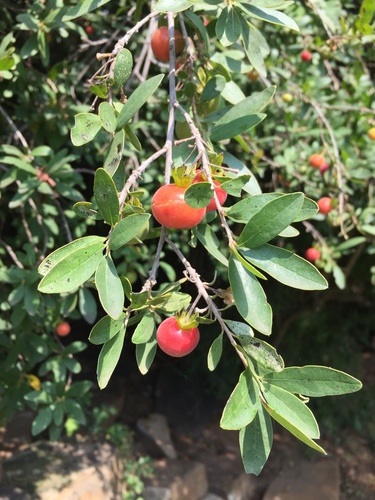
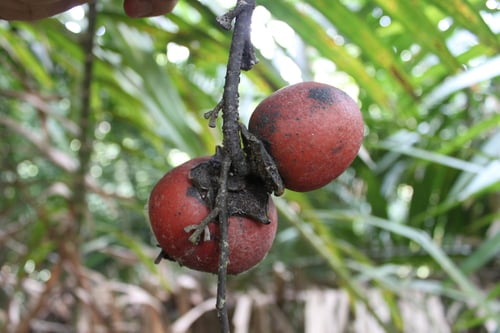
A large tree. It can grow to 20 m or more high. Often it is only a small tree. It is a spreading tree with drooping branches. The leaves are smooth but covered with fine soft hairs. They are 7.5-22.5 cm long by 2.5-7.5 cm wide. The leaves are dark green on the top surface and copper coloured underneath. Flowers are in small clusters of 2-3 together in the axils of leaves. Both male and female flowers occur. These are on separate trees. The flowers are cream and have a slight scent. The fruit are round and 5-8 cm across. The fruit colour is pink to brown. It can be dark red or purple. The fruit have short silky hairs and have the sepals still attached. The flesh is white and sweet but has a cheesy unpleasant smell. The fruit are like a flat persimmon but have a velvety appearance. Often fruit contain many large seeds. Seedless fruit also occur.
Edible Uses
The ripe fruit flesh is eaten raw after removing the hairs and skin. The fruit can also be made into jellies or juice.
Traditional Uses
The fruit is eaten fresh or made into jellies or juice. The fleshy portion of the fruit is eaten raw when ripe. The hairs and skin are removed.
This uses section is brief — help expand it
Distribution
A tropical and subtropical plant. It suits the hot humid tropical lowlands. Mature trees can withstand light frost for short times. Young trees do not tolerate low temperatures. It is better to have trees in sheltered places protected from cold winds. Slightly acid, moist and free draining soils are best. It can grow in sun or light shade. It cannot tolerate salt. Plants grow naturally in the Philippines. It is common and widely distributed in the forests of the Philippines. It has become established wild in the bush in the Gazelle Peninsula of Papua New Guinea. It grows from sea level to 200m altitude in Taiwan. It suits hardiness zones 9-12.
Where It Grows
Africa, Asia, Australia, Bangladesh, Bermuda, Brazil, Caribbean, Central America, China, Colombia, Cook Islands, Cuba, Guiana, Guyana, Hawaii, Honduras, India, Indochina, Indonesia, Jamaica, Malaysia, Mexico, Myanmar, Northeastern India, Pacific, Papua New Guinea, Philippines, PNG, Puerto Rico, SE Asia, Singapore, South America, St Lucia, Taiwan, Thailand, Trinidad, USA, Vietnam, West Africa, West Indies,
Cultivation
They are cultivated for the fruit popularly known as mabalo. Trees are mostly grown from seed. Plants are normally grown from seed. A spacing of 5 m is needed. Trees should be left unattended prior to flowering. It is possible to do grafting and air-layering.
Production
A slow growing tree. It may take three years for seedling trees to be large enough to transplant. Fruiting is not normally seasonal. Fruit ripening takes 2-4 months from flowering.
Other Information
The fruit are popular and widely used and sold. It is a cultivated food plant. At present only of minor importance in some coastal areas of Papua New Guinea. It is better suited to Papua New Guinea than the Japanese persimmon (Diospyros kaki ).
Notes
There are about 485 species of Diospyros mostly in the tropics.
Nutrition
| Part | Moisture | kJ | kcal | Protein | Vit A | Vit C | Iron | Zinc |
|---|---|---|---|---|---|---|---|---|
| Fruit | 77 | 210 | 50 | 0.8 | — | — | — | — |
Synonyms
Also Known As
Bilayati gab, Bisbul, Buah choklat, Buah lemak, Buah mantega, Buah mentaga, Buah sakhlat, Butterfruit, Camagong, Chalta, Hong nhung, Kadiba, Kadiba-thi, Kamagong, Marit, Persimo, Persimonio, Pohon bisbul, Tabang, Talang, Tayok-te, Yi se shi
References (64)
- Alegado, A. M. & De Guzman, R. B., 2014, Indigenous food crops of the Aetas tribe in the Philippines and their traditional methods of food preparation. in Promotion of Underutilized Indigenous Food Resources for Food Security and Nutrition in Asia and Pacific. FAO. Bangkok p 160 (As Diospyros philippensis)
- Ambasta, S.P. (Ed.), 2000, The Useful Plants of India. CSIR India. p 176 (As Diospyros discolor)
- Arora, R. K., 2014, Diversity in Underutilized Plant Species - An Asia-Pacific Perspective. Bioversity International. p 66 (Also as Diospyros blancoi)
- Aubrev. et al., eds. 1961-. Flore du Gabon. (As Diospyros philippensis)
- BARC, 2016, State of Biodiversity for Food and Agriculture in Bangladesh. Bangladesh Agricultural Research Council.
Show all 64 references Hide references
- Barwick, M., 2004, Tropical and Subtropical Trees. A Worldwide Encyclopedic Guide. Thames and Hudson p 149 (As Diospyros blancoi)
- Brown, W.H., 1920, Wild Food Plants of the Philippines. Bureau of Forestry Bulletin No. 21 Manila. p 148 (As Diospyros discolor)
- Burkill, H. M., 1985, The useful plants of west tropical Africa, Vol. 1. Kew. (As Diospyros blancoi)
- Burkill, I.H., 1966, A Dictionary of the Economic Products of the Malay Peninsula. Ministry of Agriculture and Cooperatives, Kuala Lumpur, Malaysia. Vol 1 (A-H) p 841 (As Diospyros discolor)
- Carig, Elizabeth T., 2020, Guidebook on Native Trees within the Quirino Forest Landscape. Plaridel, Bulacan, St. Andrew Publishing House. p 71 (As Diospyros discolor)
- Chin, H.F., & Yong, H.S., 1996, Malaysian Fruits in Colour. Tropical press, Kuala Lumpur p 65 (As Diospyros discolor)
- Coronel, R.E., 1982, Fruit Collections in the Philippines. IBPGR Newsletter p 6 (As Diospyros blancoi)
- Darley, J.J., 1993, Know and Enjoy Tropical Fruit. P & S Publishers. p 27 (As Diospyros discolor)
- Dassan. & Fosb. 1980-. A revised handbook to the flora of Ceylon. (As Diospyros philippensis)
- H. G. A. Engler & K. A. E. Prantl, Nat. Pflanzenfam. 4(1):164. 1891 (non D. philippinensis A. DC. 1844) (As Diospyros philippensis)
- Facciola, S., 1998, Cornucopia 2: a Source Book of Edible Plants. Kampong Publications, p 92 (As Diospyros discolor)
- Flora reipublicae popularis sinicae. (F China) [=D. philippensis (Desr.) Guerke]. (As Diospyros philippensis)
- Flora of China. Vol. 15, p 232 and Flora of China. www.eFloras.org (As Diospyros philippensis)
- French, B.R., 1986, Food Plants of Papua New Guinea, A Compendium. Asia Pacific Science Foundation p 289 (As Diospyros philippensis)
- Hazarika, B. et al. (2020). An overview of the unexplored underutilized fruit crops of Assam, India. Journal of Applied and Natural Science, 12(3): 442 - 453 (As Diospyros blancoi)
- Hearne, D.A., & Rance, S.J., 1975, Trees for Darwin and Northern Australia. AGPS, Canberra p 53 (As Diospyros discolor)
- Howard, R. A., 1971. Baileya 18:26. (As Diospyros philippensis)
- Howard, R., 1974-. Flora of the lesser Antilles. (As Diospyros philippensis)
- Hedrick, U.P., 1919, (Ed.), Sturtevant's edible plants of the world. p 276 (As Diospyros discolor)
- Jardin, C., 1970, List of Foods Used In Africa, FAO Nutrition Information Document Series No 2.p 133 (As Diospyros discolor)
- Jayaraman, U., & Singh, V., 1987, A Census of Edible Species of Diospyros L. in India. J. Econ. Tax. Bot. Vol. 10 No. 2 pp 416-419 (As Diospyros discolor) (As Diospyros philippensis)
- John, L., & Stevenson, V., 1979, The Complete Book of Fruit. Angus & Robertson p 183 (As Diospyros discolor)
- Kiple, K.F. & Ornelas, K.C., (eds), 2000, The Cambridge World History of Food. CUP p 1804 (As Diospyros discolor)
- Knapp., S. and Gilbert, M. G., 2002, Proposal to Conserve the Name Diospyros discolor against Cavanillea philippensis (Ebenaceae) Taxon, Vol. 51, No. 3, pp. 579-580 (Also as Diospyros philippensis)
- Kuo, W. H. J., (Ed.) Taiwan's Ethnobotanical Database (1900-2000), http://tk.agron.ntu.edu.tw/ethnobot/DB1.htm (As Diospyros philippensis)
- Lembaga Biologi Nasional, 1977, Buah-Buahan, Balai Pustaka, Jakarta. p 22 (As Diospyros philippensis)
- Llamas, K.A., 2003, Tropical Flowering Plants. Timber Press. p 185 (As Diospyros blancoi)
- Macmillan, H.F. (Revised Barlow, H.S., et al) 1991, Tropical Planting and Gardening. Sixth edition. Malayan Nature Society. Kuala Lumpur. p 298 (As Diospyros blancoi)
- Martin, F. W., et al, 1987, Perennial Edible Fruits of the Tropics. USDA Handbook 642 p 25
- Merrill 1922-1926. An enumeration of Philippine flowering plants. (As Diospyros philippensis)
- Miguel, E., et al, 1989, A checklist of the cultivated plants of Cuba. Kulturpflanze 37. 1989, 211-357 (As Diospyros blancoi)
- Milow, P., et al, 2013, Malaysian species of plants with edible fruits or seeds and their evaluation. International Journal of Fruit Science. 14:1, 1-27 (As Diospyros blancoi)
- Monsalud, M.R., Tongacan, A.L., Lopez, F.R., & Lagrimas, M.Q., 1966, Edible Wild Plants in Philippine Forests. Philippine Journal of Science. p 461 (As Diospyros philippensis)
- Morton, Julia F., 1987, Fruits of Warm Climates. Creative Resources Systems, Inc. . p. 418
- Omawale, 1973, Guyana's edible plants. Guyana University, Georgetown p 33 (As Diospyros discolor)
- Pasha, M. K. & Uddin, S. B., 2019, Minor Edible Fruits of Bangladesh. Bangladesh J. Plant Taxon. 26(2): 299–313 (As Diospyros blancoi)
- Peekel, P.G., 1984, (Translation E.E.Henty), Flora of the Bismarck Archipelago for Naturalists, Division of Botany, Lae, PNG. p 433, 434 (As Diospyros discolor)
- Pham-Hoang Ho, 1999, An Illustrated Flora of Vietnam. Nha Xuat Ban Tre. p 642 (As Diospyros philippensis)
- Priyadi, H., et al, Five hundred plant species in Gunung Halimun Salak National Park West Java. A checklist including Sundanese names, distribution and use. CIFOR, FFPRI, SLU p 24
- Prodr. 8:237. 1844 (As Diospyros blancoi)
- PROSEA (Plant Resources of South East Asia) handbook, Volume 2, 1991, Edible fruits and nuts. (As Diospyros blancoi)
- Roa, J. A. G. & Boada, D. S. G., 2018, Fundación para el Fortalecimiento de la Fruticultura y Plantas Alimenticias no Convencionales en Colombia.
- Segura, S., et al, 2018, The edible fruit species in Mexico. Genet Resour Crop Evol (2018) 65:1767–1793 (As Diospyros blancoi)
- Staples, G.W. and Herbst, D.R., 2005, A tropical Garden Flora. Bishop Museum Press, Honolulu, Hawaii. p 271 (Drawing) (As Diospyros blancoi)
- Sukarya, D. G., (Ed.) 2013, 3,500 Plant Species of the Botanic Gardens of Indonesia. LIPI p 235
- Tankard, G., 1990, Tropical fruit. An Australian Guide to Growing and using exotic fruit. Viking p 66 (As Diospyros discolor) (Also as Diospyros philippensis)
- Tate, D., 1999, Tropical Fruit. Archipelago Press. Singapore. p 56 (As Diospyros blancoi)
- Terrell et al. 1986. Agric. Handb. no. 505.
- USDA, ARS, National Genetic Resources Program. Germplasm Resources Information Network - (GRIN). [Online Database] National Germplasm Resources Laboratory, Beltsville, Maryland. Available: www.ars-grin.gov/cgi-bin/npgs/html/econ.pl (10 April 2000) (As Diospyros blancoi)
- van Wyk, B., 2005, Food Plants of the World. An illustrated guide. Timber press. p 179 (As Diospyros blancoi)
- Verheij, E. W. M., and R. E. Coronel, eds. 1991. Edible fruits and nuts. In: E. W. M. Verheij & R. E. Coronel (eds.), Plant Resources of South-East Asia (PROSEA). 2:151. (As Diospyros philippensis)
- Whitmore, T. C., I.G.M. Tantra & U. Sutisna (eds.). 1989. Tree flora of Indonesia, Check list for Kalimantan (As Diospyros philippensis)
- Whitmore, T. C., I.G.M. Tantra & U. Sutisna (eds.). 1989. Tree flora of Indonesia, Check list for Sulawesi. (As Diospyros philippensis)
- Wiersema, J. H. & Leon, B., 2013, World Economic Plants. A Standard Reference CRC Press. 2nd Ed. p 249 (As Diospyros blancoi)
- Woodson & Schery, eds. 1943-1980. Flora of Panama. (As Diospyros philippensis)
- World Checklist of Useful Plant Species 2020. Royal Botanic Gardens, Kew
- www.tradewindsfruit.com
- Zawiah, N. & Othaman, H., 2012, 99 Spesies Buah di FRIM. Institut Penyelidikan Perhutanan Malaysia. p 96 (As Diospyros blancoi)
- Zeven, A. C. & de West, J. M. J., 1982, Dictionary of cultivated plants and their regions of diversity. Wageningen. p 52
More from Ebenaceae
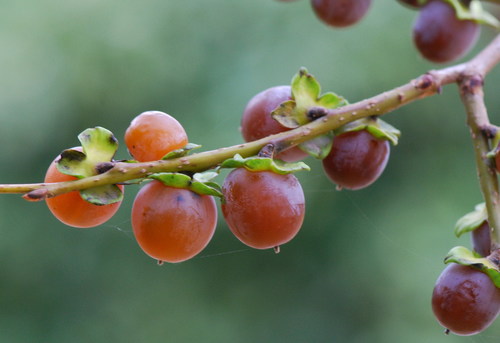
Diospyros lotus
Lotus persimmon, Date plum, Dateplum persimmon
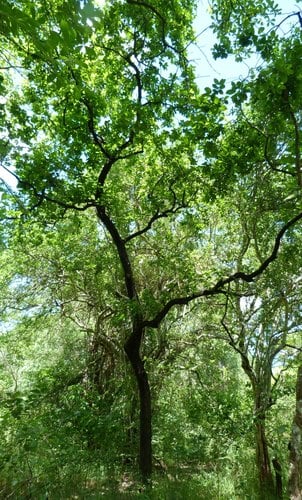
Diospyros loureiroana
Dye diospyros, Dye star-apple
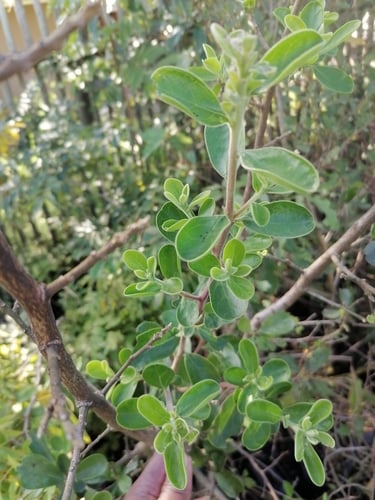
Diospyros lycioides
Red star apple, Bluebush star-apple, Quilted bluebush, Karoo blue bush
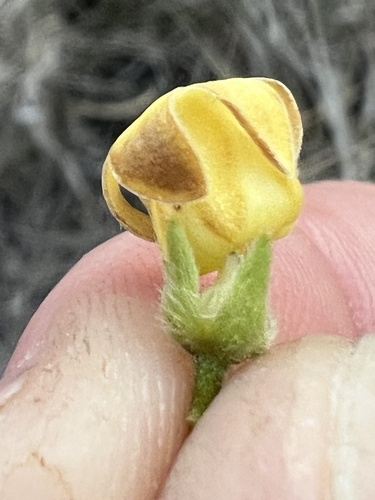
Diospyros lycioides subsp. guerkei
Quilted bluebush
Diospyros lycioides subsp. sericea
Kalahari star-apple, Blue bush, Monkey-plum
Diospyros macrophylla
Red ebony tree