Diospyros glandulosa
Lace
iNaturalist· cc-by-nc
(c) Wangworn Sankamethawee, some rights reserved (CC BY-NC), uploaded by Wangworn Sankamethawee
iNaturalist· cc-by-nc
(c) Wangworn Sankamethawee, some rights reserved (CC BY-NC)
Description
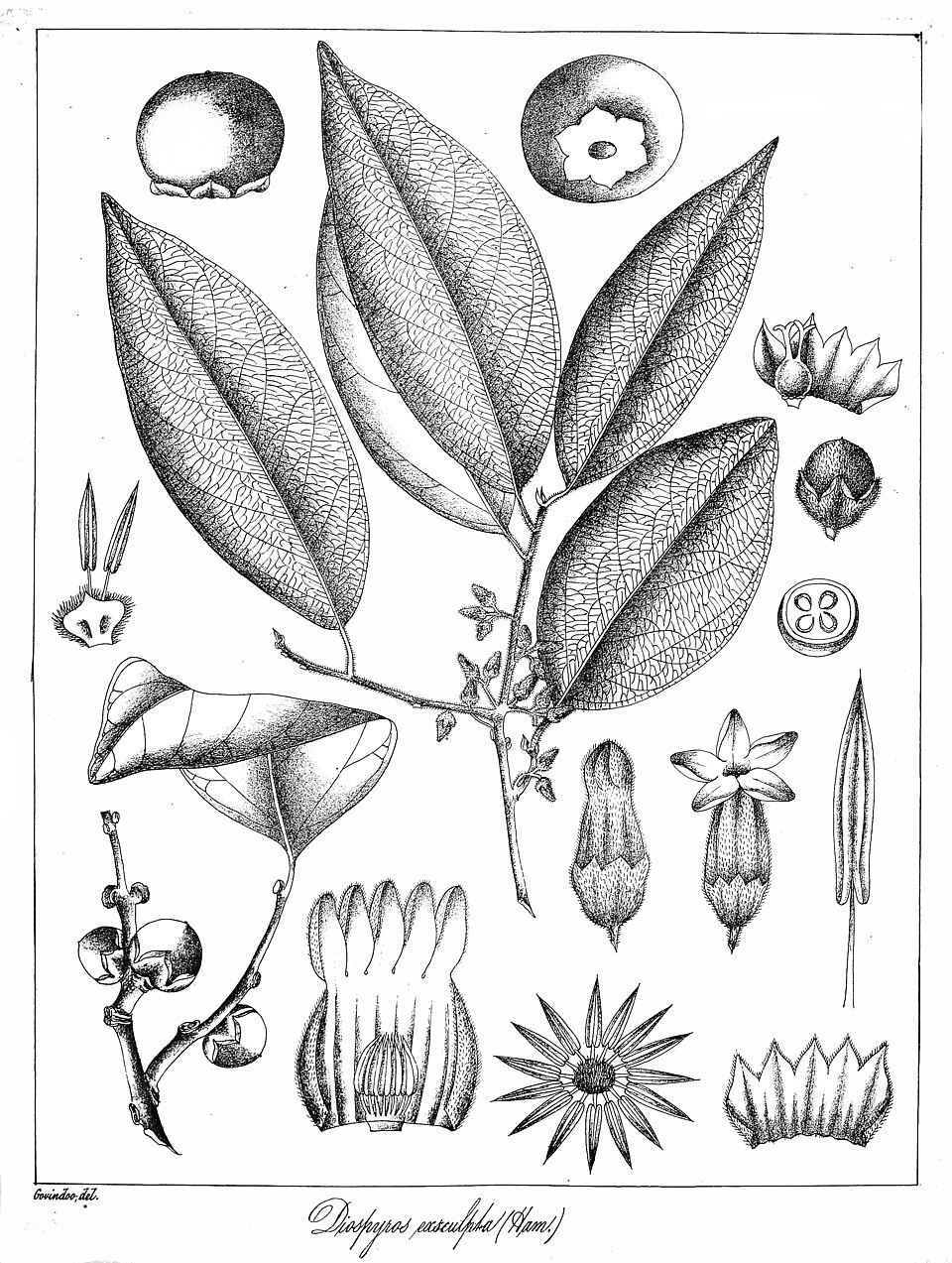
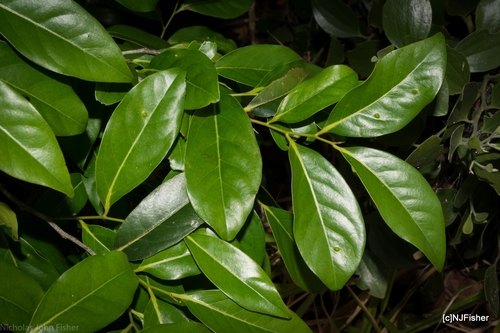
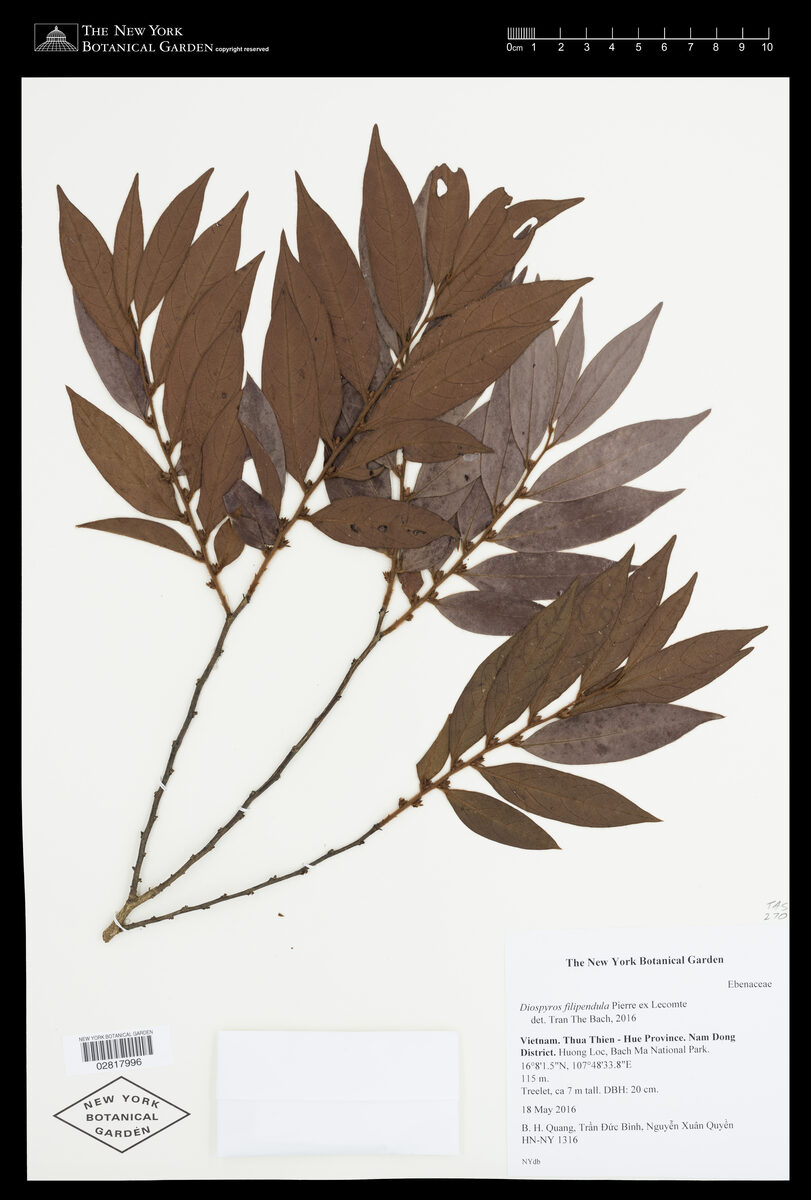
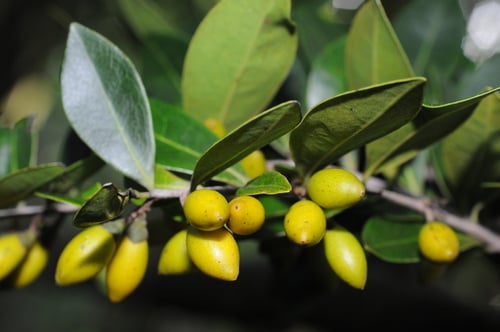
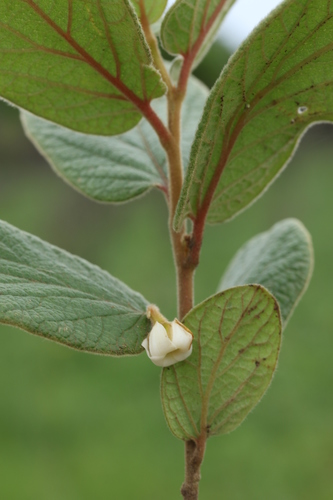
An evergreen tree. It grows 15-20 m tall. The leaves are alternate, oval and taper to a tip. They are 12 cm long and 6 cm wide. The male flowers are in groups of 3-6 and the female flowers occur singly. The fruit are round and 3-4 cm across.
Edible Uses
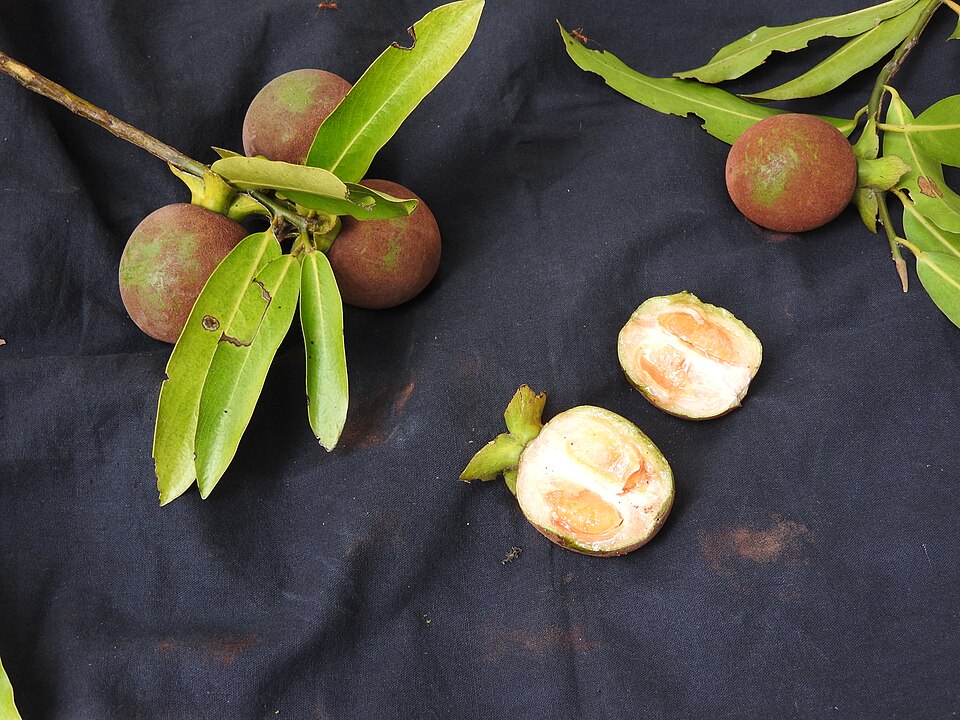
Fruit - raw. Eaten when fully ripe. The yellow-orange, succulent, globose fruit is around 25 - 40mm in diameter.
Distribution
It is a tropical plant. It grows in cool mountainous areas.
Where It Grows
Asia, Indochina, Laos, Myanmar, SE Asia, Thailand, Vietnam,
Cultivation
A fast-growing tree. A dioecious species, both male and female forms need to be grown if fruit and seed are required.
Propagation
Seed - in general the seed of Diospyros species has a very short viability and so should be sown as soon as possible. The flesh should be removed since this contains germination inhibitors. Sow the seed in a shady position in a nursery seedbed. The sowing media for ebony uses soil and fine sand at the ratio 3:1. The seed is planted horizontally or vertically with the radicle end down, with a sowing depth of 1 - 1½ times the thickness of seed. Distance between the seeds is 3 - 5cm. Seeds are very sensitive to desiccation during germination and early growth, so must be regularly watered at this time. Normally the seed will germinate after one week. As a rule fresh seeds have a high percentage of fertility. The seedlings develop long taproots at an early stage, often before any appreciable elongation of the shoot takes place. The growth of the seedling is decidedly slow .
Other Uses
A good quality timber, it is used for ornamental carvings and cabinet work. The tree is planted as a pioneer species in northern Thailand in reforestation projects to restore native woodland - it is planted in degraded woodland and open areas in a mix with various other species that all have the ability to grow fast; produce dense, weed-suppressing crowns; and attract seed-dispersing wildlife, particularly birds and bats.
Notes
This is possibly the plant from which Diospyros kaki developed.
Also Known As
Kluai-ruesi, Mai kua thoun, Te, Thi tuyen
References (2)
- Schmidt-Vogt, D., 2001, Secondary Forests in Swidden Agriculture in the Highland of Thailand. Journal of tropical Forest Science 13(4): 748-767
- Utsunomiya, N. et al, 1998, Diospyros Species in Thailand: Their Distribution, Fruit Morphology and Uses. Economic Botany, Vol. 52, No. 4, pp. 343-351