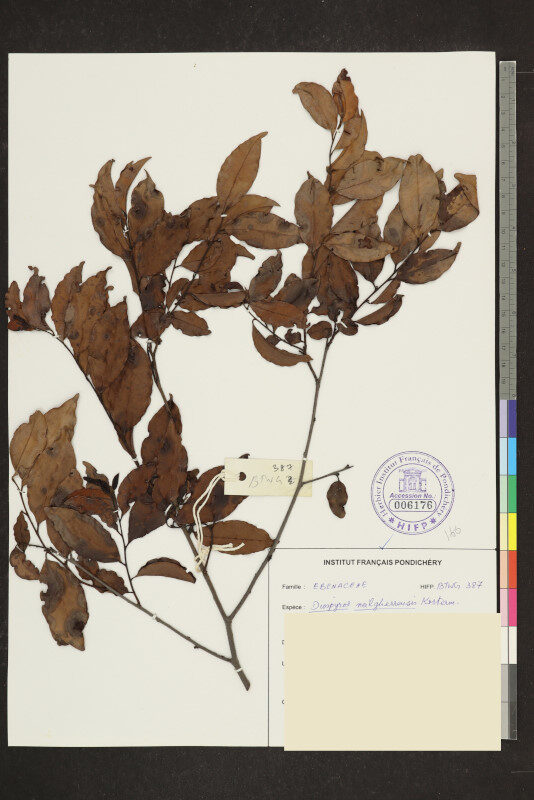
Diospyros australis
(R. Br.) Hiern
Black plum, Grey plum, Yellow persimmon
iNaturalist· cc-by-nc
(c) Emmett Weatherford, some rights reserved (CC BY-NC)
iNaturalist· cc-by-nc
(c) Emmett Weatherford, some rights reserved (CC BY-NC)
iNaturalist· cc-by-nc
(c) Phil Zylstra, some rights reserved (CC BY-NC)
Summary
Source: WikipediaDiospyros australis is the most southerly of the group of some 450 ebonies and persimmons. It is a shrub or small tree growing in rainforests of seaward eastern Australia. The habitat is in a variety of different rainforest forms, though not often seen in the cool temperate rainforests. The range of natural distribution is from Durras Lake (35° S) near Batemans Bay in south east New South Wales, to Atherton (17° S) in tropical Queensland. Common names include black plum and yellow persimmon. "Grey plum", sometimes used for this species, usually denotes its northern relative D. pentamera. Junior synonyms of D. australis are: Cargillia australis R.Br. Diospyros cargillia F.Muell. Diospyros microcarpa Gürke Maba cargilia F.Muell.
Description
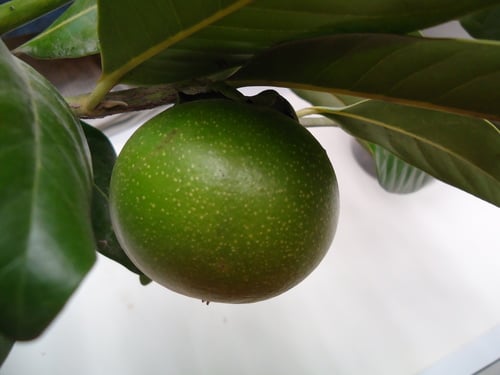
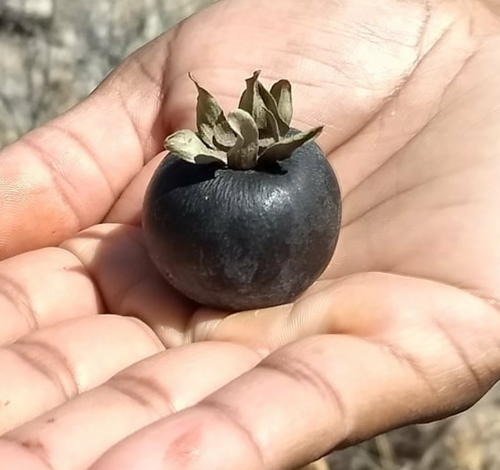
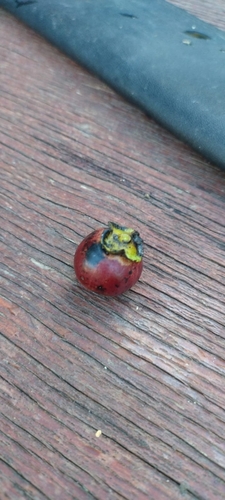
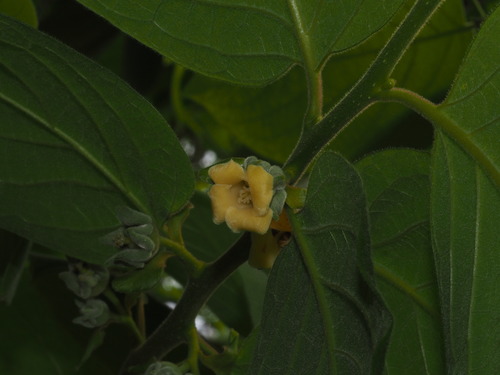
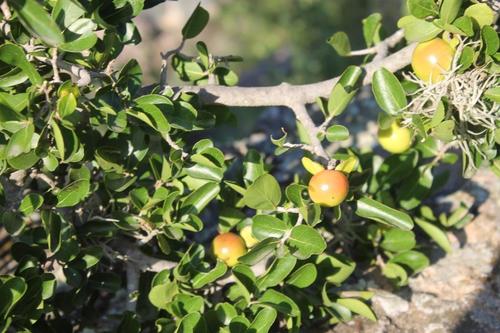
A small tree. It grows 4-10 m high. The leaves are oval with a blunt tip. They are dark green and shiny above and pale green underneath. They are 2.5-8 cm long by 1-2.5 cm wide. They occur in two regular rows along the branch. The male and female flowers are separate. Male flowers are yellowish and 0.5 cm long. They are in clusters in the axils of leaves. Female flowers are 0.8 cm long and occur either singly or 2-3 in the axils of leaves. Flowers are on the underside of the stem. Fruit are black, oval and fleshy. They are 1.5-2 cm long. There is a single seed about 0.9 cm long. The fruit is edible.
Edible Uses
The fruit is eaten fresh.
Traditional Uses
The fruit is eaten.
This uses section is brief — help expand it
Distribution
A tropical plant. They need moist conditions and a well-drained soil. Shade is needed when young. In tropical Queensland it grows between 20-1120 m altitude. It grows in drier rainforest. Mt Cootha Botanical Gardens. Hobart Botanical Gardens.
Where It Grows
Australia*, Tasmania,
Cultivation
Plants are grown from seed which must be planted fresh.
Notes
There are about 485 species of Diospyros mostly in the tropics.
Synonyms
Also Known As
Rainforest ebony
References (14)
- Anon., 2003, Native Plants for the Fitzroy basin. Society for Growing Australian Plants Inc. (Rockhampton Branch) p 46
- Bodkin, F., 1991, Encyclopedia Botanica. Cornstalk publishing, p 346
- Cherikoff V. & Isaacs, J., The Bush Food Handbook. How to gather, grow, process and cook Australian Wild Foods. Ti Tree Press, Australia p 199
- Cooper, W. and Cooper, W., 2004, Fruits of the Australian Tropical Rainforest. Nokomis Editions, Victoria, Australia. p 154
- Cribb, A.B. & J.W., 1976, Wild Food in Australia, Fontana. p 75
Show all 14 references Hide references
- Edible and Useful Native Plants (off internet)
- Elliot, W.R., & Jones, D.L., 1984, Encyclopedia of Australian Plants suitable for cultivation. Vol 3. Lothian. p 283
- Hibbert, M., 2002, The Aussie Plant Finder 2002, Florilegium. p 87
- Melzer, R. & Plumb, J., 2011, Plants of Capricornia. Belgamba, Rockhampton. p 103
- Pearson, S. & A., 1992, Rainforest Plants of Eastern Australia. Kangaroo Press p 88
- Townsend, K., 1994, Across the Top. Gardening with Australian Plants in the tropics. Society for Growing Australian Plants, Townsville Branch Inc. p 161
- Trans. Cambridge Philos. Soc. 12:54, 246. 1873
- Williams, J.B., Harden, G.J., and McDonald, W.J.F., 1984, Trees and shrubs in rainforests of New South Wales and Southern Queensland. Univ. of New England, Armidale. p 95
- Yallakool Reserve Plant List July 1, 2009 Off internet