Diospyros tetrasperma
Sw.
Clamberry persimmon, Wattle tree
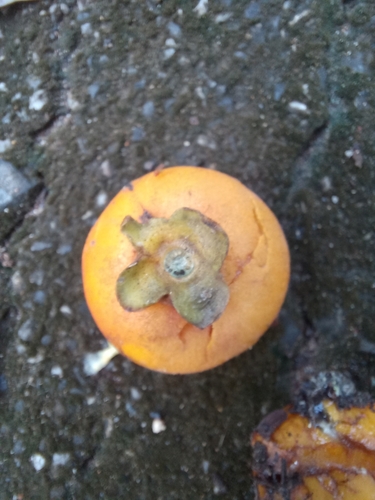
iNaturalist· cc-by-nc
(c) victornc, some rights reserved (CC BY-NC), uploaded by victornc
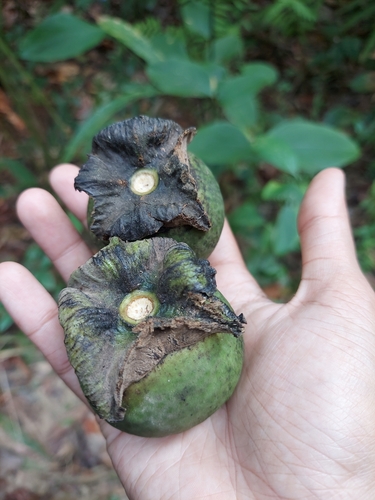
iNaturalist· cc-by-nc
(c) victornc, some rights reserved (CC BY-NC), uploaded by victornc
iNaturalist· cc-by-nc
(c) victornc, some rights reserved (CC BY-NC), uploaded by victornc
Description
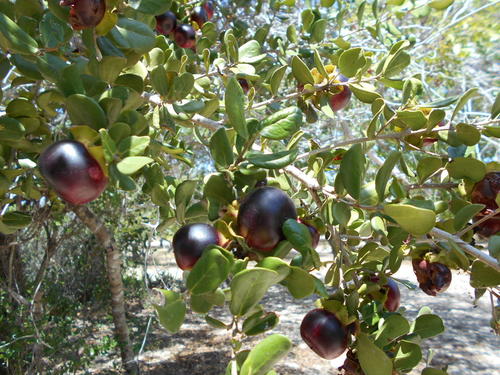
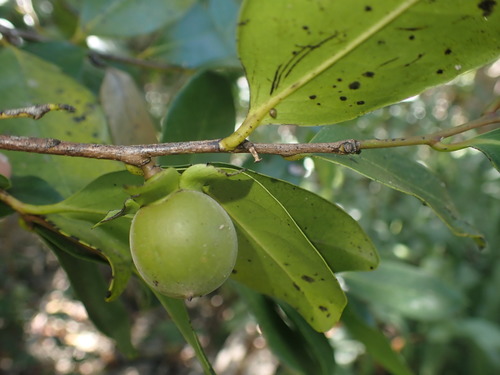
A tree. It grows 6-12 m high. The crown is round and dense. The trunk is upright and 30-50 cm across. The bark cracks into plates. The leaves are simple and alternate. They have a wavy edge. They are 6-12 cm long by 4-6 cm wide. The flowers occur singly in the axils of leaves. They are greenish-yellow. The fruit are a flattened round shape. They become greenish-purple when ripe. They have 4-8 seeds.
Edible Uses
The fruit are eaten fresh, though they are slightly bitter.
Traditional Uses
The fruit are eaten but are slightly bitter.
This uses section is brief — help expand it
Distribution
A tropical plant. It grows in broadleaf semi-deciduous forest in Brazil.
Where It Grows
Belize, Brazil, Central America, Cuba, Dominican Republic, Guatemala, Haiti, Hispaniola, Jamaica, Mexico, North America, South America, West Indies,
Cultivation
Plants are grown from seed. The ripe fruit are put in a heap to allow them to soften to make it more easy to reove the seeds. The seeds are washed out in a seive and planted fresh. Seeds germinate in 70-90 days.
Synonyms
Also Known As
Maria-preta, Olho-de-boi
References (8)
- Bortolotto, I. M., et al, 2018, Lista preliminar das plantas alimenticias nativas de Mato Grosso do Sul, Brasil. Iheringia, Serie Botanica, Porto Alegre, 73 (supl.):101-116 (As Diospyros obovata)
- FMNH Botany Collections Database - Mesoamerican Ethnobotany emuweb.field museum.org (As Diospyros cuneata)
- Gouldstone, S., 1983, Growing your own Food-bearing Plants in Australia. Macmillan p 122
- Grandtner, M. M., 2008, World Dictionary of Trees. Wood and Forest Science Department. Laval University, Quebec, Qc Canada. (Internet database http://www.WDT.QC.ca)
- Hedrick, U.P., 1919, (Ed.), Sturtevant's edible plants of the world. p 278
Show all 8 references Hide references
- Kew Plants of the World On line
- Lorenzi, H., 2002, Brazilian Trees. A Guide to the Identification and Cultivation of Brazilian Native Trees. Vol. 02 Nova Odessa, SP, Instituto Plantarum p 106 (As Diospyros obovata)
- Plants of Haiti Smithsonian Institute http://botany.si.edu/antilles/West Indies