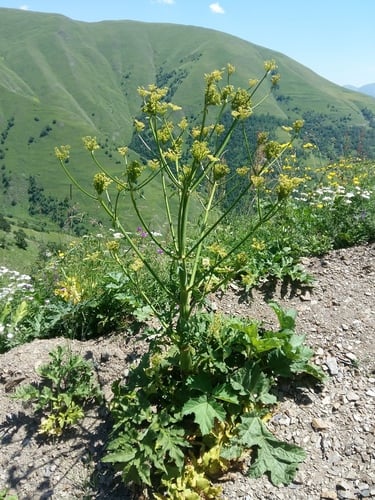
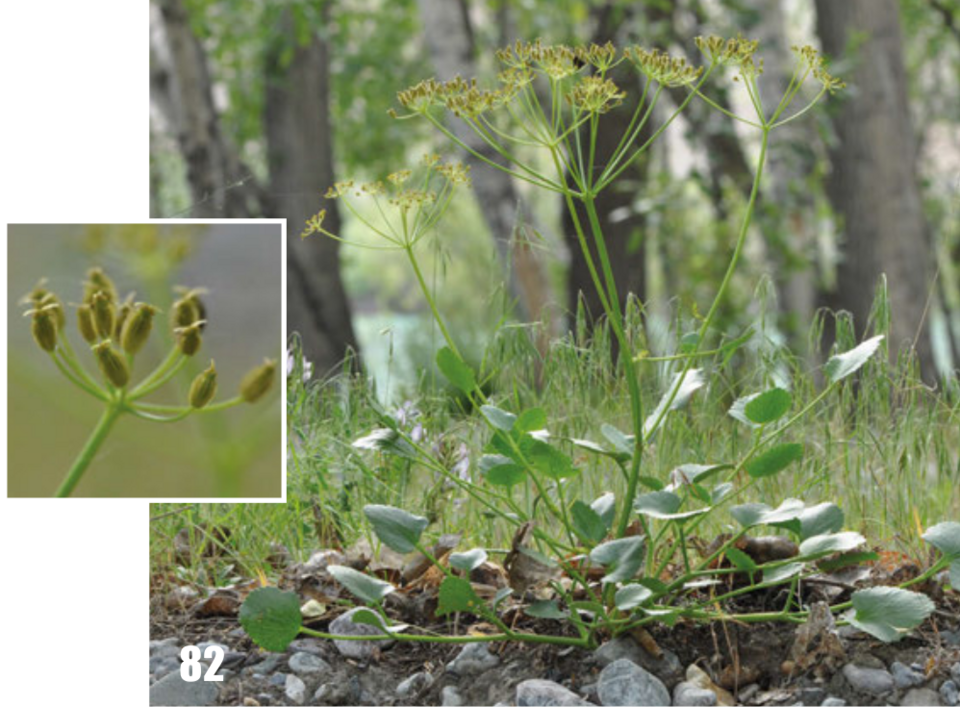
Aethusa cynapium
L.
Fool’s parsley
iNaturalist· cc-by-sa
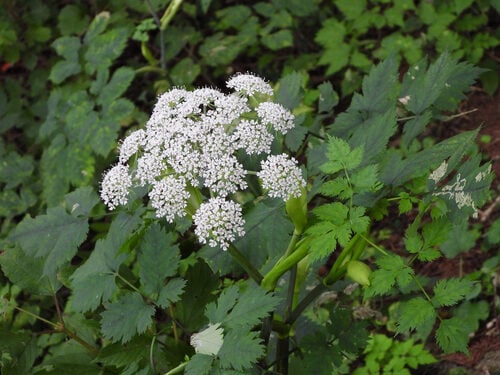
(c) Gilles San Martin, some rights reserved (CC BY-SA), uploaded by Gilles San Martin
iNaturalist· cc-by
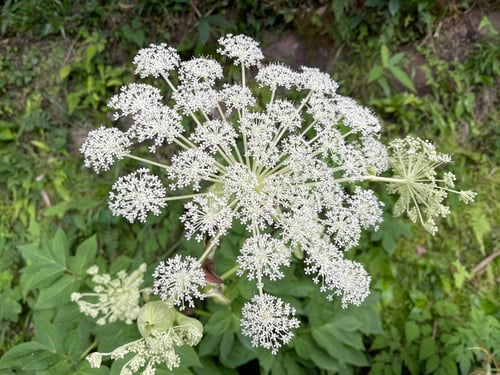
(c) Sigitas Juzėnas, some rights reserved (CC BY), uploaded by Sigitas Juzėnas
iNaturalist· cc-by-nc
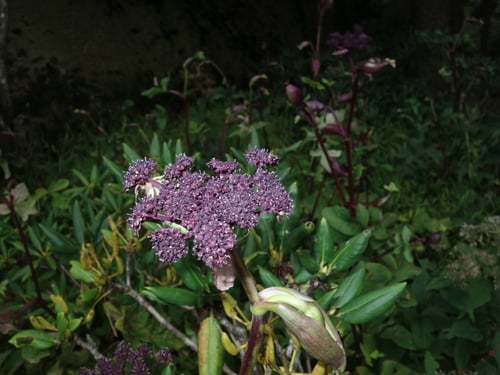
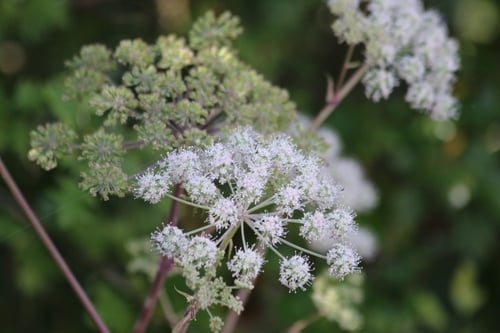
(c) nz_willowherb, some rights reserved (CC BY-NC)
Summary
Source: WikipediaAethusa cynapium (fool's parsley, fool's cicely, or poison parsley) is an annual (rarely biennial) herb in the flowering plant family Apiaceae, native to Europe, western Asia, and northwest Africa. It is the only member of the genus Aethusa. It is related to hemlock and water-dropwort, and like them it is poisonous, though less so than hemlock. It has been introduced into many other parts of the world and is a common weed in cultivated ground.
Description
An annual plant which grows 1.2 m high. The root is white and spindle shaped. The stem is slender and has bluish flecks. The leaves are dark green above and yellowish-green underneath. They are divided 3 times and the leaflets are divided. The flowers are white and in compound groups.
Edible Uses
The leaves can technically be eaten raw or cooked, but consuming this plant is strongly inadvisable given its toxicity.
Traditional Uses
CAUTION: The entire plant is poisonous. It is probably less poisonous once dried. The leaves have been recorded as eaten after cooking. It is probably best not to eat this plant.
Medicinal Uses
Although fairly toxic, fool's parsley has occasionally been used in folk medicine. The herb is sedative and stomachic, and has been used to treat gastro-intestinal problems — particularly in children — as well as convulsions and summer diarrhoea. Extreme caution is advised in any use of this herb.
Known Hazards
The entire plant is poisonous though less so than Conium maculatum (q.v.). Small amounts can cause pain, confusion of vision and vomiting. The dried plant might be safe to eat.
Distribution
It is a temperate plant. It will grow in most soils.
Where It Grows
Andorra, Australia, Belgium, Britain, Europe*, France, Georgia, Germany, Luxembourg, North America, Turkey,Türkiye,
Cultivation
We have no details for this species, see its native habitat above for ideas on its cultivation needs. All parts of the plant have an unpleasant smell reminiscent of hemlock (Conium maculatum).
Propagation
No specific details are available for this species, but sowing seed in situ as soon as it is ripe, or in spring, is suggested.
Other Uses
None known.
Also Known As
Mariamdzmara
References (5)
- Bodkin, F., 1991, Encyclopedia Botanica. Cornstalk publishing, p 55
- Bussman, R. W., et al, 2016, A comparative ethnobotany of Khevsureti, Samtskhe-Javakheti, Tusheti, Svaneti, and Racha-Lechkhumi, Republic of Georgia (Sakartvelo), Caucasus. Journal of Ethnobiology and Ethnomedicine (2016) 12:43
- Bussman, R. W., et al, 2021, Unity in diversity—food plants and fungi of Sakartvelo (Republic of Georgia), Caucasus. Journal of Ethnobiology and Ethnomedicine (2021) 17:72 p 5
- Plants for a Future database, The Field, Penpol, Lostwithiel, Cornwall, PL22 0NG, UK. http://www.scs.leeds.ac.uk/pfaf/
- Sp. pl. 1:256. 1753