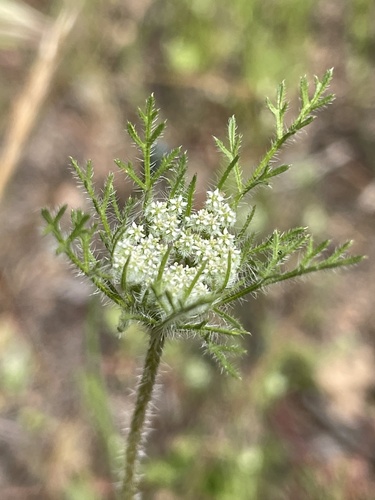
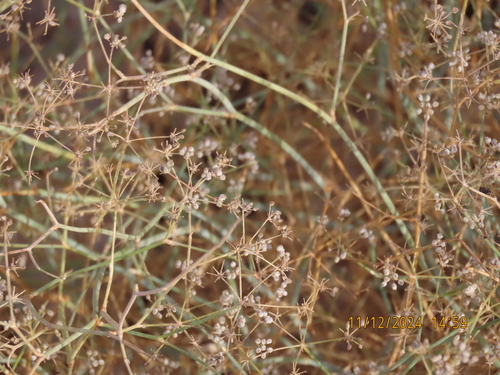
Eryngium campestre
L.
Field eryngo, Snakeroot
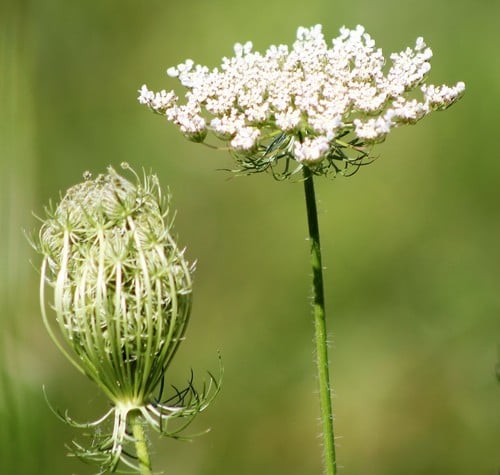
iNaturalist· cc-by-nc
(c) junjadores, some rights reserved (CC BY-NC), uploaded by junjadores
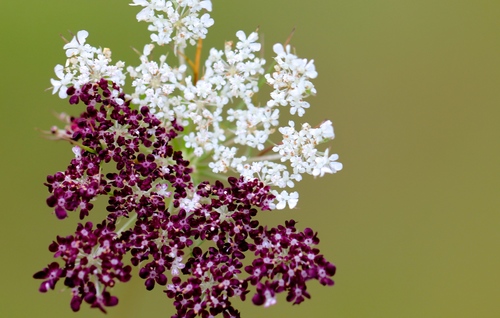
iNaturalist· cc-by-sa
(c) Andreas Rockstein, some rights reserved (CC BY-SA)
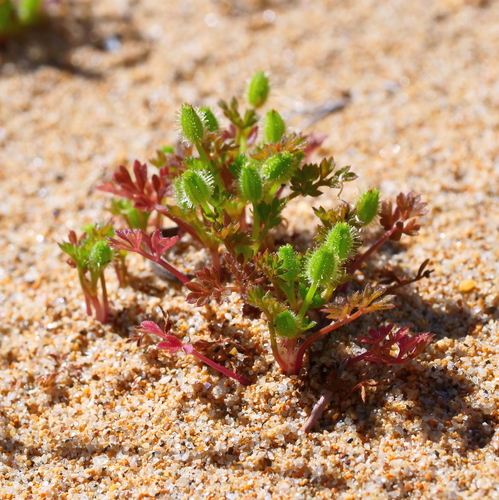
iNaturalist· cc-by-sa
(c) Andreas Rockstein, some rights reserved (CC BY-SA)
Summary
Source: WikipediaEryngium campestre, known as field eryngo, or Watling Street thistle, is a species of Eryngium, which is also used medicinally. A member of the carrot family Apiaceae, it is a hairless, greenish perennial plant with tough spiny leaves.
Description
A short perennial herb. The leaves at the base are leathery. They are oval and have 3 lobes. They have spiny teeth. The stalks do not have wings. The leaves on the stems do not have stalks. They clasp the stem. The flowers are pale greenish-white or greenish yellow. They are in rounded or spreading heads. They are 10-15 mm across. There are 6-7 bracts. These are sword shaped and 15-45 mm long.
Edible Uses
Young shoots can be cooked and used as an asparagus substitute. The root is also edible cooked — it can be prepared as a vegetable or candied and eaten as a sweetmeat, and is considered easily digested.
Traditional Uses
Young shoots are used as a substitute for asparagus. They are also used in soups. The roots can be candied and eaten. They are also cooked as a vegetable.
Medicinal Uses
The root is antispasmodic, aromatic, diaphoretic, diuretic, expectorant, galactofuge, and stimulant. It should be harvested in autumn from plants at least 2 years old. The root promotes free expectoration and is considered very useful in treating the debility associated with chronic coughs in the advanced stages of pulmonary consumption. Drunk freely, it is also used to treat whooping cough, diseases of the liver and kidneys, and skin complaints.
Distribution
It is a Mediterranean plant. It grows in dry habitats. It is often on stony ground and in the Mediterranean can be on the coast or inland.
Where It Grows
Albania, Andorra, Australia, Balkans, Bosnia, Britain, Croatia, Europe, France, Greece, Hungary, Iran, Italy, Libya, Luxembourg, Macedonia, Mediterranean, Portugal, Sicily, Slovenia, Spain, Tasmania, Turkey, Türkiye,
Cultivation
Requires a well-drained soil and a sunny position. Prefers a light sandy soil but tolerates most soil types including lime and poor gravels. The plant has deep and wide-ranging roots, it can spread freely in the garden and become difficult to eradicate. Plants should be put in their final position whilst small since they resent root disturbance. The plant is often used in dried flower arrangements since it retains its colour for a long time.
Propagation
Seed is best sown as soon as it is ripe in early autumn, placed on the surface of a well-drained compost in a cold frame. Sowing in spring is also possible. Germination typically occurs in 5–90 days at 20°C. Once large enough to handle, prick seedlings out into individual pots and grow them on in the greenhouse through their first winter, then plant out into permanent positions in late spring or early summer after the last expected frosts. Division can be done in early spring or autumn, though care should be taken as the plant resents root disturbance. Root cuttings can be taken in autumn or winter.
Other Uses
None known.
Notes
There are 230 Eryngium species. It is used in medicine.
Also Known As
Bikacsipke, Bikacsoke, Boga dikeni, Cardidda, Cardo corredor, Cardocuca, Csipke, Kotrljan obicni, Macskatovis, Panical, Panicauru, Poljska možina, Seker dikeni, Szehajtitovis
References (24)
- Ari, S., et al, 2015, Ethnobotanical survey of plants used in Afyonkarahisar-Turkey. Journal of Ethnobiology and Ethnomedicine 11:84
- Biscotti, N. et al, 2018, The traditional food use of wild vegetables in Apulia (Italy) in the light of Italian ethnobotanical literature. Italian Botanist 5:1-24
- Blamey, M and Grey-Wilson, C., 2005, Wild flowers of the Mediterranean. A & C Black London. p 154
- Denes, A., et al, 2012, Wild plants used for food by Hungarian ethnic groups living in the Carpathian Basin. Acta Societatis Botanicorum Poloniae 81 (4): 381-396
- Dogan, Y., et al, 2004, The Use of Wild Edible Plants in Western and Central Anatolia (Turkey). Economic Botany 58(4) pp. 684-690
Show all 24 references Hide references
- Dogan, A., et al, 2014, A review of edible plants on the Turkish Apiaceae species. J. Fac. Pharm. Istanbul, 44(2) pp 251-262
- Dogan, Y., 2012, Traditionally used wild edible greens in the Aegean Region of Turkey. Acta Societatis Botanicorum Poloniae 81(4): 329-342
- Ertug, F, Yenen Bitkiler. Resimli Türkiye Florası -I- Flora of Turkey - Ethnobotany supplement
- Geraci, A., et al, 2018, The wild taxa utilized as vegetables in Sicily (Italy): a traditional component of the Mediterranean diet. Journal of Ethnobiology and Ethnomedicine (2018) 14:14
- Hibbert, M., 2002, The Aussie Plant Finder 2002, Florilegium. p 95
- Kayabasi, N. P., et al, 2018, Wild edible plants and their traditional use in the human nutrition in Manyas (Turkey). Indian Journal of Traditional Knowledge. Vol. 17(2), April 2018, pp 299-306
- Lentini, F. and Venza, F., 2007, Wild food plants of popular use in Sicily. J Ethnobiol Ethnomedicine. 3: 15
- Lim, T. K., 2015, Edible Medicinal and Non Medicinal Plants. Volume 9, Modified Stems, Roots, Bulbs. Springer p 41
- Luczaj et al, 2013, Wild vegetable mixes sold in the markets of Dalmatia (southern Croatia). Journal of Ethnobiology and Ethnomedicine. 8:2
- Luczaj, L. et al, 2013, Wild food plants used in the villages of the Lake Vrana Nature Park (northern Dalmatia, Croatia). Acta Societatis Botanicorum Poloniae, 82(4): 275-281
- Luczaj, L. et al, 2014, Wild Food Plants of Dalmatia (Croatia). in A. Pieroni, C. L. Quave (eds.), Ethnobotany and Biocultural Diversities in the Balkans, p 142
- Mahklouf, M. H., 2019, Ethnobotanical Study of Edible Wild Plants in Libya. European Journal of Ecology. 5(2): 30-40
- Mirdeilami, S. Z., et al, 2011, Ethnopharmacological survey of medicinal plants in Maraveh Tappeh region, north of Iran. Iranian Journal of Plant Physiology 2(1): 327‐338
- Pasta, S., et al, 2020, An Updated Checklist of the Sicilian Native Edible Plants: Preserving the Traditional Ecological Knowledge of Century-Old Agro-Pastoral Landscapes. Frontiers in Plant Science. Volume 11|Article 388
- Plants for a Future database, The Field, Penpol, Lostwithiel, Cornwall, PL22 0NG, UK. http://www.scs.leeds.ac.uk/pfaf/
- Redzic, S. J., 2006, Wild Edible Plants and their Traditional Use in the Human Nutrition in Bosnia-Herzegovina. Ecology of Food and Nutrition, 45:189-232
- Rivera, D. et al, 2006, Gathered Mediterranean Food Plants - Ethnobotanical Investigations and Historical Development, in Heinrich M, Müller WE, Galli C (eds): Local Mediterranean Food Plants and Nutraceuticals. Forum Nutr. Basel, Karger, 2006, vol 59, pp 18–74
- Sp. pl. 1:233. 1753
- Tardio, J., et al, Ethnobotanical review of wild edible plants in Spain. Botanical J. Linnean Soc. 152 (2006), 27-71