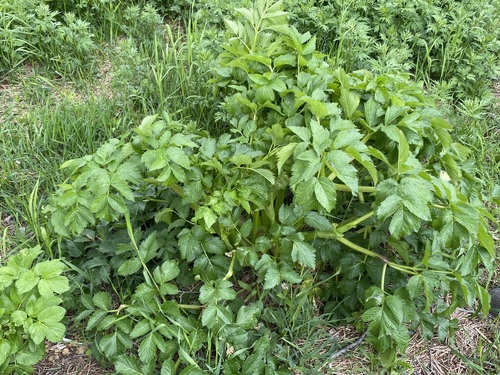
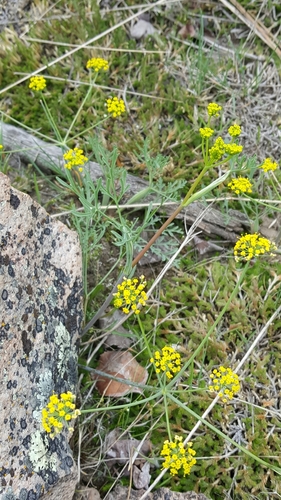
Eryngium aquaticum
L.
iNaturalist· cc-by-nc
(с) j_appleget, некоторые права защищены (CC BY-NC), загрузил j_appleget
iNaturalist· cc0
никакие права не защищены, загрузил John Kees
iNaturalist· cc-by
(с) Scott Allen Davis, некоторые права защищены (CC BY), загрузил Scott Allen Davis
Summary
Source: WikipediaEryngium aquaticum is a species of flowering plant in the family Apiaceae known by the common name rattlesnakemaster, marsh rattlesnake master, corn-snakeroot, bitter snakeroot, and marsh eryngo. This plant is native to eastern North America. This biennial or perennial herb grows up to 2 meters (6 ft 7 in) tall. The ribbed, erect stem branches toward the top. There are alternately arranged leaves which are lance-shaped and toothed on the edges. The basal leaves may be up to 90 centimeters (35 in) long by 9 cm (3.5 in) wide. The inflorescence contains white to blue flower heads with spiny, blue-tinged bracts. In the wild this plant grows in wet soils, such as those by bogs, marshes, and ditches. It tolerates saturated soils and periodic flooding. This plant had a number of medicinal uses for Native American groups. The Cherokee people used it for nausea. The Choctaw people used it as a remedy for snakebite and gonorrhea, and the Delaware people used it for intestinal worms. Many groups made it into tea to treat gastrointestinal complaints. The Koasati attributed magical powers to the plant. This plant is used in flower arranging and as an ornamental garden plant. However, most plants sold under the name E. aquaticum are actually specimens of Eryngium yuccifolium.
Description
Evergreen perennial reaching 1.2 m tall. Flowers July to August with hermaphrodite blooms pollinated by bees, flies, and beetles. Self-fertile. Grows in light sandy or medium loamy soils with good drainage and tolerates poor soil. Thrives in mildly acidic to basic pH. Requires full sun and tolerates both dry and moist conditions. Hardy to UK zone 6 with maritime exposure tolerance.
Edible Uses
None known
Medicinal Uses
The plant is diaphoretic, diuretic, and expectorant, and acts as an emetic in large doses. It is used mainly to treat disorders of the kidneys and sexual organs. The pounded roots are used as a diuretic, and an infusion of the roots is used to reduce fevers. The plant has been used as an antidote to snake poison; the roots are chewed and applied directly to the bite. A homeopathic remedy is made from the fresh or dried root.
Distribution
It is a temperate plant.
Where It Grows
North America, USA,
Cultivation
Requires a well-drained soil and a sunny position. Prefers a light sandy soil but tolerates most soil types including lime and poor gravels. Plants should be put in their final position whilst small since they resent root disturbance. Plants labelled in nurseries as E. aquaticum are often E. yuccifolium.
Propagation
Seed is best sown as soon as it is ripe in early autumn on the surface of a well-drained compost in a cold frame. It can also be sown in spring. Germination usually takes place in 5–90 days at 20°C. Prick seedlings out into individual pots when large enough to handle and grow them on in the greenhouse through their first winter. Plant out into permanent positions in late spring or early summer, after the last expected frosts. Division can be done in early spring or autumn, though the plant resents root disturbance and care should be taken. Root cuttings can be taken in autumn or winter.
Other Uses
None known Special Uses
Synonyms
References (1)
- World Checklist of Useful Plant Species 2020. Royal Botanic Gardens, Kew