Dendrocnide photinophylla
(Kunth.) Chew
Shiny-leaved Stinging Tree, Mulberry-leaved Stinging Tree
iNaturalist· cc-by-nc
(c) cesdamess, some rights reserved (CC BY-NC)
iNaturalist· cc-by
(c) Lucas Christofides, some rights reserved (CC BY)
iNaturalist· cc-by
(c) Lucas Christofides, some rights reserved (CC BY)
Description
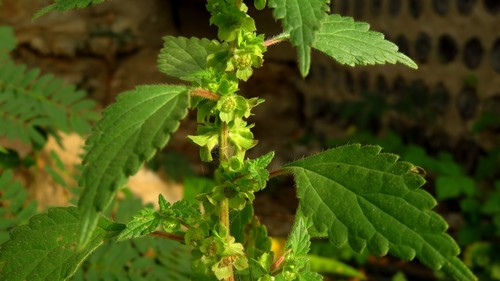
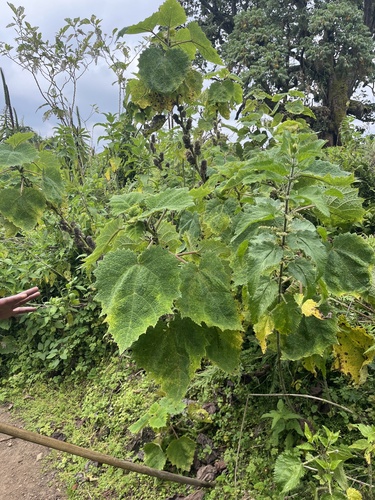
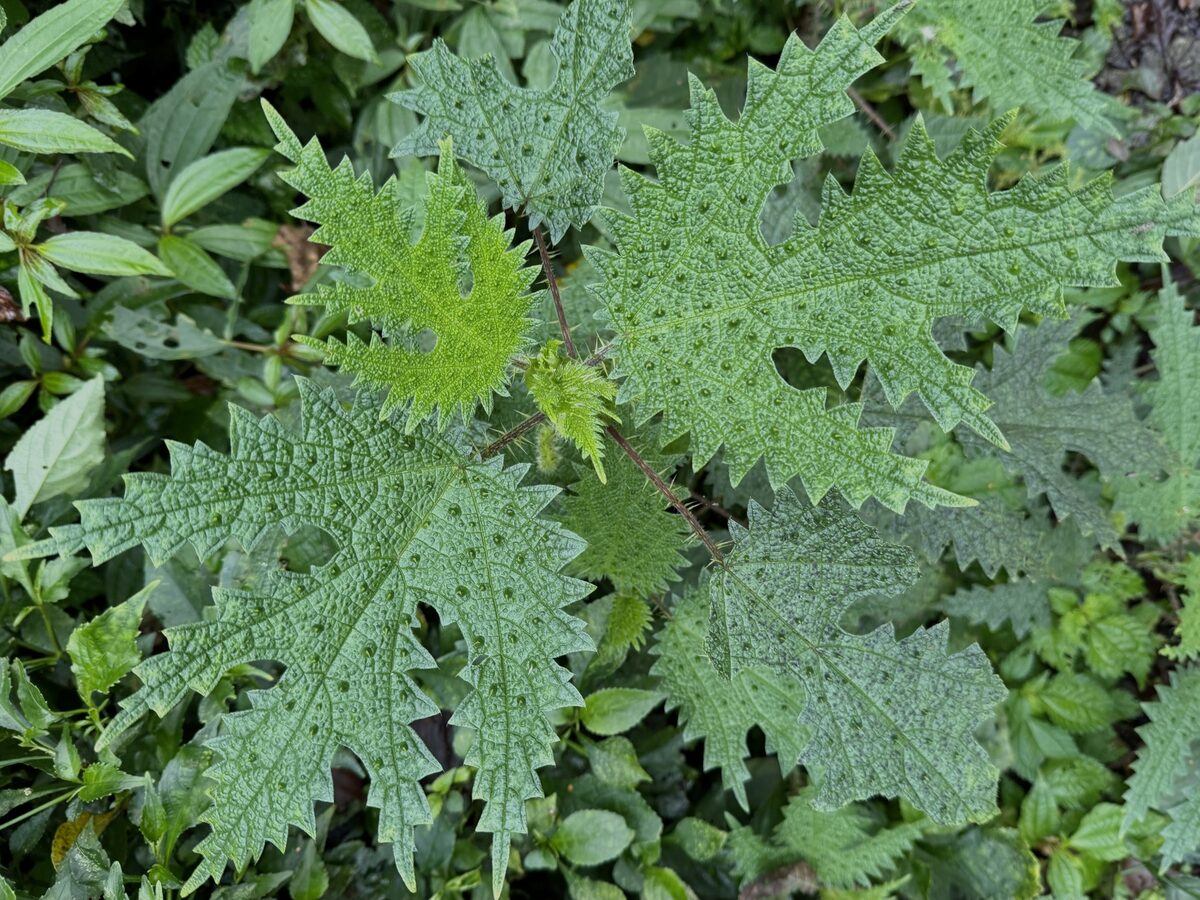
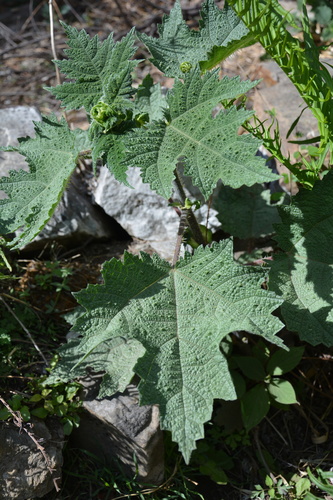
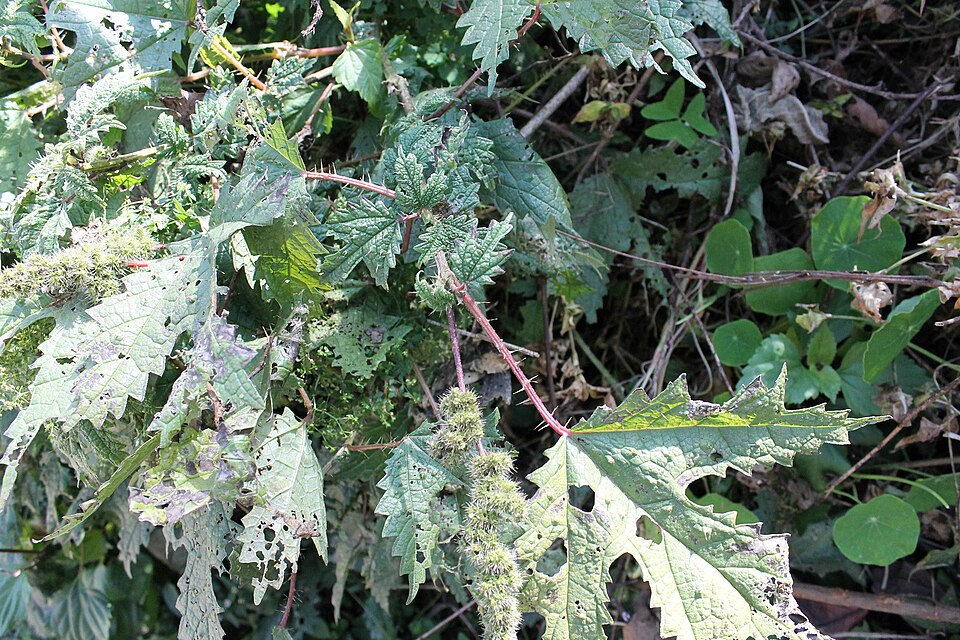
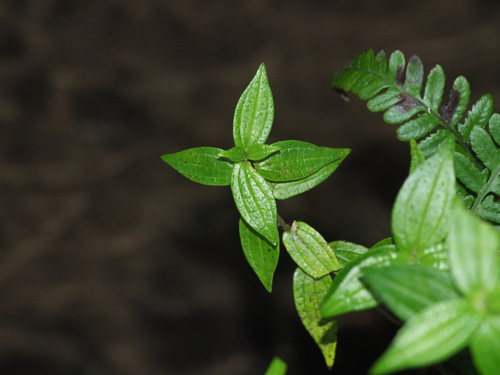
A tall tree. It grows to 25 m tall. The leaves are oval with a long tip. They are thick and dark green. They are shiny on top and dull underneath. Leaves are 5-12 cm long by 2-6 cm wide. The new growth is smooth and soft. The male and female flowers are separate. They are in panicles in the axils of leaves. These are 5-6 cm long. The fruit is a nut 0.1-0.2 cm across. There are fleshy white stalks around it. It is probably possible to select forms which do not have stinging hairs.
Edible Uses
Fruit - raw. Very enjoyable, the fruits have a crisp texture and an acid flavour. The fruits usually have at least some stinging hairs on them - these need to be removed before eating the fruit. This can be done quite easily by tossing a number of fruits together in a bag, thus abrading the hairs. The fruits are produced in small clusters which can fall to the ground when ripe.
Traditional Uses
Caution: The plant has stinging hairs. The fruit are eaten after the stinging hairs are removed.
This uses section is brief — help expand it
Known Hazards
The plant has stinging hairs on the leaves that cause serious stinging to hands. The fruit must have stinging hairs removed before consumption.
Distribution
A subtropical plant. It grows naturally in Queensland and New South Wales in Australia. It grows from sea level to 800 m above sea level. It prefers rich, well-composted soils. It needs an open sunny position. It is damaged by drought and frost.
Where It Grows
Australia*,
Cultivation
Plants can be grown from seed or by cuttings.
Propagation
Seed - germinates readily. Cuttings root easily.
Other Uses
The inner bark yields a good quality fibre that can be used for cordage, nets, bags etc. The wood is extremely soft and light.
Notes
The leaves cause serious stinging to hands. There are 36 Dendrocnide species.
Nutrition
| Part | Moisture | kJ | kcal | Protein | Vit A | Vit C | Iron | Zinc |
|---|---|---|---|---|---|---|---|---|
| Fruit | 92 | 114 | 27 | 1.4 | — | — | — | — |
References (17)
- Bodkin, F., 1991, Encyclopedia Botanica. Cornstalk publishing, p 334
- Cribb, A.B. & J.W., 1976, Wild Food in Australia, Fontana. p 28
- Cronin, L., 1989, The Concise Australian Flora. Reed. p 157
- Elliot, W.R., & Jones, D.L., 1984, Encyclopedia of Australian Plants suitable for cultivation. Vol 3. Lothian. p 251
- Flora of Australia, Volume 3, Hamamelidales to Casuarinales, Australian Government Publishing Service, Canberra (1989) p 76, 77
Show all 17 references Hide references
- Hibbert, M., 2002, The Aussie Plant Finder 2002, Florilegium. p 85
- Jackes, B.R., 2001, Plants of the Tropics. Rainforest to Heath. An Identification Guide. James Cook University. p 85
- Lazarides, M. & Hince, B., 1993, Handbook of Economic Plants of Australia, CSIRO. p 78
- Low, T., 1991, Wild Food Plants of Australia. Australian Nature FieldGuide, Angus & Robertson. p 79
- Low, T., 1992, Bush Tucker. Australia’s Wild Food Harvest. Angus & Robertson. p 65
- Melzer, R. & Plumb, J., 2011, Plants of Capricornia. Belgamba, Rockhampton. p 353
- Nicholson, N & H., 1994, Australian Rainforest Plants 4, Terania Rainforest Publishing. NSW. p 27
- Pearson, S. & A., 1992, Rainforest Plants of Eastern Australia. Kangaroo Press p 86
- Townsend, K., 1994, Across the Top. Gardening with Australian Plants in the tropics. Society for Growing Australian Plants, Townsville Branch Inc. p 157
- Williams, J.B., Harden, G.J., and McDonald, W.J.F., 1984, Trees and shrubs in rainforests of New South Wales and Southern Queensland. Univ. of New England, Armidale. p 64
- Williams, K.A.W., 1999, Native Plants of Queensland Volume 4. Keith A.W. Williams North Ipswich, Australia. p 150
- Young, P.A.R., 1991, Rainforest Guide. Brisbane Forest Park. p 29