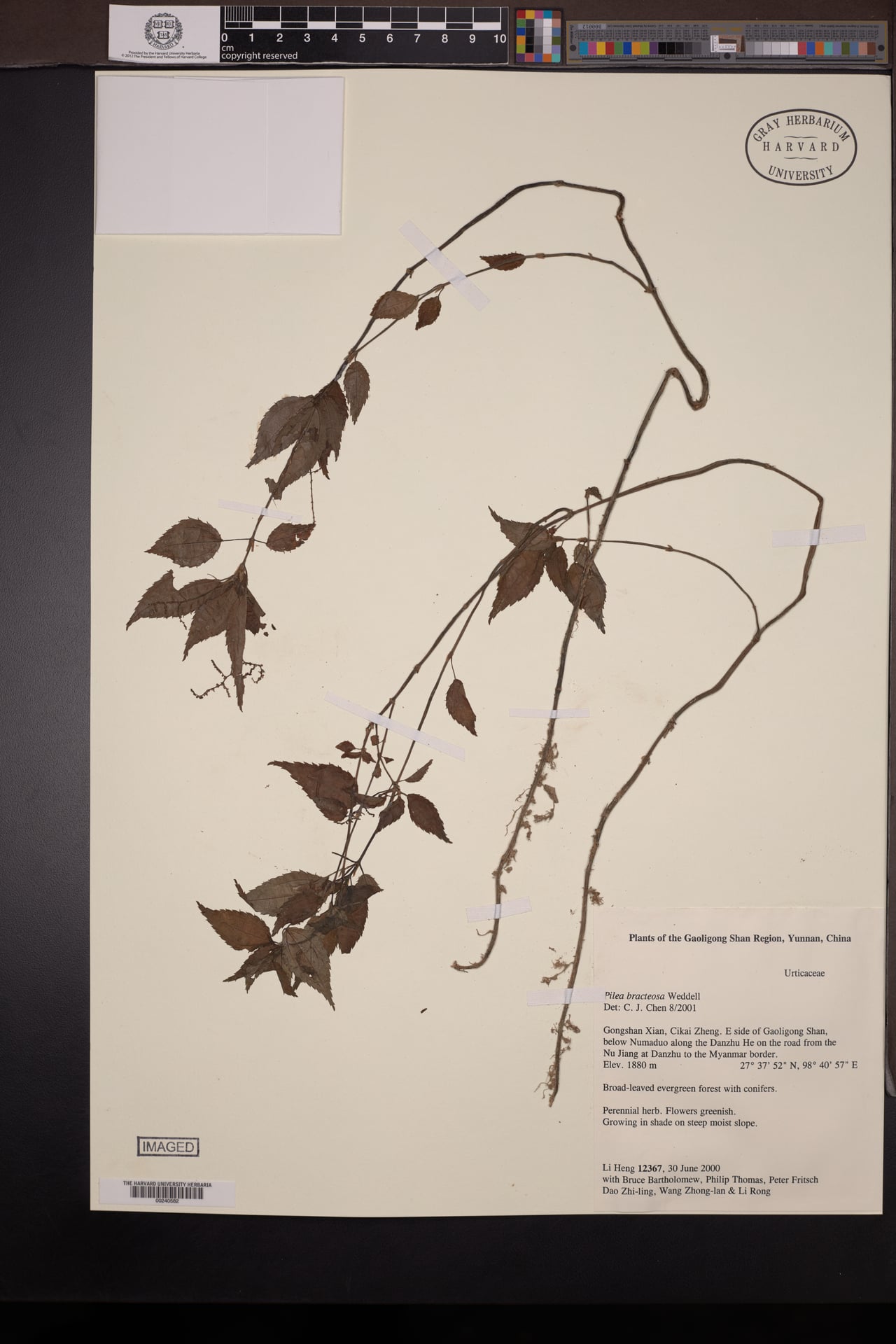
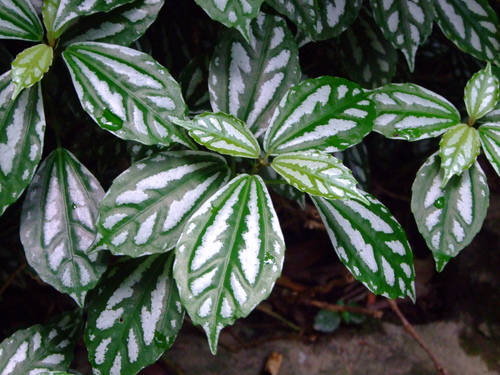
Debregeasia edulis
(Siebold. & Zucc.) Wedd.
Water hemp
iNaturalist· cc-by-nc
(c) zhangyuhong, some rights reserved (CC BY-NC)
iNaturalist· cc-by-nc
(c) zhangyuhong, some rights reserved (CC BY-NC)
iNaturalist· cc-by-nc-sa
(c) Gregory Mihaich, some rights reserved (CC BY-NC-SA)
Summary
Source: WikipediaAn evergreen shrub with year-round foliage. Grows in light sandy, medium loamy, or heavy clay soils tolerating mildly acid to mildly alkaline pH. Suitable for semi-shaded conditions in light woodland and prefers moist soil.
Description
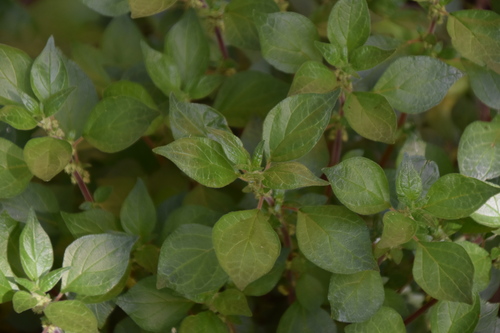
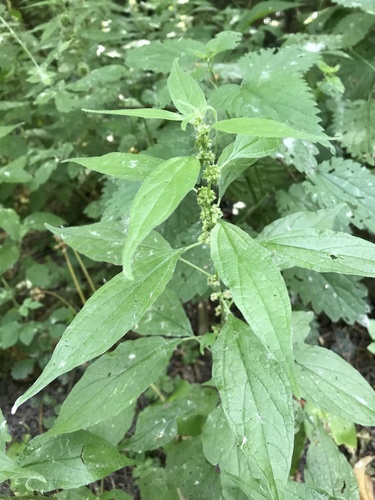
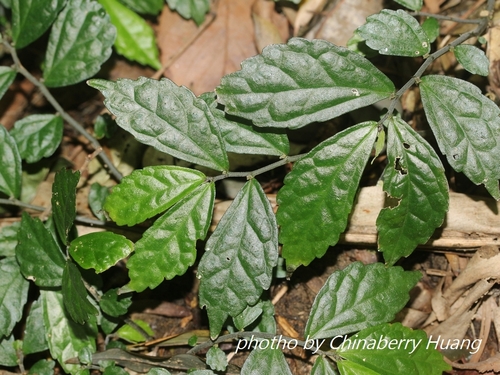
An evergreen shrubby tree. The small branches have dense white hairs. The leaves are long and sword shaped. They are 4-16 cm long by 1-3 cm wide. There are fine teeth along the edge. They have a rough surface and a brownish colour. The flowers are separately male and female on separate plants. These occur in rounded heads. The fruit allow light to shine through. They are fleshy and edible. They are 7 mm across.
Edible Uses
The fruit is eaten raw. It is pleasantly sweet and said to resemble strawberries in flavour.
Traditional Uses
The fruit are pleasantly sweet and are eaten raw.
This uses section is brief — help expand it
Medicinal Uses
A decoction of the leaves and/or fruits is sudorific. The leaves are also decocted together with Pterocarya spp. and used in the treatment of itch.
Distribution
It can grow in a range of soils and can tolerate some shade. It prefers a sheltered well drained soil.
Where It Grows
Asia, China, Japan, Myanmar, Pacific, Papua New Guinea, PNG, SE Asia,
Cultivation
Both male and female trees must be grown for fruit production. Plants can be grown from seed. The seed should be sown shallowly and take 1-2 months to germinate at 20°C. They can be sown in a nursery and transplanted. Plants can also be grown from cuttings.
Propagation
Sow seed in a greenhouse from late winter to mid-summer, barely covering it. Germination typically occurs within 1–2 months at 20°C. Once large enough to handle, prick seedlings out into individual pots and grow on under glass for at least their first winter. Plant out into permanent positions in late spring or early summer, after the last expected frosts. Softwood cuttings can be taken in early summer.
Other Uses
None known.
Production
The fruit are tender and fall apart easily. They are not therefore easily marketable. Fruit remain on the tree for several weeks.
Notes
The leaves are used as tooth brushes. The Flora of China simply says fruit of Debregeasia are edible.
Also Known As
Janatsi-itsigo, Khaox siuat, Toon itsigo, Yanagi-ichigo
References (9)
- Arch. Mus. Hist. Nat. 9:462. 1857
- Borrell, O.W., 1989, An Annotated Checklist of the Flora of Kairiru Island, New Guinea. Marcellin College, Victoria Australia. p 142
- Facciola, S., 1998, Cornucopia 2: a Source Book of Edible Plants. Kampong Publications, p 243
- Hedrick, U.P., 1919, (Ed.), Sturtevant's edible plants of the world. p 265
- Hu, Shiu-ying, 2005, Food Plants of China. The Chinese University Press. p 363
Show all 9 references Hide references
- Ohwi. G. , 1965, Flora of Japan. (English translation) Smithsonian Institution
- Plants for a Future database, The Field, Penpol, Lostwithiel, Cornwall, PL22 0NG, UK. http://www.scs.leeds.ac.uk/pfaf/
- Tanaka,
- Uphof. J. C. Th., 1959, Dictionary of Economic Plants. Weinheim