Parietaria officinalis
L.
Chambo rouseto
iNaturalist· cc-by-nc
(c) zebra1193, some rights reserved (CC BY-NC), uploaded by zebra1193
iNaturalist· cc-by-nc
(c) Александр Косоротов, some rights reserved (CC BY-NC)
iNaturalist· cc-by-nc
(c) Александр Косоротов, some rights reserved (CC BY-NC)
Summary
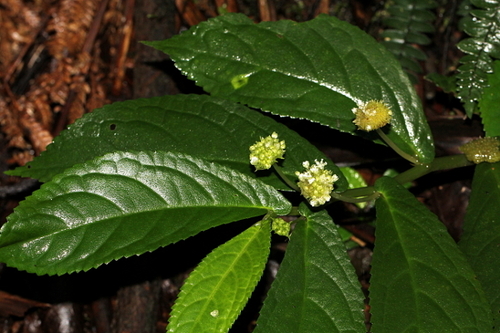
Source: WikipediaParietaria officinalis, the eastern pellitory-of-the-wall, also known as upright pellitory and lichwort, is a plant of the nettle family. Its leaves, however, are non-stinging. The plant grows on rubbish and on walls, hence the name. The pollen is a cause of allergy.
Description
A perennial reaching 0.6 m tall and wide. Not frost tender, flowering June to October. Dioecious requiring both male and female plants for seed production; wind-pollinated and not self-fertile. Adapts to light, medium, or heavy well-drained soils across mildly acid to basic pH ranges. Grows in semi-shade or full sun, tolerating dry or moist soil.
Edible Uses
The young plant can be eaten raw or cooked, and the young shoots make a good addition to mixed salads.
Traditional Uses
The young leaves are cooked in mixtures. They are used in soups and omelettes. The roots were boiled twice to reduce bitterness and then fried or roasted.
Medicinal Uses
Pellitory of the wall has been valued for over 2,000 years as a diuretic, a soother of chronic coughs, and a balm for wounds and burns. European herbal medicine regards it as having a restorative action on the kidneys, supporting and strengthening their function. The whole herb, gathered in flower, is cholagogue, slightly demulcent, diuretic, laxative, refrigerant, and vulnerary. It is an effective remedy for kidney and bladder stones and urinary complaints such as cystitis and nephritis. It should not be prescribed to people with hay fever or other allergic conditions. The leaves can be applied externally as a poultice on wounds and have a soothing effect on simple burns and scalds. The plant is harvested when flowering and can be used fresh or dried.
Known Hazards
Should not be prescribed to people with hay fever or other allergic conditions.
Distribution
It is a temperate plant.
Where It Grows
Brazil, Ecuador, Europe, Italy, Luxembourg, Mediterranean, Sicily, South America,
Cultivation
Prefers a well-drained to dry alkaline soil in full sun or semi-shade. The plant grows well on drystone walls. The pollen of this plant is one of the earliest and most active of the hay fever allergens. Dioecious. Male and female plants must be grown if seed is required.
Propagation
Sow seed in spring or autumn in a cold frame. Prick out seedlings when large enough to handle and plant out in summer. If sufficient seed is available, sow in situ in autumn or spring. Divide in spring — larger divisions can go directly into permanent positions, while smaller divisions are better potted up and grown on in light shade in a cold frame until well established before planting out in late spring or early summer.
Other Uses
The whole plant is used for cleaning windows and copper containers.
Also Known As
Ierve du vinde, Parietaria
References (4)
- Biscotti, N. et al, 2018, The traditional food use of wild vegetables in Apulia (Italy) in the light of Italian ethnobotanical literature. Italian Botanist 5:1-24
- Licata, M., et al, 2016, A survey of wild plant species for food use in Sicily (Italy) – results of a 3-year study in four Regional Parks. Journal of Ethnobiology and Ethnomedicine 12:12
- Mattalia, G., et al, 2012, Traditional uses of wild food and medicinal plants among Brigasc, Kye ́, and Provenc ̧al communities on the Western Italian Alps. Genet Resour Crop Evol. Springer
- Torre, de la, L., et al, 2008, Enciclopedia de las Plantas Útiles del Ecuador. Herbario QCA. Pontificia Universidad Católica del Ecuador. p 607