Lasimorpha senegalensis
Schott
Swamp arum
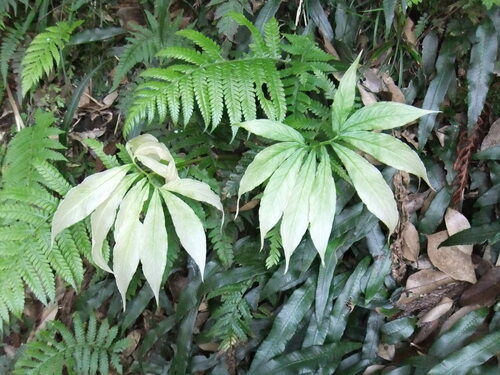
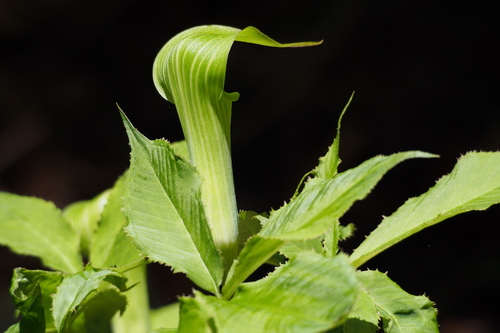
iNaturalist· cc-by-nc
(c) Anne-Hélène Paradis, some rights reserved (CC BY-NC), uploaded by Anne-Hélène Paradis
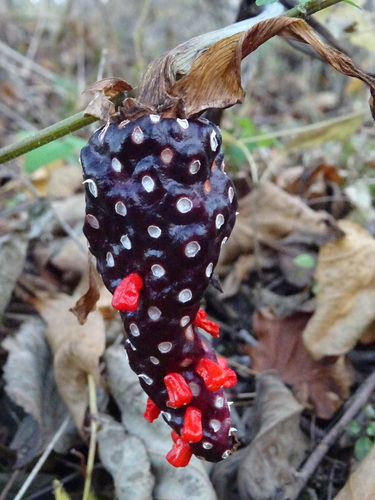
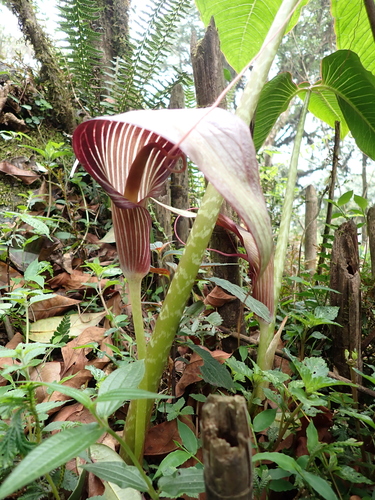
iNaturalist· cc-by-nc
(c) Scamperdale, some rights reserved (CC BY-NC)
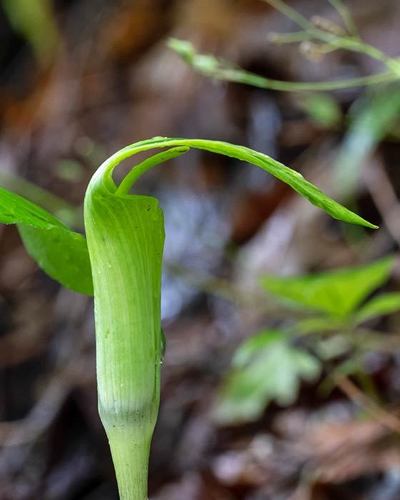
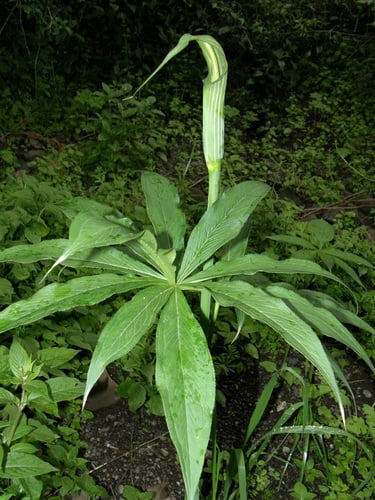
iNaturalist· cc-by-nc
(c) Bart Wursten, some rights reserved (CC BY-NC), uploaded by Bart Wursten
Description
A large herb. It is a taro family plant. It has a large rootstock. The underground suckers lead to large clumps. It keeps growing from year to year. It has large spear shaped leaves. The leaf stalks have prickles. The leaf stalks are 1.7 m long. The leaf blade is 20-50 cm long by 15-30 cm wide. The lobes at the base taper. The flowering stalk and spathe is 4 m tall. The flowers have both sexes tightly packed on a spadix. The fruit is an irregular round berry. These are 1.5 cm long and red with 1-4 seeds.
Edible Uses
The young leaves are eaten as a vegetable, mature leaves are used as flavouring in sauces and as food wrappers, the leaf stalks are edible, and the roots are burnt to ash to produce a vegetable salt.
Traditional Uses
The leaves are used as flavouring in sauces and other foods. They are also used as food wrappers. The young leaves are also eaten as a vegetable. The plant roots are burnt to ash to produce a vegetable salt. Caution: Most plants in this group can have oxalate crystals.
Medicinal Uses
The leaves are given to women during childbirth to accelerate delivery. The leaf sap has been taken orally against hiccups. The rhizomes are used to treat ulcers. A decoction is analgesic and sedative. It is taken as a cough cure (one teaspoon), and in larger doses to treat nervousness and agitation. The fruits are an ingredient of remedies for gonorrhoea and dysentery.
Known Hazards
Although no specific mention has been seen for this species, it belongs to a family where most of the members contain calcium oxalate crystals. This substance is toxic fresh and, if eaten, makes the mouth, tongue and throat feel as if hundreds of small needles are digging in to them. However, calcium oxalate is easily broken down either by thoroughly cooking the plant or by fully drying it and, in either of these states, it is safe to eat the plant. People with a tendency to rheumatism, arthritis, gout, kidney stones and hyperacidity should take especial caution if including this plant in their diet.
Distribution
A tropical plant. It grows on the edges of forests and near swamps in West Africa.
Where It Grows
Africa, Angola, Benin, Cameroon, Central Africa, Central African Republic, CAR, Congo DR, Congo R, Côte d'Ivoire, Gabon, Gambia, Ghana, Guinea, Guinée, Guinea-Bissau, Ivory Coast, Liberia, Nigeria, Senegal, Sierra Leone, West Africa,
Cultivation
Plants can be grown from seed. Plants can also be grown by division.
Other Information
It is a minor food plant of local importance.
Notes
There are 11-12 Cyrtosperma species.
Synonyms
Also Known As
Dina, Hubam amata, Kilodi, Kityokolo, Kokoahatew, Mgbo, Nopicobo, Okuo, Owaka, Sukoko Eko
References (14)
- A. L. P. P. de Candolle & A. C. de Candolle, Monogr. phan. 2:270. 1879
- Burkill, H. M., 1985, The useful plants of west tropical Africa, Vol. 1. Kew. (As Cyrtosperma senegalense)
- Dalziel, 1937,
- Grubben, G. J. H. and Denton, O. A. (eds), 2004, Plant Resources of Tropical Africa 2. Vegetables. PROTA, Wageningen, Netherlands. p 359
- Latham, P., 2004, Useful Plants of Bas-Congo province. Salvation Army & DFID p 167
Show all 14 references Hide references
- Mansfield's encyclopedia of agricultural and horticultural crops. p 2320 (As Cyrtosperma senegalense)
- Morton, J.K., 1961, West African Lilies and Orchids. Longmans. p 46 (As Cyrtosperma senegalense)
- Nkeoua, G. & Boundzanga, G. C., 1999, Donnees sur les produits forestieres non ligneux en Republique du Congo. FAO. p 24 (As Cyrtosperma senegalense)
- Peters, C. R., O'Brien, E. M., and Drummond, R.B., 1992, Edible Wild plants of Sub-saharan Africa. Kew. p 12 (As Cyrtosperma senegalense)
- Raponda-Walker, A & Sillans, R., 1961, Les Plantes Utiles du Gabon. Editions Paul Lechevalier, Paris. p 95 (As Cyrtosperma senegalense)
- Romanowski, N., 2007, Edible Water Gardens. Hyland House. p 61
- Termote, C., et al, 2011, Eating from the wild: Turumbu, Mbole and Bali traditional knowledge of non-cultivated edible plants, District Tshopo, DRCongo, Gen Resourc Crop Evol. 58:585-618
- Terra, G.J.A., 1973, Tropical Vegetables. Communication 54e Royal Tropical Institute, Amsterdam, p 44 (As Cyrtosperma senegalense)
- World Checklist of Useful Plant Species 2020. Royal Botanic Gardens, Kew