Amorphophallus abyssinicus
(A. Rich.) N. E. Br.
Black arum, Barter's arum
iNaturalist· cc-by-nc
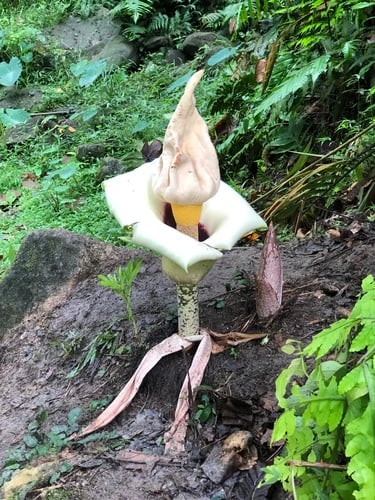
(c) Jakob Fahr, some rights reserved (CC BY-NC), uploaded by Jakob Fahr
iNaturalist· cc-by-nc
(c) Jakob Fahr, some rights reserved (CC BY-NC), uploaded by Jakob Fahr
iNaturalist· cc-by-nc
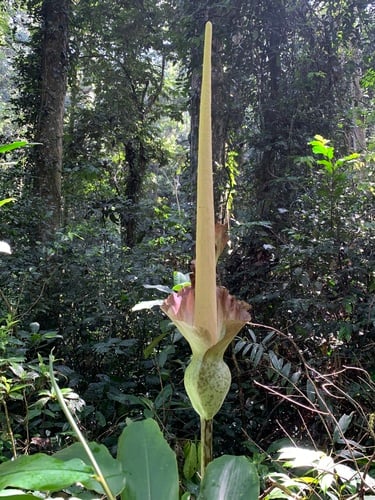
(c) andreaudzungwa, some rights reserved (CC BY-NC)
Summary
Source: WikipediaAmorphophallus abyssinicus, also known as Bagana (Sidamo), is a plant of the genus Amorphophallus. It is native to southern Ethiopia, where it is grown in gardens, hence its specific epithet, abyssinicus, derived from Latin and meaning "Abyssinian" or "Ethiopian". It is cultivated in Gojjam, and the Semien Omo Zone and Konso special woreda of the Southern Nations, Nationalities and Peoples Region, on lands between 1300 and 2000 meters above sea level. The tuberous roots are harvested and cooked for a long time before eating.
Description
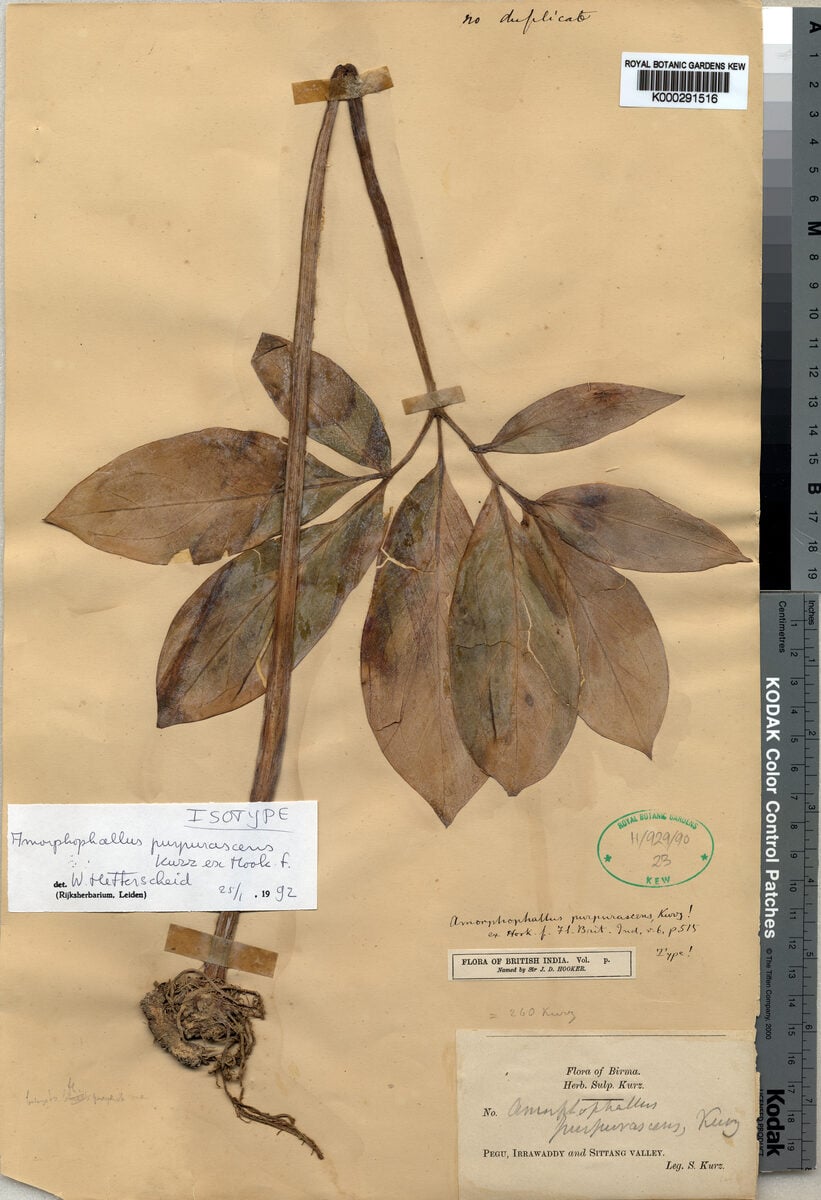
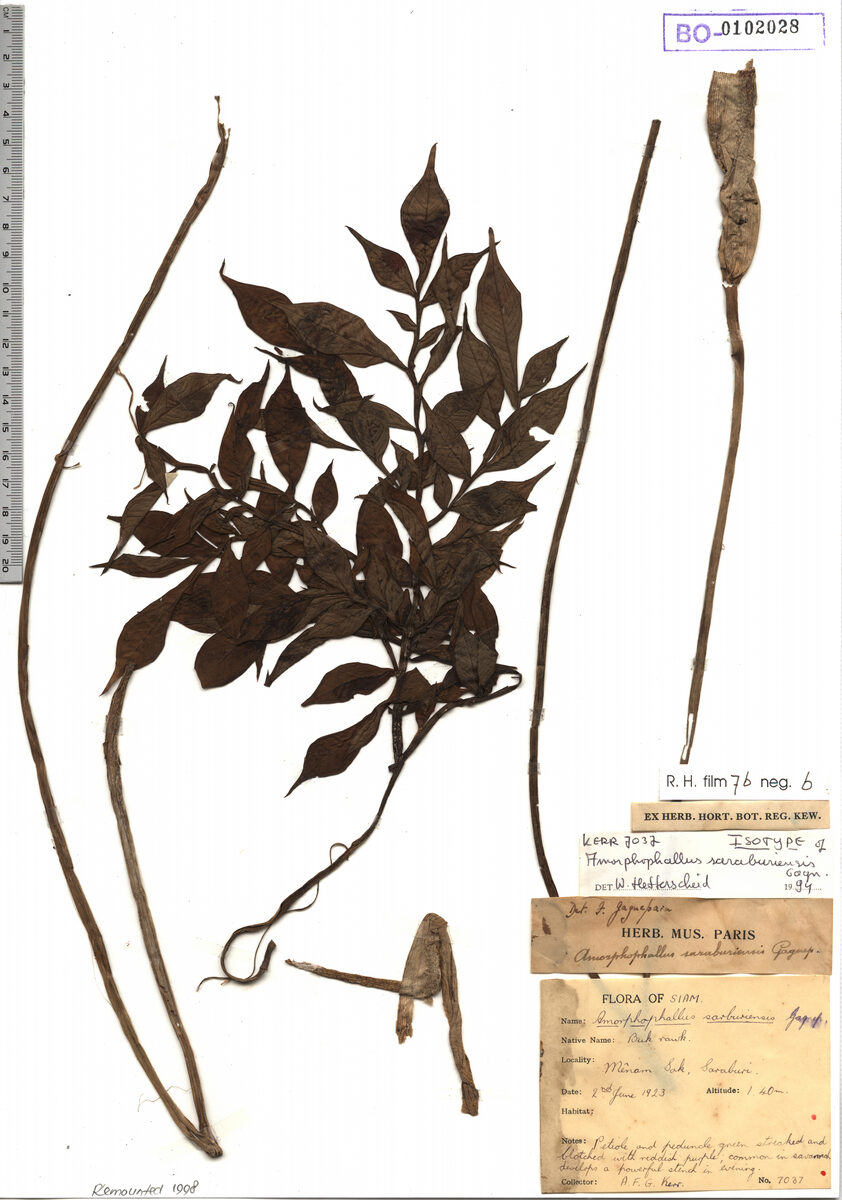
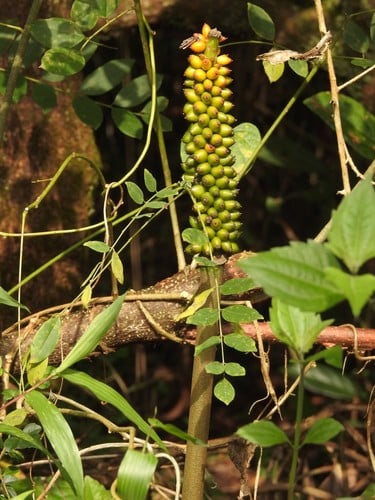
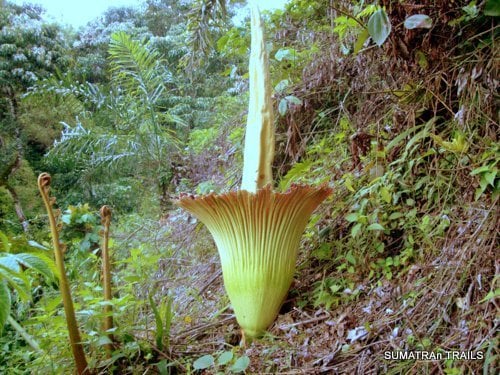
A fleshy plant. The stems are erect and stout. The leaves arise from the tuber. They are 60 cm high and wide. The leaves are rich green and umbrella like. They are deeply divided around the edges. The bract that surrounds the flower is dark reddish-purple and slender. The edges are wavy. The spadix is 20 cm long.
Edible Uses
Leaves - cooked. They must be thoroughly cooked. Tuber - cooked. The corm must be thoroughly boiled or baked, it is acrid when raw (see notes above on 'Known Hazards'). Mainly used in times of shortage. The flattened tuber is up to 7cm in diameter.
Traditional Uses
Caution: It has toxic oxalates unless properly cooked and prepared. It is cooked for a long time.
This uses section is brief — help expand it
Medicinal Uses
Traditionally used as a famine food.
Known Hazards
The plant contains toxic oxalates and must be properly cooked and prepared to be safe for consumption.
Distribution
It is a tropical plant. It grows in damp places in savanna. It needs rich, moist well-drained soil. It is damaged by drought and frost. In Ethiopia it grows between 1,300-2,000 m above sea level.
Where It Grows
Africa, Australia, Burkina Faso, Cameroon, Central Africa, Congo, East Africa, Ethiopia, Ghana, Nigeria, Southern Africa, Sudan, Tanzania, West Africa, Zambia, Zimbabwe,
Cultivation
Plants can be grown by division.
Other Information
A famine food.
Synonyms
Also Known As
Bagana, Bagane, Nkona
References (13)
- Asfaw, Z., Conservation and use of traditional vegetables in Ethiopia. FAO
- Bodkin, F., 1991, Encyclopedia Botanica. Cornstalk publishing, p 76
- Burkill, H. M., 1985, The useful plants of west tropical Africa, Vol. 1. Kew.
- Grivetti, L. E., 1980, Agricultural development: present and potential role of edible wild plants. Part 2: Sub-Saharan Africa, Report to the Department of State Agency for International Development. p 73
- Jardin, C., 1970, List of Foods Used In Africa, FAO Nutrition Information Document Series No 2.p 55 (As Amorphophallus schweinfurthii) (Also as Amorphophallus foetidus)
Show all 13 references Hide references
- Lulekal, E., et al, 2011, Wild edible plants in Ethiopia: a review on their potential to combat food insecurity. Afrika Focus - Vol. 24, No 2. pp 71-121
- Martin, F.W. & Ruberte, R.M., 1979, Edible Leaves of the Tropics. Antillian College Press, Mayaguez, Puerto Rico. p 176 (As Amorphophallus schweinfurthii)
- Molla, A., Ethiopian Plant Names. http://www.ethiopic.com/aplants.htm
- Morley, B. & Everard, B., 1970, Wild Flowers of the World. Ebury press. Plate 67 (As Amorphophallus schweinfurthii)
- Morton, J.K., 1961, West African Lilies and Orchids. Longmans. p 44
- Peters, C. R., O'Brien, E. M., and Drummond, R.B., 1992, Edible Wild plants of Sub-saharan Africa. Kew. p 11
- Scudder, 1971,
- Terra, G.J.A., 1973, Tropical Vegetables. Communication 54e Royal Tropical Institute, Amsterdam, p 23 (As Amorphophallus schweinfurthii)