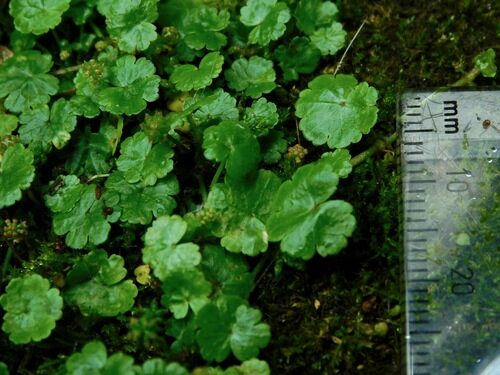
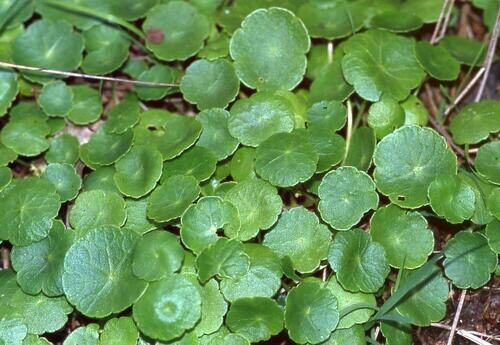
Aegopodium podagraria
L.
Goutweed, Ground elder
iNaturalist· cc0
no rights reserved
iNaturalist· cc-by-nc
(c) Andrii Churilov, some rights reserved (CC BY-NC)
iNaturalist· cc-by-nc
(c) lpditzle, some rights reserved (CC BY-NC)
Summary
Source: WikipediaA perennial herbaceous plant reaching 0.6 m tall and spreading 1 m wide at a fast rate. Hardy to UK zone 5. Flowers from May to July with small white hermaphrodite blooms pollinated by bees and flies. Self-fertile and adaptable to light, medium, and heavy soils with mildly acidic to basic pH. Thrives in full shade to semi-shade conditions and prefers moist soil.
Description
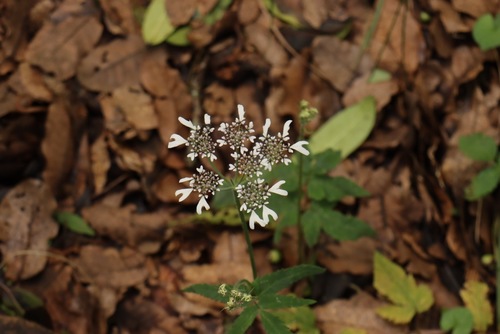
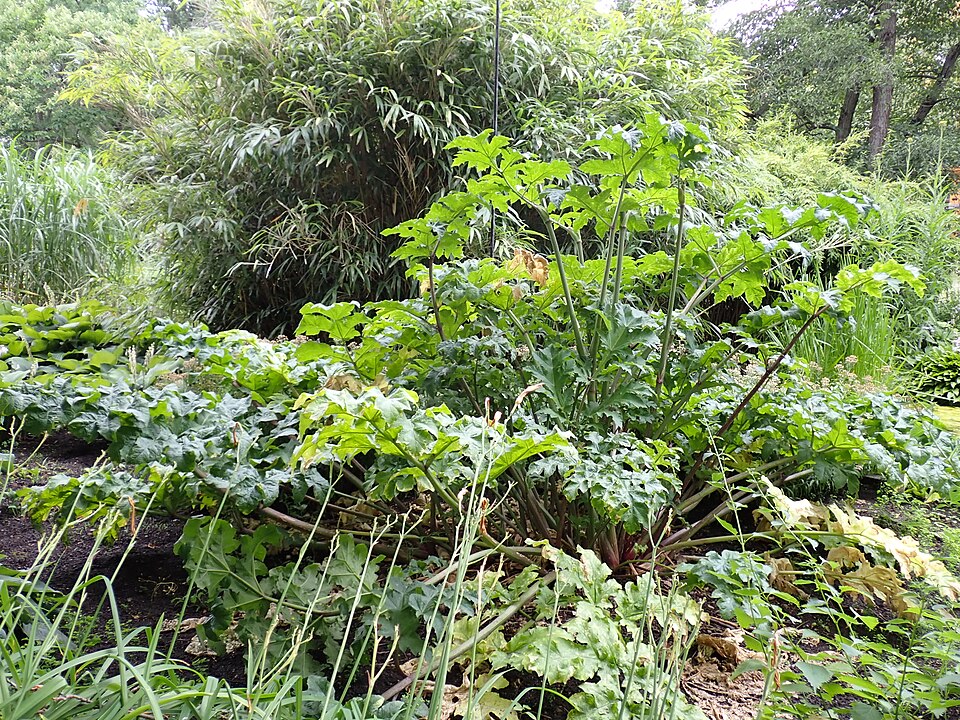
A perennial herb. It has creeping, branching underground stems. It grows up to 60-90 cm high. It can spread 60-90 cm wide. The leaves usually have 3 oval lobes. The flowers are in large compound heads. They can be white, cream or pink. The fruit are oval and ribbed.
Edible Uses
Leaves can be eaten raw or cooked, best harvested before flowering. They have an unusual tangy flavor that appeals to some but not others. Use in salads, soups, or as a cooked vegetable.
Traditional Uses
The young leaves are eaten raw or cooked. They have a tangy flavour and are used in salads, cooked as greens or made into fritters. They are eaten in green soup in Germany. It is used in omelette and quiche.
Medicinal Uses
All plant parts are antirheumatic, diuretic, sedative, and vulnerary. An infusion treats rheumatism, arthritis, bladder, and intestinal disorders. Externally applied as a poultice for burns, stings, wounds, and painful joints. Harvested when flowering in late spring to mid-summer, used fresh or dried. A homeopathic remedy made from the flowering plant treats arthritis and rheumatism.
Known Hazards
The tender leaves can be utilized as a spring leaf vegetable akin to spinach, having been used thus since antiquity. It is commonly used for soup. Young leaves are preferred as a pot herb. It is best picked from when it appears (as early as February in the UK and other parts of northern Europe) to just before it flowers (May to June). If it is picked after this point it tastes pungent and has a laxative effect. However, it can be stopped from flowering by pinching out the flowers, ensuring the plant remains edible if used more sparingly as a pot herb. It has been used as a medicinal herb to treat gout and arthritis. The plant is said to have been introduced into Great Britain by the Romans as a food plant and into Northern Europe as a medicinal herb by monks. It is still found growing in patches surrounding many monastic ruins in Europe, and descriptions of its use are found among monastic writings, such as in Physica by Hildegard von Bingen. As a member of Apiaceae, its flowers may be confused with extremely toxic species such as poison hemlock and hemlock water dropwort; attention to the leaves is required for a conclusive identification.
Distribution
It is a temperate plant. It occurs commonly as a self sown plant in waste ground in Britain. It will grow in most soils but prefers damp shady places. It suits hardiness zones 3-9. Tasmania Herbarium.
Where It Grows
Albania, Asia, Australia, Balkans, Belarus, Bosnia, Britain, Caucasus, Czech Republic, Estonia, Europe*, Finland, France, Germany,Ireland, Italy, Korea, Latvia, Lithuania, Luxembourg, Mediterranean, Netherlands, North America, Norway, Poland, Russia, Scandinavia, Siberia, Slovenia, Spain, Sweden, Switzerland, Tasmania, Turkey,Türkiye,
Cultivation
Prefers damp shady conditions but succeeds in most soils. Prefers a well-drained soil, succeeding in sun or shade. Plants are hardy to at least -15°c. This species was cultivated in the Middle Ages as a medicinal and food plant. A very invasive plant, spreading freely at the roots, though it seldom sets seed in Britain. Once established it can be very difficult to eradicate because any small piece of root left in the ground can regrow. If introducing this plant to your garden, it might be best to restrict the roots by growing the plant in a bottomless container buried in the soil. There is a variegated form of this species that is less invasive and is sometimes grown in the ornamental garden. Plants seem to be immune to the predations of rabbits. In garden design, as well as the above-ground architecture of a plant, root structure considerations help in choosing plants that work together for their optimal soil requirements including nutrients and water. Bloom Color: White. Main Bloom Time: Early summer. Form: Prostrate, Spreading or horizontal.
Propagation
Sow seed in spring in a cold frame and transplant seedlings to individual pots in summer. Alternatively, divide in spring at almost any time of year; divisions establish readily in permanent positions.
Other Uses
Excellent ground cover for semi-wild settings, though it spreads vigorously and is considered invasive in many gardens. Suitable for borders, containers, foundations, and woodland gardens. Use in food forests.
Production
It grows rapidly.
Other Information
It was introduced into Britain as a food plant by the Romans. It is an emergency or famine food. It is foraged and used in restaurants in Sweden.
Notes
It is used in medicine against gout. The young leaves are high in Vitamin C. There are 5 Aegopodium species. It can become invasive.
Also Known As
Anitka, Ashweed, Bishop's weed, Brslice kozi noha, Garsa, Ground ash, Herb Gerard, Naat, Navadna regačica, Podagrycznik, Sanminari, Skvallerkal, Snitka, Snyc, Snyt', Varesnaat, Zevenblad
References (36)
- Abbet, C., et al, 2014, Ethnobotanical survey on wild alpine food plants in Lower and Central Valais (Switzerland). Journal of Ethnopharmacology 151 (2014) 624–634
- Biocyclopedia Edible Plant Species. biocyclopedia.org
- Bircher, A. G. & Bircher, W. H., 2000, Encyclopedia of Fruit Trees and Edible Flowering Plants in Egypt and the Subtropics. AUC Press. p 11
- Bodkin, F., 1991, Encyclopedia Botanica. Cornstalk publishing, p 51
- Brickell, C. (Ed.), 1999, The Royal Horticultural Society A-Z Encyclopedia of Garden Plants. Convent Garden Books. p 82
Show all 36 references Hide references
- Brown, D., 2002, The Royal Horticultural Society encyclopedia of Herbs and their uses. DK Books. p 104
- Cerne, M., 1992, Wild Plants from Slovenia used as Vegetables. Acta Horticulturae 318
- Cundall, P., (ed.), 2004, Gardening Australia: flora: the gardener's bible. ABC Books. p 104
- Demir, E., et al, 2020, Nutrient and bioactive substance contents of edible plants grown naturally in Salıpazarı (Samsun). Acta Sci. Pol. Hortorum Cultus, 19(1), 151–160
- Facciola, S., 1998, Cornucopia 2: a Source Book of Edible Plants. Kampong Publications, p 14
- Girard, N. J., 2020, Sustainable Foraging of Wild Edible Plants in Norway. A Bioculutral Approach. M. Sc. thesis Norwegian University. p 127
- Hedrick, U.P., 1919, (Ed.), Sturtevant's edible plants of the world. p 27
- http://nordicfood lab/org/blog/2102/9/wild-edible-plants-an-overview
- Irving, M., 2009, The Forager Handbook, A Guide to the Edible Plants of Britain. Ebury Press p 108
- Kalle, R. & Soukand, R., 2012, Historical ethnobotanical review of wild edible plants of Estonia (1770s-1960s) Acta Societatis Botanicorum Poloniae 81(4):271-281
- Kim, H. & Song, M., 2013, Ethnobotanical analysis for traditional knowledge of wild edible plants in North Jeolla Province (Korea). Genetic. Resour. Crop Evol. (2013) 60:1571-1585
- Kolosova, V., et al, 2020, Foraging in Boreal Forest: Wild Food Plants of the Republic of Karelia, NW Russia. Foods 2020, 9, 1015; p 8
- Luczaj, L. et al, 2012, Wild food plant use in 21st century Europe: the disappearance of old traditions and the search for new cuisines involving wild edibles. Acta Soc Bot Pol 81(4):359–370
- Lukasz, L., et al, 2013, Wild edible plants of Belarus: from Rostafiński’s questionnaire of 1883 to the present. Journal of Ethnobiology and Ethnomedicine 2013, 9:21
- Lukasz, L., 2016, Wild Edible Plants Traditionally Used in Poland.
- Marinelli, J. (Ed), 2004, Plant. DK. p 443
- Mabey, R., 1973, Food for Free. A Guide to the edible wild plants of Britain, Collins. p 95
- Michael, P., 2007, Edible Wild Plants and Herbs. Grub Street. London. p 107
- Plants for a Future database, The Field, Penpol, Lostwithiel, Cornwall, PL22 0NG, UK. http://www.scs.leeds.ac.uk/pfaf/
- Prakofjewa, J., et al, 2023, Boundaries Are Blurred: Wild Food Plant Knowledge Circulation across the Polish-Lithuanian-Belarusian Borderland. Biology 2023, 12, 571.
- Pruse, B., et al, 2021, Active Wild Food Practices among Culturally Diverse Groups in the 21st Century across Latgale, Latvia. Biology 2021, 10, 551.
- Redzic, S. J., 2006, Wild Edible Plants and their Traditional Use in the Human Nutrition in Bosnia-Herzegovina. Ecology of Food and Nutrition, 45:189-232
- Redzic, S., 2010, Use of Wild and Semi-Wild Edible Plants in Nutrition and Survival of People in 1430 Days of Siege of Sarajevo during the War in Bosnia and Herzegovina (1992–1995). Coll. Antropol 34 (2010) 2:551-570
- Ryan, S., 2008, Dicksonia. Rare Plants Manual. Hyland House. p 93
- Seidemann J., 2005, World Spice Plants. Economic Usage, Botany, Taxonomy. Springer. p 6
- Simkova, K. et al, 2014, Ethnobotanical review of wild edible plants used in the Czech Republic. Journal of Applied Botany and Food Quality 88, 49-67
- Soukand, R., et al, 2017, Multi-functionality of the few: current and past uses of wild plants for food and healing in Liubań region, Belarus. Journal of Ethnobiology and Ethnomedicine (2017) 13:10
- Sp. pl. 1:265. 1753
- Ulian, T., et al, 2020, Unlocking plant resources to support food security and promote sustainable agriculture. Plants, People, Planet. 2020;2:421–445.
- Vermeulen, N, 1998, The Complete Encyclopedia of Herbs. Rebo Publishers. p 26
- Vorstenbosch, T., et al, 2017, Famine food of vegetal origin consumed in the Netherlands during World War II. Journal of Ethnobiology and Ethnomedicine (2017) 13:63