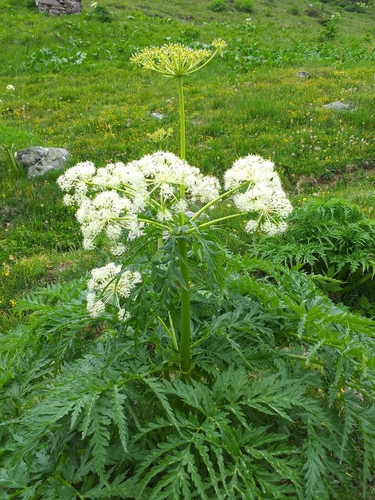
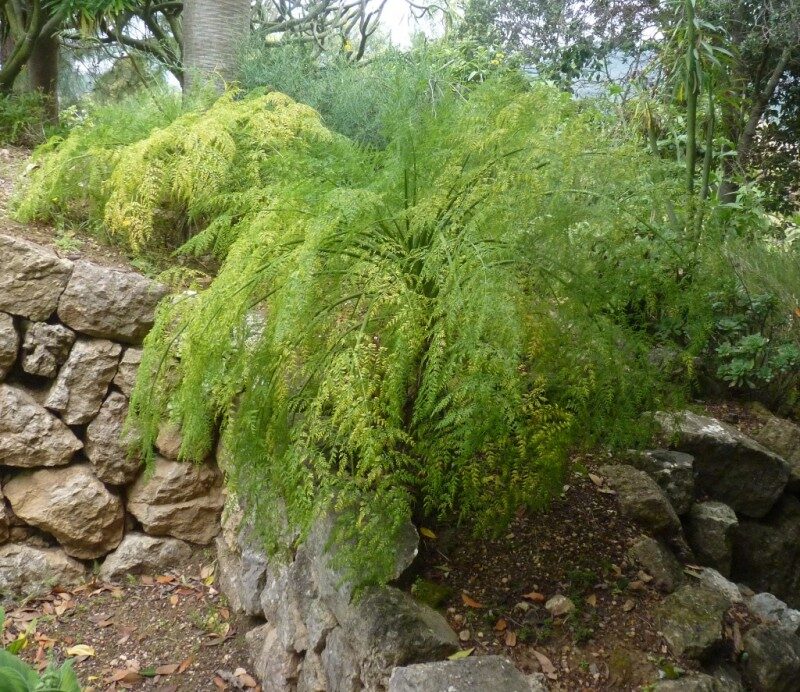
Aegopodium alpestre
Ledebour
Goutweed, Hillside celery
iNaturalist· cc-by-nc
(c) V.S. Volkotrub, some rights reserved (CC BY-NC), uploaded by V.S. Volkotrub
Summary
Aegopodium alpestre is a perennial herb reaching 0.5 m (1 ft 8 in) tall. Flowers June to July with seeds ripening August to September. Self-fertile, insect-pollinated hermaphrodite. Grows in light sandy, medium loamy, and heavy clay soils. Tolerates full shade, semi-shade, or full sun across mildly acidic to mildly alkaline pH ranges and prefers moist soil.
Description
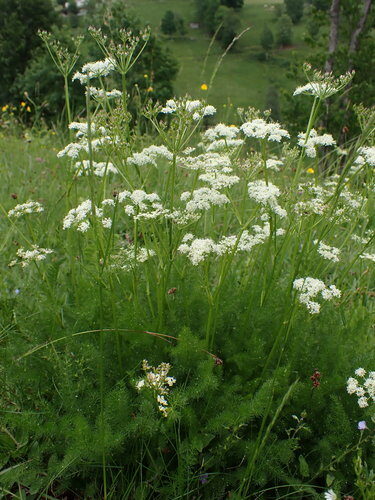
It is a perennial plant about 45 cm high. It has creeping rhizomes or underground stems. These are thickened at the nodes. Roots and erect stems emerge from these. The stems are hollow. The leaves are 5-10 cm long on leaf stalks 30 cm long. The leaves have 3 leaflets. The flowers are white.
Edible Uses
Young shoots can be eaten cooked.
Traditional Uses
The young shoots are cooked and eaten. They are cooked with flour, in soups and for pickles.
This uses section is brief — help expand it
Medicinal Uses
None known
Distribution
It is a cold temperate plant. It occurs naturally in low mountain regions in Japan. In north China it grows between 900-2,200 m above sea level.
Where It Grows
Asia, China, Japan, Korea, Manchuria, Mongolia, Russia, Siberia,
Cultivation
We have very little information on this species and do not know if it will be hardy in Britain, though judging by its native range it should succeed outdoors in many parts of the country. It is likely to succeed in sun or light shade and to prefer a moist soil.
Propagation
Sow seed in spring in a cold frame. Prick seedlings out into individual pots once large enough to handle, then plant out during summer. Division in spring is also very easy — divisions can go straight into their permanent positions.
Other Uses
None known
Notes
There are 5 Aegopodium species.
References (3)
- Fan, L., et al, The Use of Edible Wild Plants and Fungi in Korean-Chinese Villages. Journal of Environmental Information Science 44-5 p 71-79
- Hu, Shiu-ying, 2005, Food Plants of China. The Chinese University Press. p 588
- Plants for a Future database, The Field, Penpol, Lostwithiel, Cornwall, PL22 0NG, UK. http://www.scs.leeds.ac.uk/pfaf/