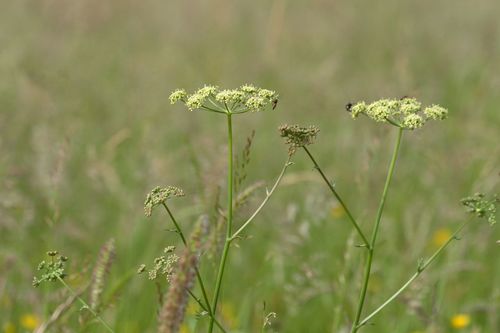
Cymopterus acaulis
(Pursh) Raf.
Plains springparsley
iNaturalist· cc-by-nc
(c) Jason Headley, some rights reserved (CC BY-NC)
iNaturalist· cc-by-nc
(c) Jason Headley, some rights reserved (CC BY-NC)
iNaturalist· cc-by-nc
(c) Jason Headley, some rights reserved (CC BY-NC)
Summary
Source: WikipediaDwarf perennial growing to just 10 cm tall. Hermaphroditic and self-fertile, pollinated by insects. Grows in light sandy, medium loamy, or heavy clay soils with good drainage. Tolerates mildly acidic to basic soils. Adapts to semi-shade or full sun. Handles both dry and moist soil conditions.
Description
Dwarf perennial growing to just 10 cm tall. Hermaphroditic and self-fertile, pollinated by insects. Grows in light sandy, medium loamy, or heavy clay soils with good drainage. Tolerates mildly acidic to basic soils. Adapts to semi-shade or full sun. Handles both dry and moist soil conditions.
Edible Uses
The root can be eaten raw or cooked and has a pleasant taste. Young roots in spring are the best, though roots can also be eaten at other times of year. Only young roots are recommended — whether older roots may be harmful is unclear. Leaves and young shoots can also be eaten raw or cooked.
Medicinal Uses
None known.
Distribution
It is a temperate plant.
Where It Grows
North America, USA,
Propagation
Sow seed in a cold frame as soon as it is ripe where possible, or sow stored seed as early in the year as possible in a greenhouse. Prick seedlings into individual pots once large enough to handle and grow on in the greenhouse through at least their first winter. Plant out into permanent positions in late spring or early summer after the last expected frosts. Division in spring or autumn may also be possible.
Other Uses
Water from boiling old roots can be used as an insecticide.
References (3)
- Beckstrom-Sternberg, Stephen M., and James A. Duke. "The Foodplant Database." http://probe.nalusda.gov:8300/cgi-bin/browse/foodplantdb.(ACEDB version 4.0 - data version July 1994)
- Bot. Surv. Nebraska 3:38. 1894
- Plants for a Future database, The Field, Penpol, Lostwithiel, Cornwall, PL22 0NG, UK. http://www.scs.leeds.ac.uk/pfaf/