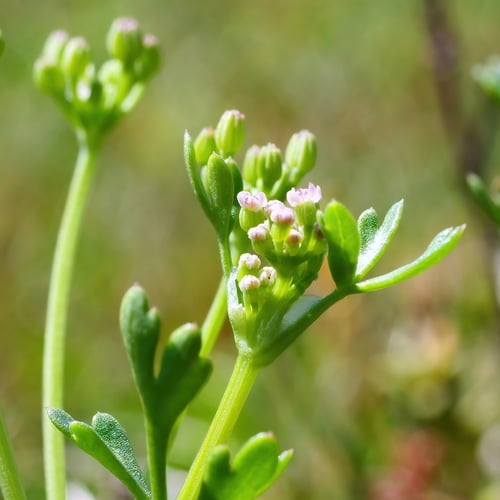
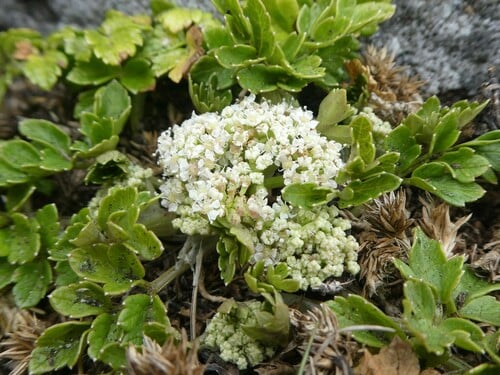
Myrrhis odorata - (L.)Scop.
(L.)Scop.
Sweet Cicely, Anise
gbif· cc-by
GBIF
gbif· cc-by
GBIF
gbif· cc-by
GBIF
Description
Myrrhis odorata is a PERENNIAL growing to 1 m (3ft 3in) by 1 m (3ft 3in). See above for USDA hardiness. It is hardy to UK zone 5 and is not frost tender. It is in flower from May to June, and the seeds ripen from July to August. The species is hermaphrodite (has both male and female organs) and is pollinated by Bees, flies, beetles. The plant is self-fertile. It is noted for attracting wildlife. Suitable for: light (sandy), medium (loamy) and heavy (clay) soils. Suitable pH: mildly acid, neutral and basic (mildly alkaline) soils. It can grow in semi-shade (light woodland) or no shade. It prefers moist soil.
Edible Uses
Tea. Leaves - raw or cooked. Excellent raw, the leaves have a delicious sweet aniseed flavour and are liked by the majority of people who try them. They are also used as a flavouring for vegetables, and are an important ingredient of the herb mix 'bouquet garni'. They can be cooked with tart fruits in order to reduce their acidity. The plant produces fresh leaves from late winter to early the following winter. The leaves can also be dried for later use. It is best to prevent the plant from flowering if the leaves are required for culinary use, because they lose their flavour when the plant is in flower. Root - raw or cooked. A similar flavour to the leaves. So long as it is not too old, the root can be boiled and mixed with other vegetables or added to salads. Seed - raw or cooked. An aniseed flavour, it is usually used as a flavouring but can also be eaten raw whilst it is still green and before the fibrous coat has formed. It makes an excellent mouth freshener. A tea is made from the leaves.
Medicinal Uses
Antiseptic Aromatic Carminative Expectorant Stomachic. The whole plant, including the seed, is aromatic, carminative, expectorant and stomachic. It is useful in the treatment of coughs and flatulence, and also as a gentle stimulant for the stomach. The root is antiseptic and a decoction has been used to treat snake and dog bites. An ointment made from the roots has been used to ease gout and soothe wounds.
Distribution
Mountainous regions of Europe, including Britain.
Where It Grows
EUROPE: Austria, Switzerland, Germany, Slovakia, Russian Federation-European part, European part, Lithuania, Ukraine, Albania, Bosnia and Herzegovina, Croatia, Italy, Montenegro, Serbia, Slovenia, Spain (northeast), France,
Cultivation
Prefers a moist rich soil in a shady position. Thrives in all soils in sun or shade. This species is hardy to about -15°c according to one report whilst another says that it is hardy to at least -20°c. Plants often self-sow freely. Sweet cicely used to be quite widely cultivated as a food plant but is now only occasionally grown in the herb garden. This is a shame since it is an extremely useful and tasty plant to grow and can provide food all year round. A good bee plant.
Propagation
Seed - best sown as soon as it is ripe since stored seed is difficult to germinate. The seed can be sown in an outdoor seedbed or, if supplies are limited, it can be sown in pots in a cold frame. Thin the seedlings in the outdoor bed as necessary (eat the thinnings) and transplant the young plants into their final positions in the following spring. Prick out the pot-grown seedlings into individual pots when they are large enough to handle and plant them out in spring. Division in spring or autumn. Remove the tapering tap root and cut the remaining root into sections with at least one eye per section and replant in their permanent position.
Other Uses
Polish. The leaves and the seed make good polishes for wood. You just rub them over the wood and then rub the wood with a clean cloth to remove any greenness. It is particularly good on oak panels, giving a lovely glossy finish and an aromatic smell. Invertabrate shelter, Nectary. Aromatic.