Acacia loderi
Maiden
Nelia
iNaturalist· cc-by-nc
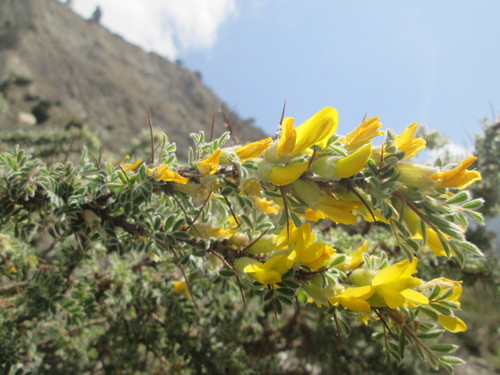
(c) Tina Gillespie, some rights reserved (CC BY-NC), uploaded by Tina Gillespie
iNaturalist· cc-by
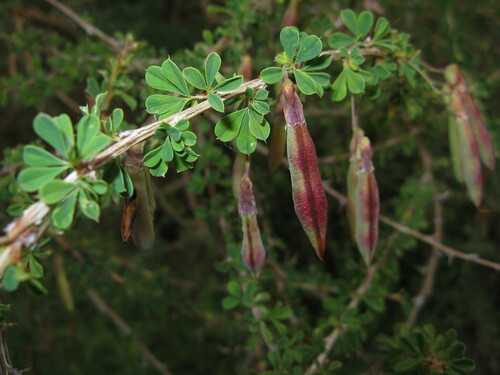
(c) Thomas Mesaglio, some rights reserved (CC BY)
iNaturalist· cc-by
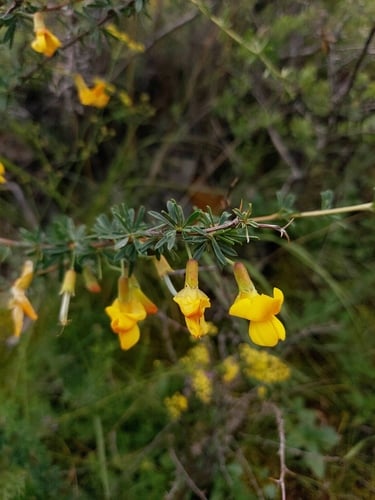
(c) Thomas Mesaglio, some rights reserved (CC BY)
Summary
Source: WikipediaAcacia loderi, known colloquially as nelia or nealie, is a species of Acacia native to Australia. Joseph Maiden described Acacia loderi in 1920 and it still bears its original name. It was named after its collector, assistant forester at Broken Hill A.C. Loder who collected it at Yancowinnia near Broken Hill in November 1907. The common name nelia and its former variants nealie and neelya are derived from the Ngiyambaa word nhiil'i for the species. Acacia loderi grows as a large shrub or small tree 3–8 m (9.8–26.2 ft) high, with an erect or spreading habit. The bark is grey. Like all wattles it has leaf-like structures known as phyllodes instead of leaves. These are pale grey-green to green and very narrow and long, measuring 5–11 cm (2.0–4.3 in) in length by 0.9–2.5 mm (0.035–0.098 in) wide. The bright yellow flowers appear in spring (August to October). Acacia loderi is found in inland southeastern Australia, mainly in far western New South Wales, from White Cliffs in the north of the tip of northwestern Victoria in the south, east to Hillston and west through the Darling River basin and Broken Hill into eastern South Australia, growing in colonized brown or red soils in mostly flat country. It forms a dominant component of Acacia loderi shrubland, where it is found with such trees as black oak (Casuarina pauper), inland rosewood (Alectryon oleifolius) and leopardwood (Flindersia maculosa), and an understory of chenopods and grasses. Acacia loderi shrubland has been classified as an Endangered Ecological Community by the New South Wales Government. Key threats include clearing and excessive grazing by livestock. The Wiradjuri people of New South Wales use the seeds of the species to make flour for bread, the fibrous bark for making string and rope, and the resin is eaten and can be used to make glue.
Description
A shrub or small tree. It grows 5 m tall. There are prickles along the stem. The leaves are twice divided and there are 8-18 pairs of pinnae. There are up to 50 pairs of pinnules on each pinnae. The flowers are yellow. They are in large clusters at the ends of branches. The pods are flattened.
Edible Uses
The seeds are ground into flour for making bread, and resin is also used.
Traditional Uses
The seeds are used for flour for bread.
This uses section is brief — help expand it
Distribution
It is a warm temperate plant.
Where It Grows
Australia,
Synonyms
References (1)
- Williams A. & Sides, T., 2008, Wiradjuri Plant Use in the Murrumbidgee Catchment. Murrumbidgee Catchment Management Authority. Wagga Wagga, p 17