Caragana pygmaea
(L.) DC.
iNaturalist· cc-by-nc
(c) Alexey Zyryanov, some rights reserved (CC BY-NC), uploaded by Alexey Zyryanov
iNaturalist· cc-by-nc
(c) Petr Kosachev, some rights reserved (CC BY-NC)
Summary
Source: WikipediaCaragana pygmaea is a species of flowering plant in the family Fabaceae.
Description
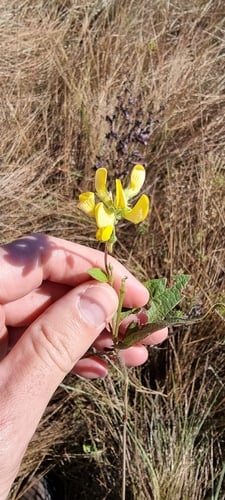
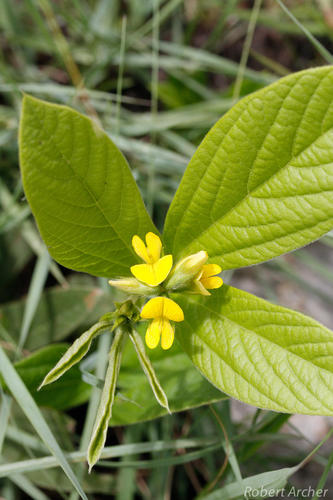
A shrub. It grows 50 cm tall. The branches are golden yellow. They are hairy when young. The leaves have 4 leaflets. They are 7-17 mm long by 1-3 mm wide. The flowers occur singly and are yellow. The pod is narrow and 2-3 cm long. It is hairy when young.
Edible Uses
The cooked root is edible and is considered an emergency food, used when all else fails.
Medicinal Uses
None known.
Distribution
It is a temperate plant. In north and west China it grows in sandy areas and on rocky slopes between 800-1,300 m above sea level. It grows in hardiness zones 5-7.
Where It Grows
Asia, Britain, China, Europe, Himalayas, India, Mongolia, Russia, Siberia, USA,
Propagation
Seed is best sown as soon as it is ripe in a cold frame, where it typically germinates within 2 weeks. Stored seed should be pre-soaked for 24 hours in warm water before sowing in a cold frame. If the seed has not swollen after soaking, scarify it and re-soak for a further 12 hours before sowing. Germination usually occurs within 2–3 weeks at 20°C, with a good success rate. Once seedlings are large enough to handle, prick them out into individual pots and grow on in a greenhouse for at least their first winter, then plant out into permanent positions in late spring or early summer after the last expected frosts. Cuttings of half-ripe wood, 7–10cm with a heel, can be taken in July or August and rooted in a frame. Layering can be carried out in spring.
Other Uses
The shoots are very flexible and are used like string for tying. The wood is used as fuel.
Notes
There are 80 Caragana species. They grow in temperate continental climates.
Synonyms
References (5)
- Ambasta S.P. (Ed.), 2000, The Useful Plants of India. CSIR India. p 103
- Jackes, D. A., Edible Forest Gardens
- Plants for a Future database, The Field, Penpol, Lostwithiel, Cornwall, PL22 0NG, UK. http://www.scs.leeds.ac.uk/pfaf/
- Prodr. 2:268. 1825
- Urgamal, M., Oyuntsetseg, B., Nyambayar, D. & Dulamsuren, Ch. 2014. Conspectus of the vascular plants of Mongolia. (Editors: Sanchir, Ch. & Jamsran, Ts.). Ulaanbaatar, Mongolia. “Admon“ Press. 334pp. (p. 121-143).