Cycas thouarsii
R. Br. ex. Gaudich.
African cycas
iNaturalist· cc-by
(c) Michael A. Alcorn, some rights reserved (CC BY), uploaded by Michael A. Alcorn
iNaturalist· cc-by-nc
(c) Bill Baker, some rights reserved (CC BY-NC)
iNaturalist· cc-by-nc
(c) Ryan E. Gray, some rights reserved (CC BY-NC)
Summary
Source: WikipediaCycas thouarsii, the Madagascar cycad, is an evergreen arborescent cycad in the genus Cycas. It is named after the French botanist Louis-Marie Aubert du Petit-Thouars (1758—1831).
Description
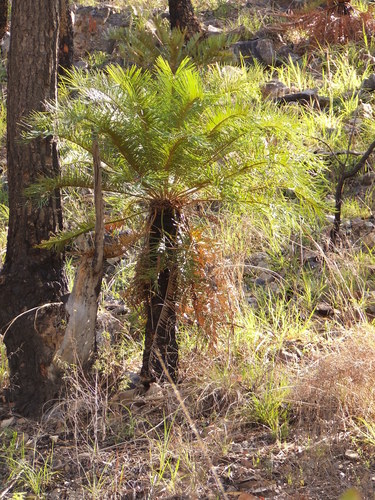
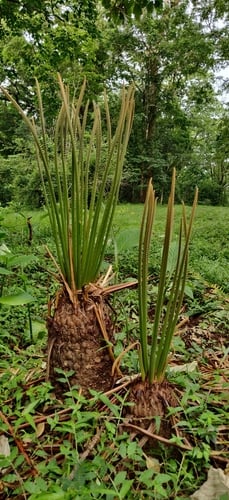
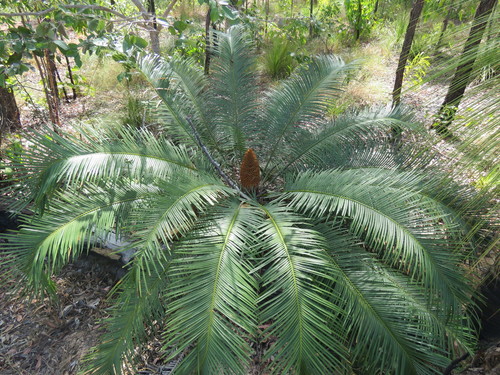
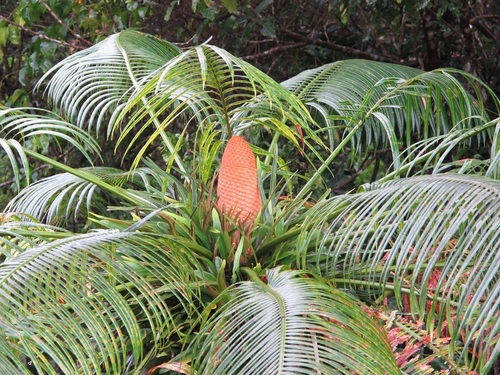
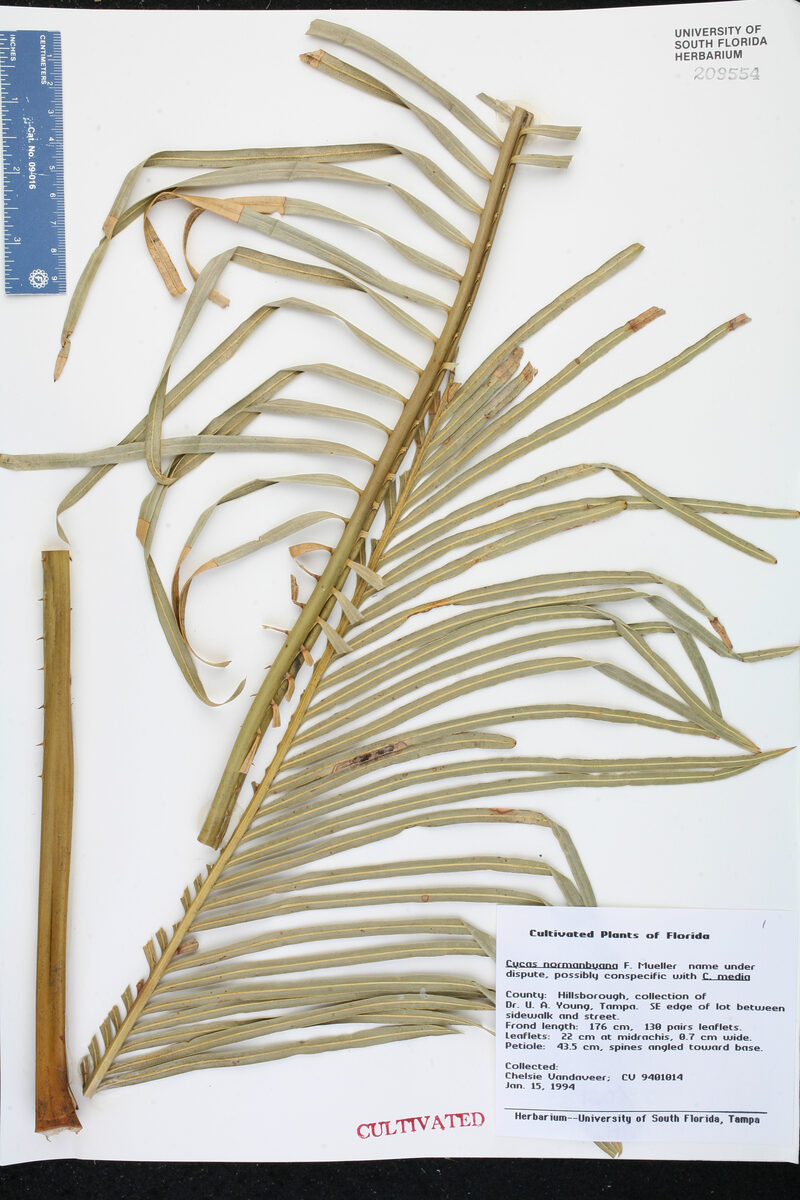
A palm like plant. It grows up to 10 m. It is unbranched. The leaves are 1-3 m long. The leaflets are long and slender and 30 cm long by 1 cm wide. The midrib is yellow and there are no secondary veins. The edge of the leaf does not have teeth but there are some spines near the tip. Male and female cones are on separate trees. The male cones are yellow-orange and 60 cm long by 20 cm wide. The scales are close and wedge shaped. The female cones consist of loose, spirally arranged scales. They are covered with dense woolly hairs. The seeds are almost round and 6 cm long by 5 cm wide. They are brick-red in colour. The plant has a long tap root.
Edible Uses
Although toxic, the seeds are eaten on the Comorian island of Ngazidja, particularly in the regions of Hamahame and Washili, where the plant, known as ntsambu, has cultural significance. The cyanotoxins are removed from the seeds by a process of repeated washing, fermentation and drying, which renders them edible.
Medicinal Uses
A gum obtained from the plant has been used medicinally, particularly as an agent that is said to produce rapid suppuration when applied to malignant ulcers. The gum also has the repute of being a good antidote for snake and insect bites.
Known Hazards
We have no specific information for this species, but most if not all members of this genus are believed to contain toxins. The two main toxic compounds that have been identified are cycasin and macrozamin. When ingested in sufficient quantities, these compounds are extremely poisonous to humans and many other animals, and have been shown to cause liver damage and cancer. Cycasin and macrozamin have a cumulative effect upon the body and are suspected of causing neurological disorders when ingested in small amounts over long periods of time. There is a long history of human use of this genus as a starch-rich food, but it should be noted that the plants needed to be treated in various ways in order to remove any toxic principles. Caution should be exercised even with properly prepared foods, since even then regular consumption may lead to severe health problems and death. Since many of these species are becoming increasingly rare in the wild, this is probably a food best left to times of food shortage when other, better foods, are not available.
Distribution
A tropical plant. It grows in a hot humid location. In the Cairns Botanical Gardens. Brisbane Botanical Gardens. It grows in light shade. It is very frost tender. In Townsville palmetum.
Where It Grows
Africa, Australia, Comoros, East Africa, Kenya, Madagascar, Mozambique, Seychelles, Southern Africa, Tanzania,
Cultivation
It can be grown from seed. It can be grown from suckers.
Other Uses
A gum exudes through wounds in the plant, especially from the megasporophylls, stems and leaves. It is used medicinally and as an adhesive. When placed in water, Cycas gum begins to swell almost immediately. By the end of several days, it expands to many times its original size and becomes so colourless and transparent that it cannot be seen in water but must be felt for with a rod. Cycas gum has been likened in its properties to that of Sterculia setigera Mature leaves are woven into mats.
Production
It is fast growing.
Notes
There are about 20-40 Cycas species.
Synonyms
Also Known As
Mgundi, Mtapo, Mtapu
References (10)
- Dale & Greenway, 1981,
- Grivetti, L. E., 1980, Agricultural development: present and potential role of edible wild plants. Part 2: Sub-Saharan Africa, Report to the Department of State Agency for International Development. p 47
- Jardin, C., 1970, List of Foods Used In Africa, FAO Nutrition Information Document Series No 2.p 13, 42, 131
- Jones, D.L., 2000, Cycads of the world. Reed New Holland. p 159
- Palgrave, K.C., 1996, Trees of Southern Africa. Struik Publishers. p 44
Show all 10 references Hide references
- Peters, C. R., O'Brien, E. M., and Drummond, R.B., 1992, Edible Wild plants of Sub-saharan Africa. Kew. p 7
- Schatz, G.E., 2001, Generic Tree Flora of Madagascar. Royal Botanical Gardens, Kew and Missouri Botanical Garden. p 123
- Voy. Uranie 434. 1829 "thuarsii"
- Walsh, M., 2009, The Use of Wild and Cultivated Plants as famine Foods on Pemba Island, Zanzibar. Études océan Indien. 42-43
- World Checklist of Useful Plant Species 2020. Royal Botanic Gardens, Kew