Cycas revoluta
Thunb.
Dwarf Sago Palm, Sago cycas
iNaturalist· cc-by-nc
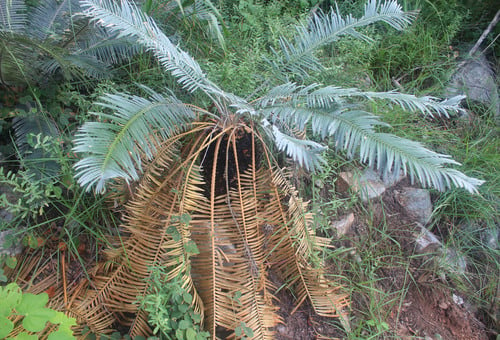
(c) kuqi_baba, some rights reserved (CC BY-NC), uploaded by kuqi_baba
iNaturalist· cc-by-nc
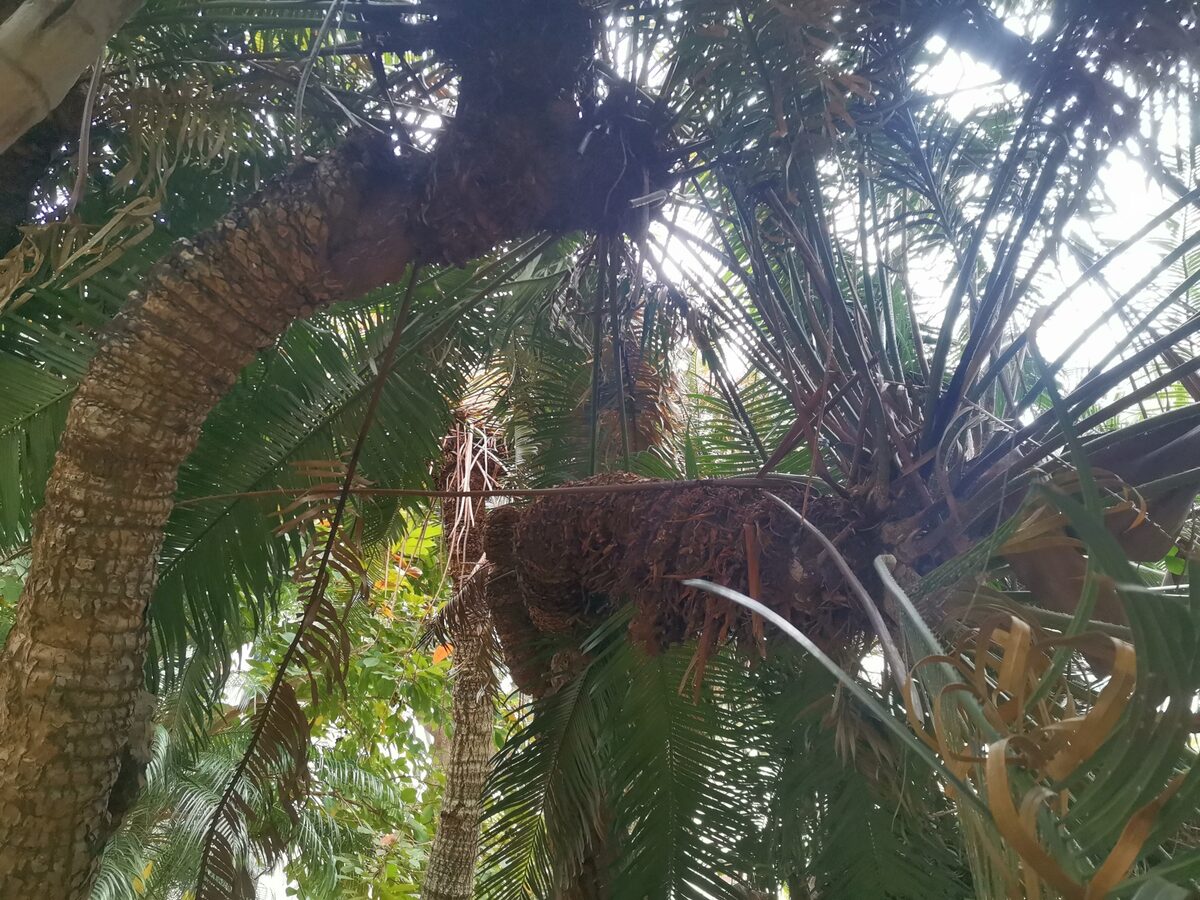
(c) kuroshio, some rights reserved (CC BY-NC), uploaded by kuroshio
iNaturalist· cc-by
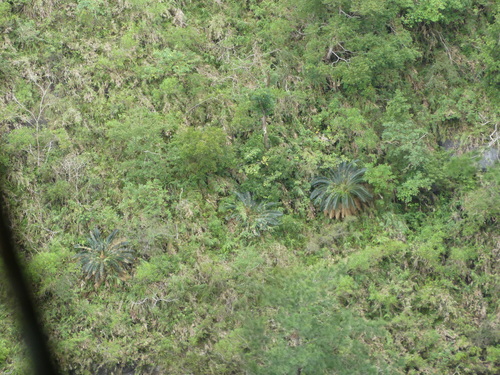
(c) Tzu-Neng Yuan, some rights reserved (CC BY), uploaded by Tzu-Neng Yuan
Summary
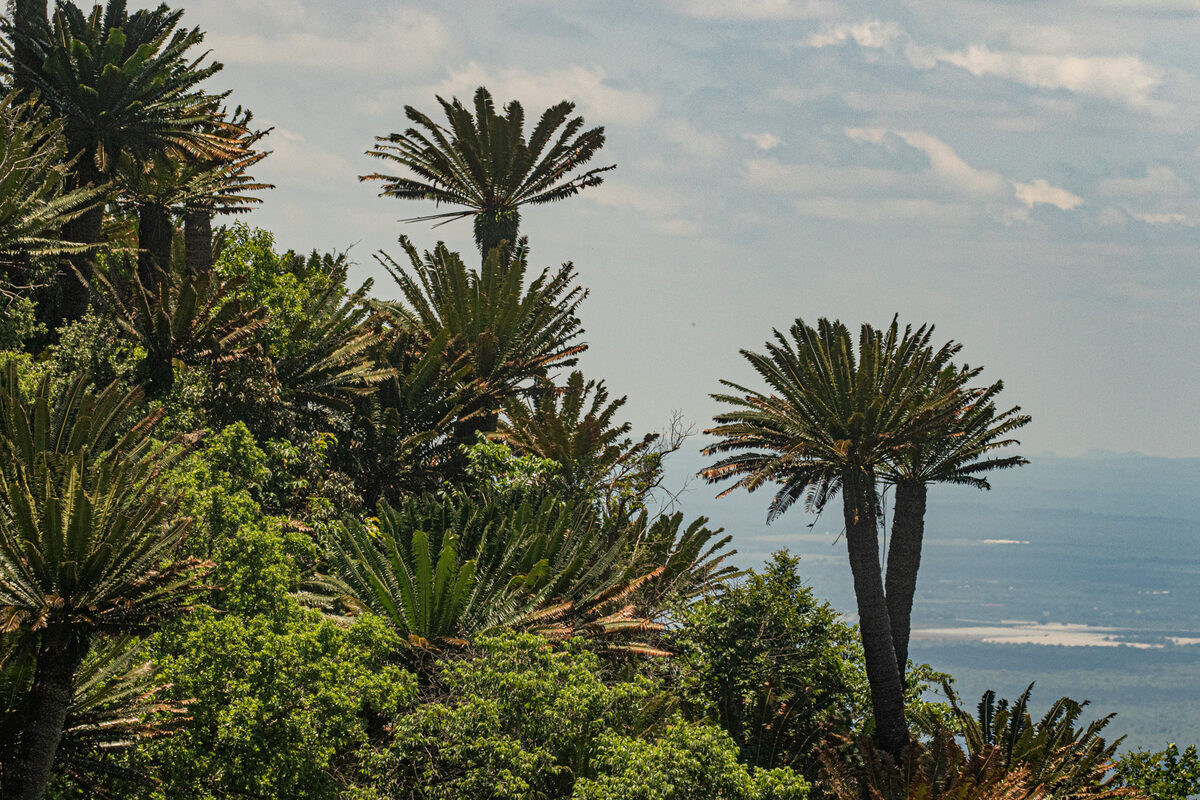
Source: WikipediaCycas revoluta (Sotetsu [Japanese ソテツ], sago cycad, sago palm, king sago, Japanese sago palm) is a species of gymnosperm in the family Cycadaceae, native to southern Japan including the Ryukyu Islands. It is one of several species used for the production of sago, as well as an ornamental plant. The sago cycad can be distinguished by a thick coat of fibers on its trunk. The sago cycad is sometimes mistakenly thought to be a palm, although the only similarity between the two is that they look similar and both produce seeds.
Description
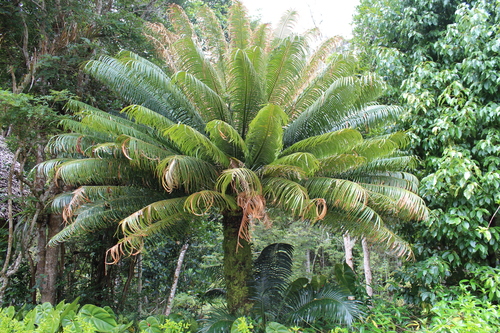
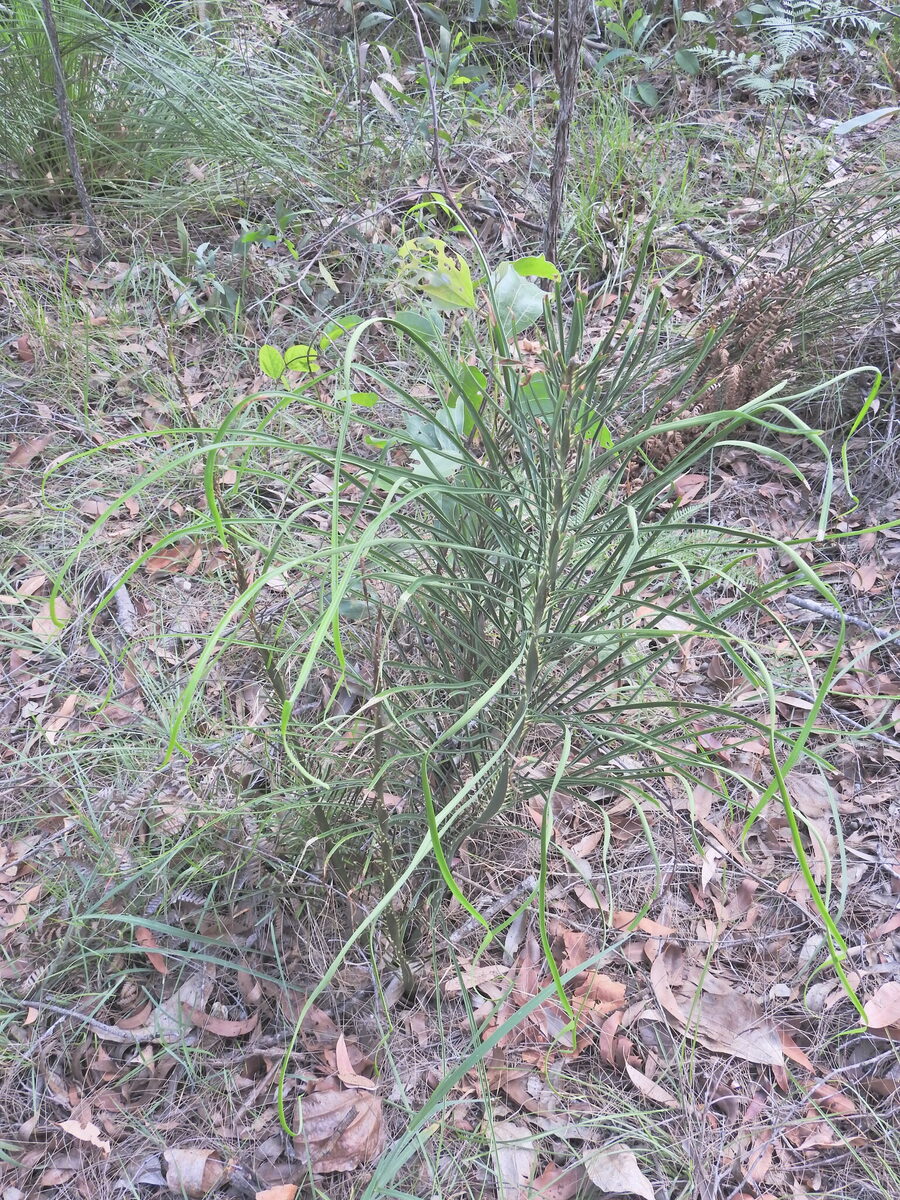
A palm-like plant. It is evergreen. There can be a single trunk, several trunks or a branched trunk. The stems are 0.3-1.5 m tall. The fronds are stiff. The leaflets are 12-16 cm long by 0.4-0.7 cm wide. Male and female plants are separate. The seeds or nuts are large and orange nuts. The nuts grow in a cluster atop the stems of the plant.
Edible Uses
The seed can be eaten raw or cooked, or dried and ground into a powder, then mixed with brown rice and fermented into 'date miso' or 'sotetsu miso'. Caution is advised given the plant's toxicity. The heart or pith of the trunk can be sliced and eaten baked, or reduced to a powder. A toxic principle must first be removed. Starch extracted from the pith is used to make dumplings and is described as very sustaining.
Traditional Uses
The trunk is chopped in small sections and dried and leached. It is fermented. The seeds are crushed, washed, cooked and eaten. They are also dried and ground into a powder then mixed with rice and fermented into a miso. The root tubers contain starch. CAUTION: A toxic glucoside, cycasin, has been isolated from the seed kernels. This is toxic and causes cancer.
Medicinal Uses
The leaves are used in the treatment of cancer and hepatoma. The terminal shoot is astringent and diuretic. The seed is emmenagogue, expectorant, and tonic, and is used in treating rheumatism. Substances extracted from the seeds have been used to inhibit the growth of malignant tumours.
Known Hazards
Cycad sago is extremely poisonous to animals (including humans) if ingested. Pets are at particular risk, since they seem to find the plant very palatable. Clinical symptoms of ingestion will develop within 12 hours, and may include vomiting, diarrhea, weakness, seizures, and liver failure or hepatotoxicity characterized by icterus, cirrhosis, and ascites. The pet may appear bruised, have nose bleeds (epistaxis), melena (blood in the stool), hematochezia (bloody straining), and hemarthrosis (blood in the joints). The ASPCA Animal Poison Control Center estimates a fatality rate of 50 to 75% when ingestion of the sago palm is involved. If any quantity of the plant is ingested, a poison control center or doctor should be contacted immediately. Effects of ingestion can include permanent internal damage and death. All parts of the plant are toxic; however, the seeds contain the highest level of the toxin cycasin. Cycasin causes gastrointestinal irritation, and in high enough doses, leads to liver failure. Other toxins include Beta-methylamino L-alanine, a neurotoxic amino acid, and an unidentified toxin which has been observed to cause hindlimb paralysis in cattle.
Distribution
A tropical plant. It is very hardy. It can resist frost. It suits hardiness zones 9-12. Coffs Harbour. In XTBG Yunnan.
Where It Grows
Africa, Antigua and Barbuda, Asia, Australia, Bangladesh, Burkina Faso, China, East Africa, Guam, Hawaii, India, Indochina, Indonesia, Japan*, Korea, Marquesas, Marshall Islands, Micronesia, Mozambique, Myanmar, Nepal, Pacific, Pakistan, SE Asia, Slovenia, USA, Vietnam,
Cultivation
Requires a strong loam with sharp sand and good drainage. Succeeds in dry soils. Requires a sunny position. Although it is the hardiest cycad, this species is not fully hardy in Britain but can tolerate occasional lows to about -5°c so long as the crown is protected and so is worthwhile trying outdoors in a sheltered position in the mildest areas of the country. Alternatively, it can be given greenhouse or conservatory protection over the winter and be placed outdoors in the summer. Plants are very slow growing. This plant is often used as a food source in its native range but recent research has shown that it can cause chronic nervous disorders if it is not treated properly. Overall its use is not to be recommended, especially since it is becoming rare in the wild. The plants produce special upward growing roots where nitrogen is produced in symbiosis with algae. Dioecious, male and female plants must be grown if seed is required.
Propagation
Sow seed in a greenhouse as soon as it is ripe, 2cm deep in individual pots sealed in plastic bags to maintain moisture until germination. Germination takes 1–3 months at 25°C. Pre-soak stored seed for 24 hours in warm water before sowing the same way. The plant can also be propagated by dividing suckers in spring.
Other Uses
The plant is a nitrogen fixer.
Production
It is slow growing and long lived. Composition of the trunk/stem is higher in male plants than in female plants, but varies in both according to season. Starch content in the male plant was observed to range (calculated to dry substance from 27% in October, to 61% in June, averaging 50% over the year. Female plant trunk/stems average 26% annually. In the female plant, trunk/stem starch content is affected by seed production.
Other Information
It is cultivated.
Notes
There are about 20-40 Cycas species. Chemical composition (fresh seeds): ca. 0.0164% to 0.220% of combined CH20. After being crushed and dried in the sun, the seeds contained 0.250 to 0.327% of total CH2O of which more than 96% was free. Air-dried starch content was analysed at 44.5%, with 9.15% crude protein. A toxic glucoside, cycasin, has been isolated from the seed kernels.
Also Known As
Feng wei jiao ye, Fossil Cycad, Japanese Fern Palm, Japanese sago cycad, Japanese sago palm, Japan-mondaing, Madanagameswari, Penawar jambe, Sikas pakis lasa, Sikas sagu, Sotesu-nut, Sotetsu, Sotichi, Zavitolistni sagovec
References (36)
- Ambasta, S.P. (Ed.), 2000, The Useful Plants of India. CSIR India. p 153
- Bodkin, F., 1991, Encyclopedia Botanica. Cornstalk publishing, p 311
- Brickell, C. (Ed.), 1999, The Royal Horticultural Society A-Z Encyclopedia of Garden Plants. Convent Garden Books. p 326
- Burkill, I.H., 1966, A Dictionary of the Economic Products of the Malay Peninsula. Ministry of Agriculture and Cooperatives, Kuala Lumpur, Malaysia. Vol 1 (A-H) p 729
- Chen Jiarui; Dennis Wm. Stevenson, CYCADACEAE, Flora of China,
Show all 36 references Hide references
- CLEYER,
- Cundall, P., (ed.), 2004, Gardening Australia: flora: the gardener's bible. ABC Books. p 449
- Etherington, K., & Imwold, D., (Eds), 2001, Botanica's Trees & Shrubs. The illustrated A-Z of over 8500 trees and shrubs. Random House, Australia. p 248
- Facciola, S., 1998, Cornucopia 2: a Source Book of Edible Plants. Kampong Publications, p 90
- Flora of Pakistan. www.eFloras.org
- HARDING,
- Hedrick, U.P., 1919, (Ed.), Sturtevant's edible plants of the world. p 256
- Hibbert, M., 2002, The Aussie Plant Finder 2002, Florilegium. p 79
- Hu, Shiu-ying, 2005, Food Plants of China. The Chinese University Press. p 275
- KOBAYASHI & NAGAHAMA,
- Lord, E.E., & Willis, J.H., 1999, Shrubs and Trees for Australian gardens. Lothian. p 95
- Marinelli, J. (Ed), 2004, Plant. DK. p 366
- Menninger, E.A., 1977, Edible Nuts of the World. Horticultural Books. Florida p 162
- NAKAMURA & NAKAJIMA,
- NISHIDA,
- NISHIDA,
- Pham-Hoang Ho, 1999, An Illustrated Flora of Vietnam. Nha Xuat Ban Tre. p 214
- Plants for a Future database, The Field, Penpol, Lostwithiel, Cornwall, PL22 0NG, UK. http://www.scs.leeds.ac.uk/pfaf/
- Schuler, S., (Ed.), 1977, Simon & Schuster's Guide to Trees. Simon & Schuster. No. 20
- Staples, G.W. and Herbst, D.R., 2005, A tropical Garden Flora. Bishop Museum Press, Honolulu, Hawaii. p 67
- Sukarya, D. G., (Ed.) 2013, 3,500 Plant Species of the Botanic Gardens of Indonesia. LIPI p 826
- THIERET,
- Vander Velde, N, 2003, The Vascular Plants of Majuro Atoll, Republic of the Marshall Islands. Atoll research Bulletin. No. 503. Smithsonian Institute. p 16
- Verh. Holl. Maatsch. Weetensch. Haarlem 20(2): 424, 426-427. 1782 (Fl. jap. 229. 1784)
- WARBURG,
- Wickens, G.E., 1995, Edible Nuts. FAO Non-wood forest products. FAO, Rome. p173
- Wiersema, J. H. & Leon, B., 2013, World Economic Plants. A Standard Reference CRC Press. 2nd Ed. p 222
- Wijayakusuma, H.M.H., et al, 1996, Tanaman Berkhasiat Obat Di Indonesia. Pustaka Kartini. p 104
- World Checklist of Useful Plant Species 2020. Royal Botanic Gardens, Kew
- YOSHIMURA,
- YOSHIMURA & SAGAWA,