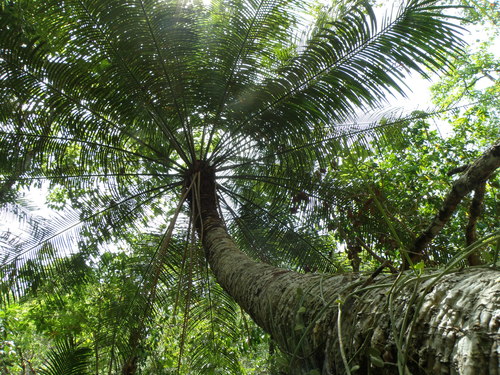
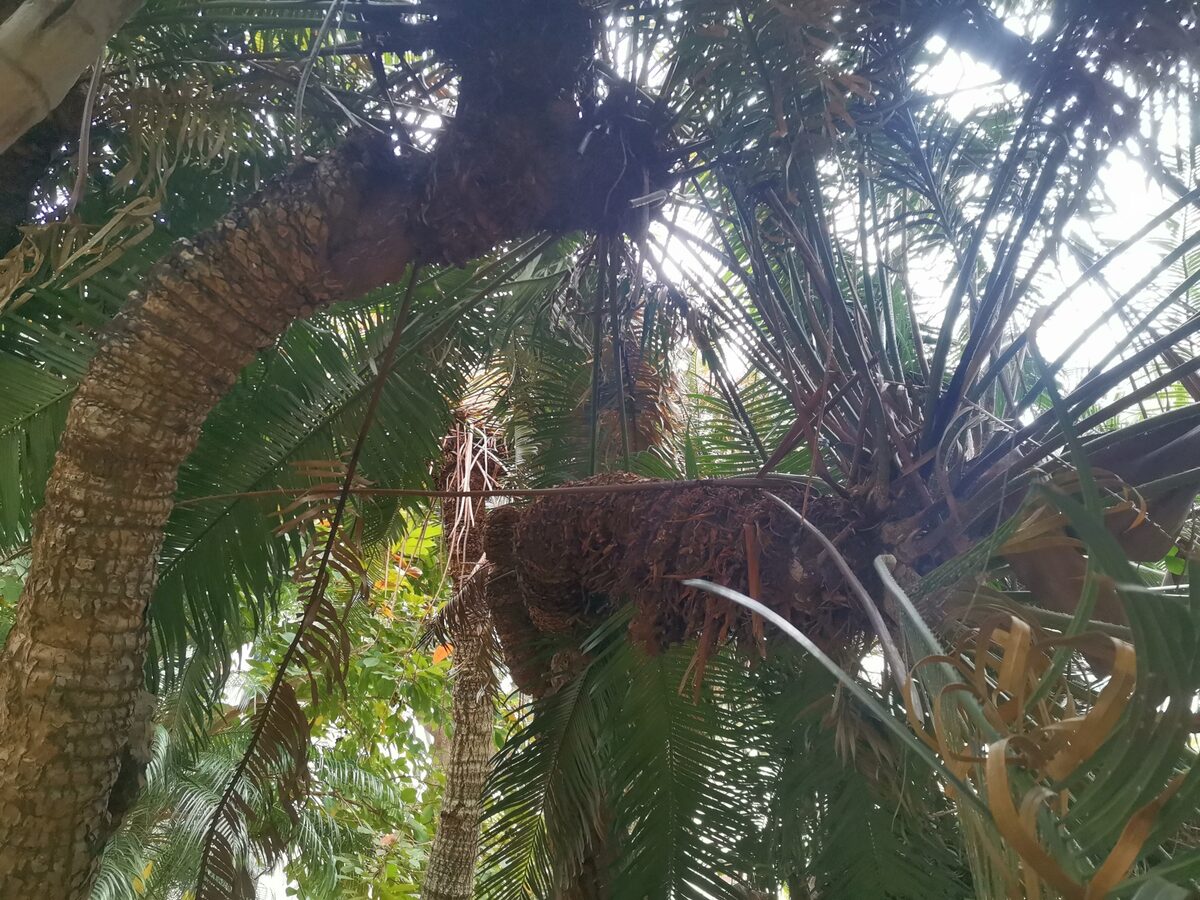
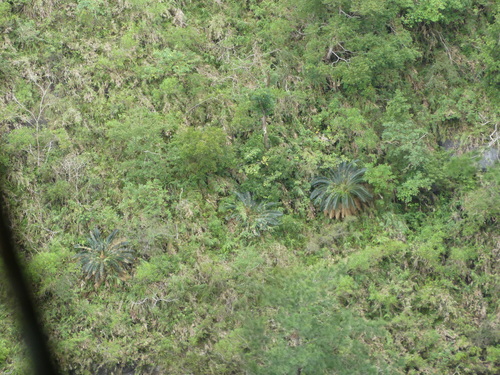
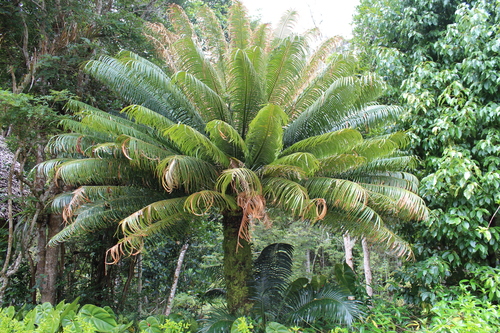
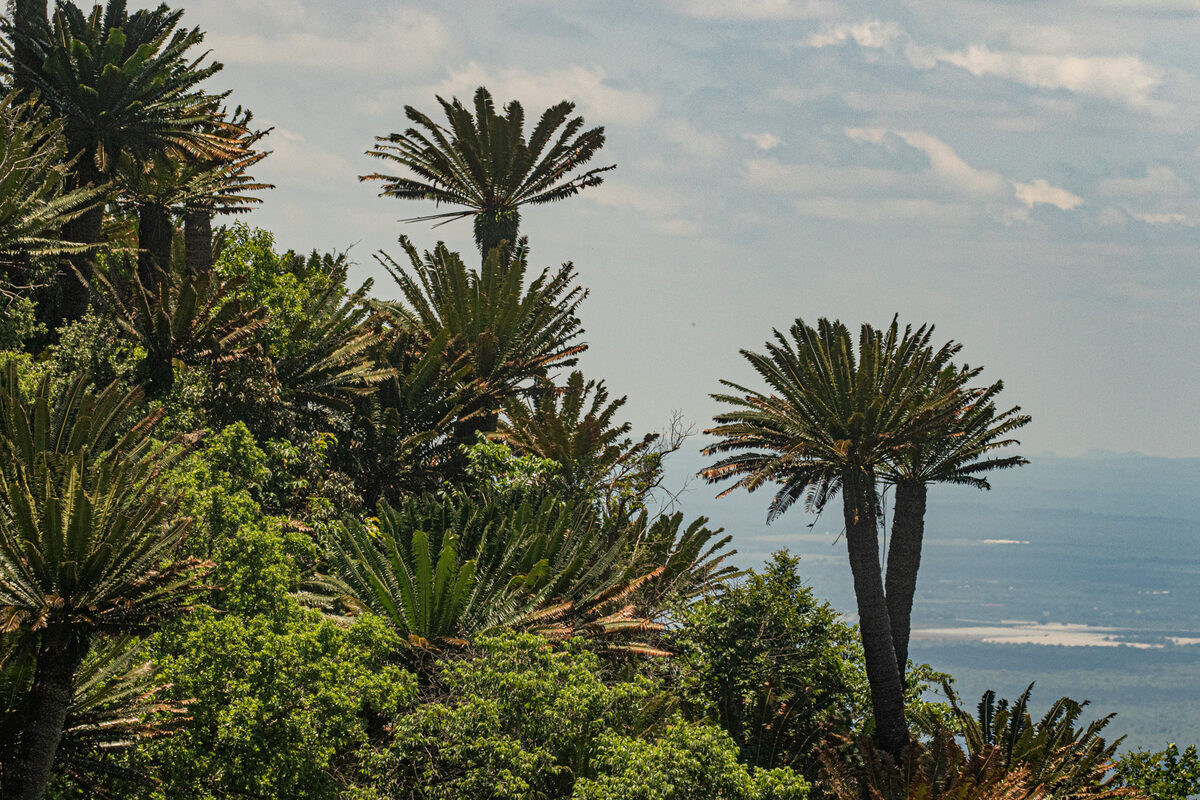
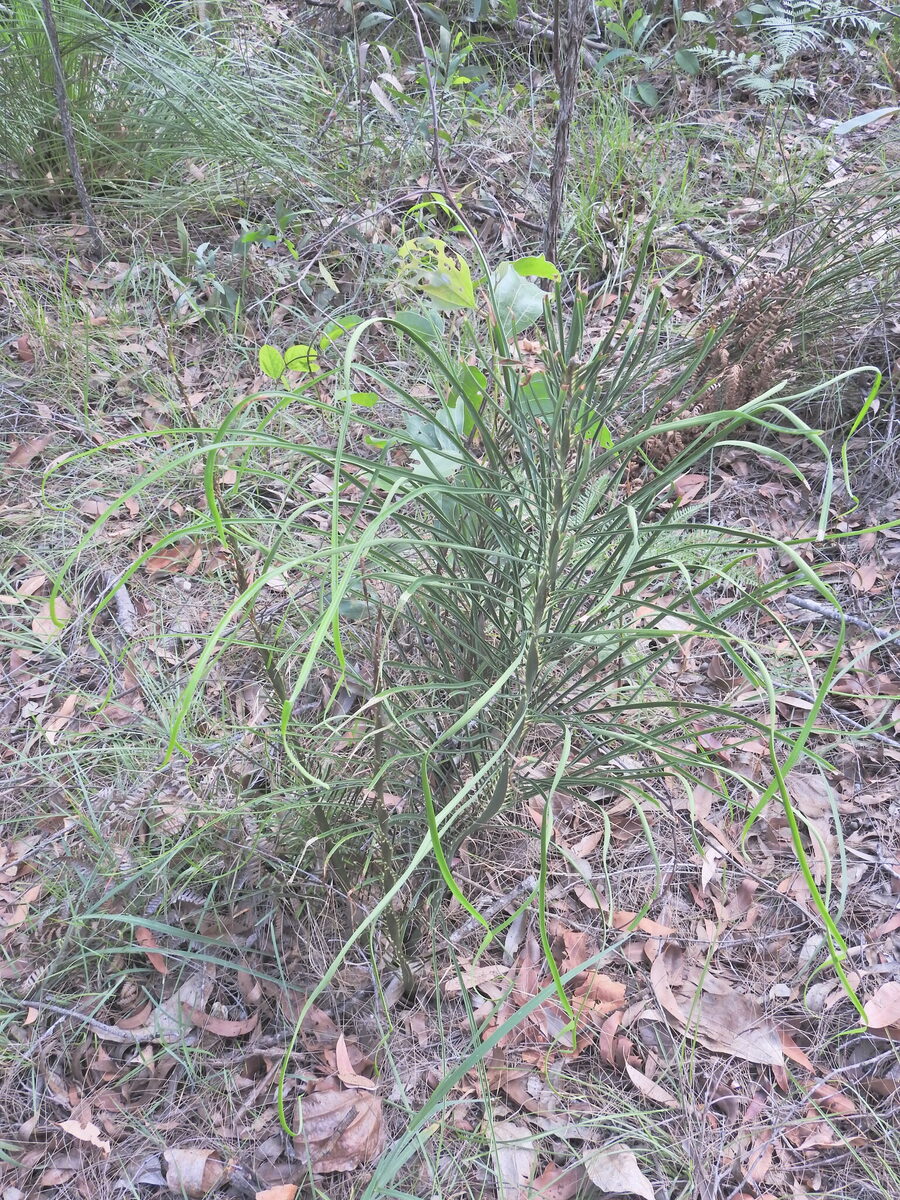
Cycas siamensis
Miq.
Siamese cycad
iNaturalist· cc-by-nc-sa
(c) Cerlin Ng, some rights reserved (CC BY-NC-SA)
iNaturalist· cc-by-nc-sa
(c) Cerlin Ng, some rights reserved (CC BY-NC-SA)
iNaturalist· cc-by
(c) Oleg Kosterin, some rights reserved (CC BY), uploaded by Oleg Kosterin
Summary
Source: WikipediaCycas siamensis is a species of cycad native to Myanmar, Thailand, and Vietnam.
Description
A small tree. The trunk is 1.5 m tall and 40-60 cm across. It is swollen at the base. The young leaves bear red brown hairs. There are many leaves. They form a widely spreading crown. They are 0.6-1.2 m long by 10-40 cm wide. They are dark green. The leaf stalks are 20-35 cm long. There are 70-180 leaflets on each leaf. The male cones are 20-30 cm long by 6-8 cm wide. They are narrow, oblong, brown and hairy. The female cones are loose and open.
Edible Uses
The seed kernels are poisonous but become edible after soaking in running water for 3-4 days. Tubers are edible after very long cooking. Starch can be extracted from the stem.
Traditional Uses
The kernels of the seeds are poisonous but when soaked in running water for 3-4 days can become edible. The tubers are edible after very long cooking. Starch can be extracted from the stem.
Medicinal Uses
A gum obtained from the plant has been used medicinally, particularly as an agent that is said to produce rapid suppuration when applied to malignant ulcers. The gum also has the repute of being a good antidote for snake and insect bites. This species is said to have the same uses as Cycas rumphii. These uses are as follows:- The pollen is narcotic. The bark and the seeds are ground to a paste with oil and used as a poultice on sores and swellings. The juice of tender leaves is useful in the treatment of flatulence and vomiting.
Known Hazards
We have no specific information for this species, but most if not all members of this genus are believed to contain toxins. The two main toxic compounds that have been identified are cycasin and macrozamin. When ingested in sufficient quantities, these compounds are extremely poisonous to humans and many other animals, and have been shown to cause liver damage and cancer. Cycasin and macrozamin have a cumulative effect upon the body and are suspected of causing neurological disorders when ingested in small amounts over long periods of time. There is a long history of human use of this genus as a starch-rich food, but it should be noted that the plants needed to be treated in various ways in order to remove any toxic principles. Caution should be exercised even with properly prepared foods, since even then regular consumption may lead to severe health problems and death. Since many of these species are becoming increasingly rare in the wild, this is probably a food best left to times of food shortage when other, better foods, are not available.
Distribution
They grow in tropical places. They grow in places with hot humid summers and mild dry winters. It grows under clear forest in coastal regions. It requires good drainage. It needs light shade. It needs regular watering. They cannot tolerate frosts. In Brisbane Botanical gardens. In Yunnan.
Where It Grows
Asia, Australia, Cambodia, China, India, Indochina, Laos, Malaysia, Myanmar, SE Asia, Thailand, Vietnam,
Cultivation
Plants are grown from seed.
Propagation
Seed - best sown in containers as soon as it is ripe. Stored seed should be pre-soaked for 24 hours in warm water prior to sowing. The seed should be sown 2cm deep in individual pots, which are then sealed in plastic bags to keep them moist until germination takes place. Germinates in 1 - 3 months at 25°c. Division of suckers in the spring.
Other Uses
A gum exudes through wounds in the plant, especially from the megasporophylls, stems and leaves. It is used medicinally and as an adhesive. When placed in water, Cycas gum begins to swell almost immediately. By the end of several days, it expands to many times its original size and becomes so colourless and transparent that it cannot be seen in water but must be felt for with a rod. Cycas gum has been likened in its properties to that of Sterculia setigera This species is said to have the same uses as Cycas rumphii. These uses are as follows:- The bark sap is used as a glue. The fruits are strung together to make children's toys or rattles.
Notes
There are about 20-40 Cycas species.
Synonyms
Also Known As
Duochi, Ko'ook, Mondaing, Pakut-kon, Ph'aawz, Prang prang prei, Prong-liam, Prong-pa, Talapat-ruesi, Thien tue xiem
References (11)
- Anderson, E. F., 1993, Plants and people of the Golden Triangle. Dioscorides Press. p 208
- Bot. Zeitung (Berlin) 21:334. 1863
- Burkill, I.H., 1966, A Dictionary of the Economic Products of the Malay Peninsula. Ministry of Agriculture and Cooperatives, Kuala Lumpur, Malaysia. Vol 1 (A-H) p 731
- Hu, Shiu-ying, 2005, Food Plants of China. The Chinese University Press. p 275
- Jones, D.L., 2000, Cycads of the world. Reed New Holland. p 158
Show all 11 references Hide references
- Phon, P., 2000, Plants used in Cambodia. © Pauline Dy Phon, Phnom Penh, Cambodia. p 187
- PROSEA handbook Volume 9 Plants yielding non-seed carbohydrates. p 188
- Verheij, E. W. M. and Coronel, R.E., (Eds.), 1991, Plant Resources of South-East Asia. PROSEA No 2. Edible fruits and nuts. Pudoc Wageningen. p 327
- Wickens, G.E., 1995, Edible Nuts. FAO Non-wood forest products. FAO, Rome. p174
- World Checklist of Useful Plant Species 2020. Royal Botanic Gardens, Kew
- Xu, You-Kai, et al, 2004, Wild Vegetable Resources and Market Survey in Xishuangbanna, Southwest China. Economic Botany. 58(4): 647-667.