Okoubaka aubrevillei
Pellegr. & Normand
iNaturalist· cc-by-sa
(c) H. Zell, some rights reserved (CC BY-SA)
wikimedia· cc-by-sa
Wikimedia Commons - H. Zell
Summary
Source: WikipediaOkoubaka aubrevillei (known as okoubaka tree from "oku baku" in Anyin) is a rare tropical tree species distributed throughout tropical rainforests of West and Central Africa that is thought to be the largest known parasitic plant.
Description
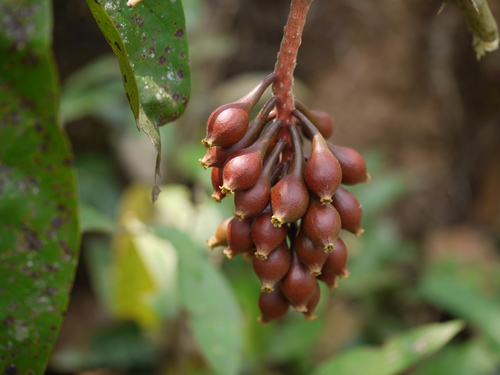
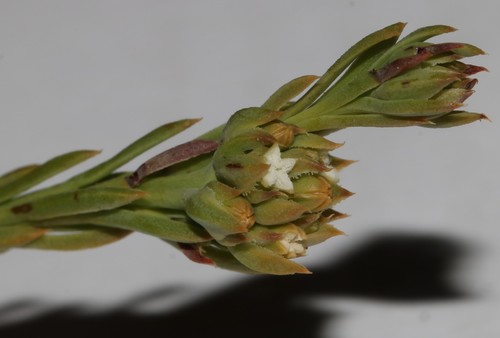
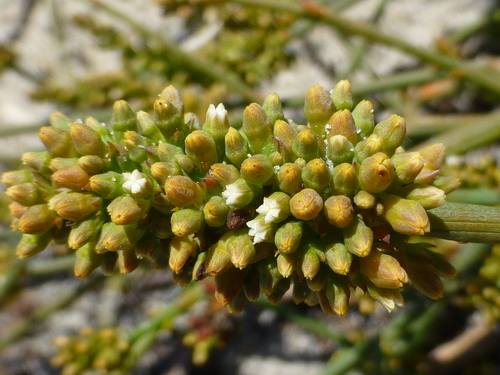
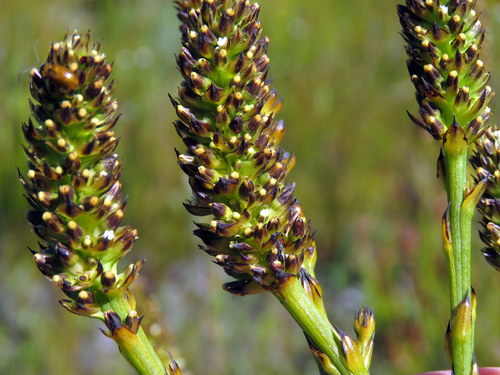
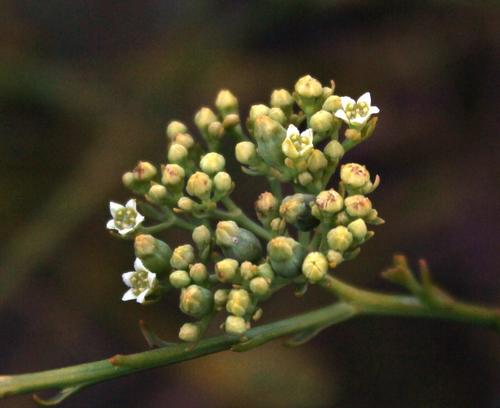
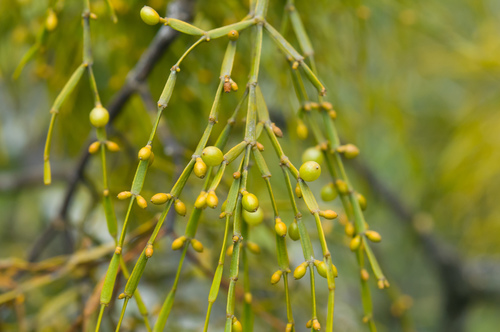
A forest tree. It grows 30 m tall. The trunk is cylinder shaped. The trunk can be 3 m wide. The leaves are 7.5-15 cm long by 3.5-6 cm wide. The flowers are greenish. The fruit are yellow when ripe.
Edible Uses
None known
Medicinal Uses
The bark is widely used medicinally in west Africa and is exported to Europe and other countries. It is particularly used in the treatment of skin disorders and poisoning. Six catechins have been isolated from the bark, including (+)-catechin and (+)-gallocatechin, along with β-sitosterol and stigmasterol. Antimicrobial and immunostimulating properties are attributed to phenolic compounds. A bark macerate is used to treat tachycardia. In Western phytotherapeutic medicine, the bark is used primarily for stomach upsets caused by poisoning and to support the system in cases of tiredness, depression, and allergies. Skin conditions, including those caused by syphilis and leprosy, are treated by washing or bathing in a macerate or infusion of bark in water. External bark preparations are also used to counteract poisoning. A bark macerate taken as a vapour bath or as nose drops is used to treat oedema, and in compress form it is applied to disperse haematomas. Traditionally, only a wooden tool is used to remove the bark — metal implements are not used under any circumstances.
Known Hazards
The bark is used as a fish poison.
Distribution
It is a tropical plant.
Where It Grows
Africa, Cameroon, Central Africa, Congo DR, Côte d'Ivoire, Ivory Coast, Sierra Leone, West Africa,
Cultivation
Natural regeneration is poor, because the fruits and seeds are eaten by porcupines. In southern Nigeria, Okoubaka aubrevillei is an important tree in religious ceremonies. It is considered to be a mystery plant in Cote D'Ivoire, and nobody would fell it. It belongs to a family of plants that includes many parasitic and hemiparasitic species and is said to kill trees around its growth place, though it has not been proven to be parasitic. Okoubaka aubrevillei is a hemi-parasitic plant. Within 6 months after germination, when nutrient reserves in the seed become depleted, the roots attach themselves to those of nearby plants by means of haustoria. However, one year after germination no differences were found in growth and foliar nutrient concentrations between plants growing with and those without hosts. The hosts, however, showed increased mortality or reduced growth. Hence, the apparent benefit which this species gains from the parasitic association is killing potential competitors for water, light and nutrients. The only tree species surviving close to it are Myrianthus arboreus and Musanga cecropioides.
Propagation
Seed — germination rates of 60–100% have been recorded. Seedlings have been transplanted in rows 4 metres apart with 2 metres between plants within rows. Millettia laurentii was planted between the rows to act as a host. After about 10 years, 54% of plants had survived, reaching an average height of 4.2 metres and a maximum of 8.6 metres. The host plant grew well for the first 6 years before beginning to die off.
Other Uses
The wood is sometimes used for construction or as firewood.
Notes
The bark is used as medicine.
Synonyms
Also Known As
Okoubaka tree, okoubaka aubrevillei
References (1)
- World Checklist of Useful Plant Species 2020. Royal Botanic Gardens, Kew