Urera gravenreuthii
Engl.
gbif· cc-by
Meise Botanic Garden
gbif· cc-by-nc-sa
MBG
gbif· cc-by
Meise Botanic Garden
Description
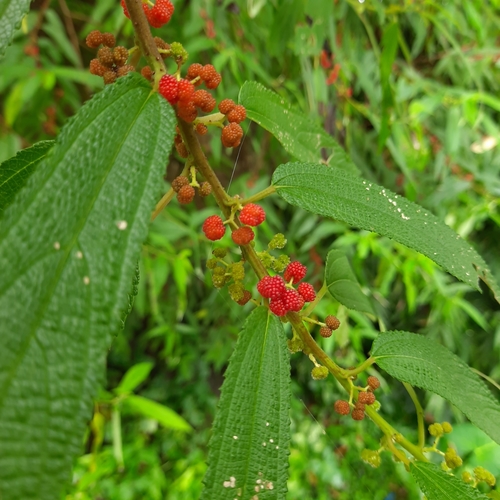
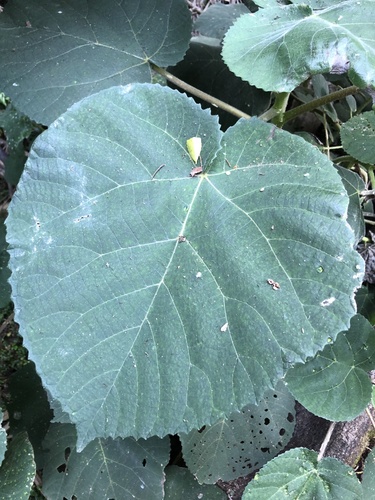
A creeper. It can grow 5-7 m long. The branches are reddish-green. Young parts are hairy. The leaves are narrowly oval and they taper to a blunt tip. They are 8-16 cm long by 6 cm wide. They have stinging hairs.
Edible Uses
The leaves are cooked and used in soups and with other cooked vegetables.
Traditional Uses
The leaves are cooked and used on soups and with other cooked vegetables.
This uses section is brief — help expand it
Medicinal Uses
The following reports are for the closely related U. Cordifolia. They almost certainly apply to this species also. There are numerous local medicinal uses reported for the leaf sap, leaf decoctions and dried, powdered leaves. These include in the treatment of dysentery; neuralgia; deafness and other ear affections; diarrhoea with blood; chest pain; male impotency; and furuncles. The leaves are also used as an aphrodisiac and laxative. The whole plant is used as a diuretic. The sap of crushed inflorescences is taken as a poison antidote.
Known Hazards
Although no specific mention has been seen for this species, most, if not all, members of this genus have strongly stinging hairs. The leaves are used as a component of arrow poison.
Distribution
It is a tropical plant. It grows in forests between 700-1,800 m above sea level.
Where It Grows
Africa, Benin, Cameroon, Central Africa, Congo DR, Equatorial Guinea, Gabon, West Africa,
Cultivation
A dioecious species, both male and female forms need to be grown if fruit and seed are required.
Other Uses
The bark fibre provides an excellent twine for fish-nets and lines, and for purposes requiring strength.
References (2)
- Ferns, K., Useful Tropical Plants.
- World Checklist of Useful Plant Species 2020. Royal Botanic Gardens, Kew