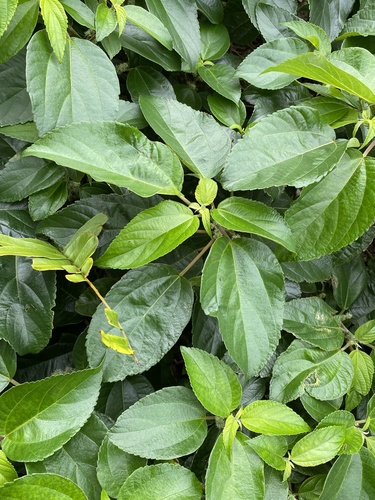
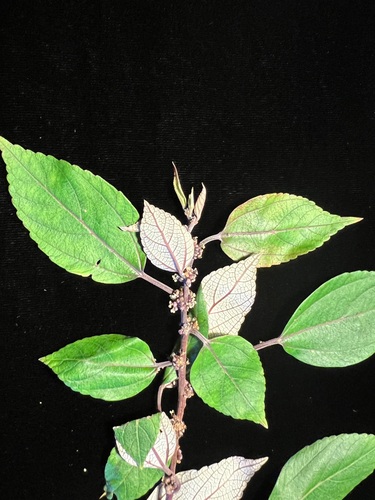
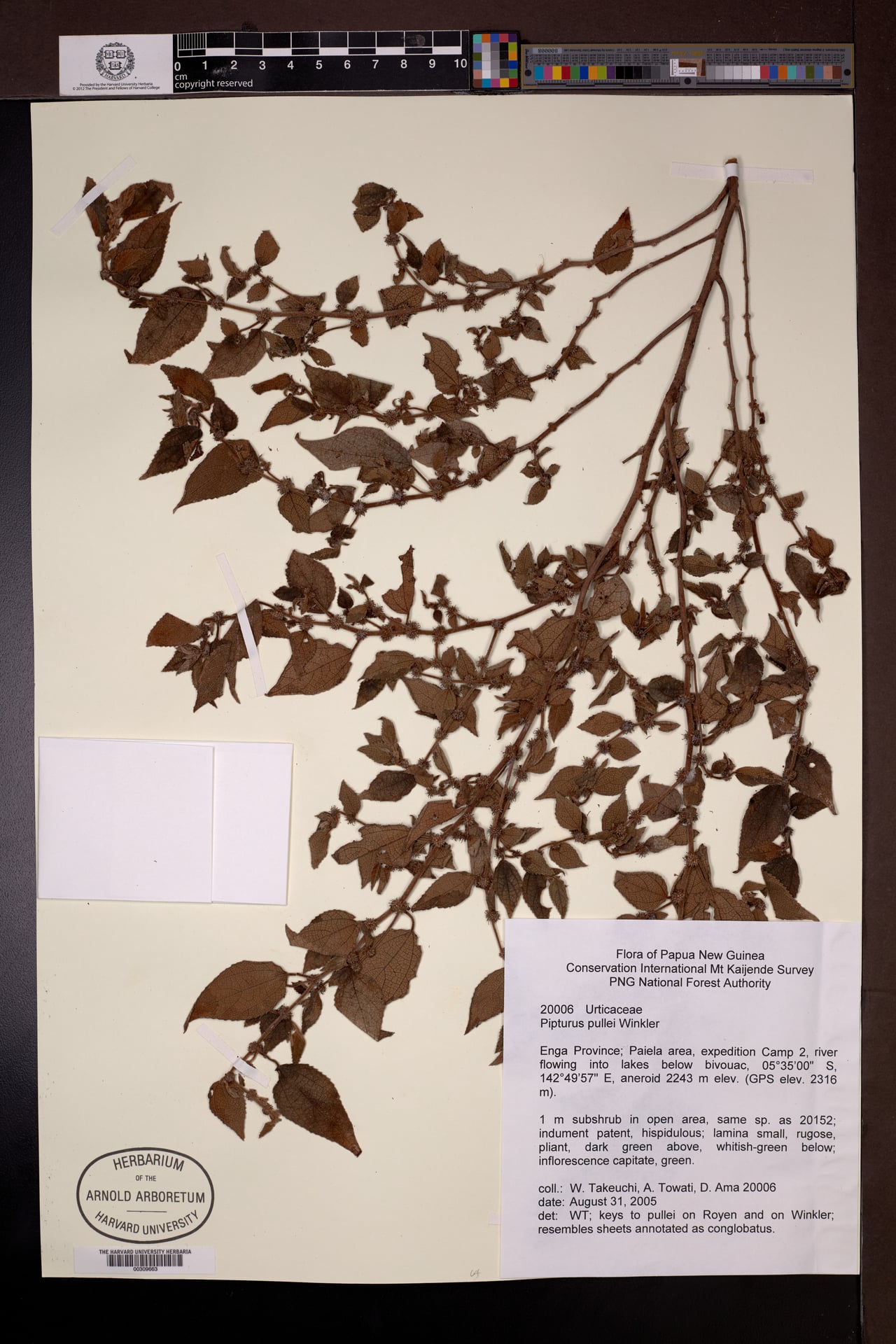
Debregeasia longifolia
(Burm. f.) Weddell
Long-leaved water hemp, Wild rhea
iNaturalist· cc-by-nc
(c) Shalahuddin Averroes Supartha, some rights reserved (CC BY-NC), uploaded by Shalahuddin Averroes Supartha
iNaturalist· cc-by-nc
(c) Stephen Thorpe, some rights reserved (CC BY-NC), uploaded by Stephen Thorpe
iNaturalist· cc-by-sa
(c) Dinesh Valke, some rights reserved (CC BY-SA)
Summary
Source: WikipediaDebregeasia longifolia also known as Orange Wild Rhea, is a large shrub growing up to a height of 5 meters seen in wet areas from plains to 1500m. Commonly found in India, Sri Lanka, Myanmar, Indo-China, west China and Malesia. In Matupi Township, Chin, Debregeasia longifolia is also known as Haikaeng Thing. Its wood is used for making charcoal and fiber used for fishing-lines. The fiber extracted from bark is used for house construction.
Description
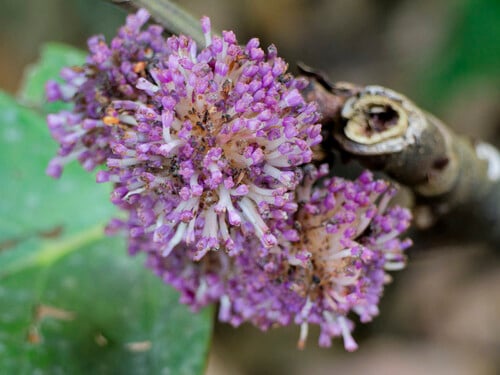
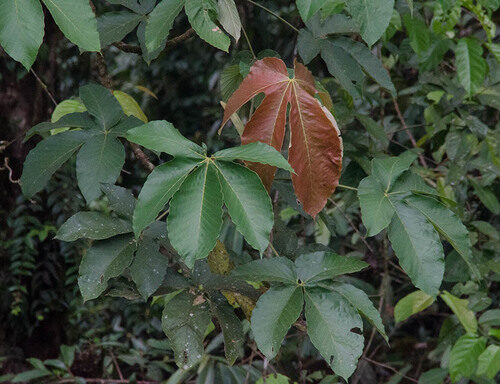
A shrub or small tree. It grows 1-3 m tall. The small branches are dark brown. The leaves are long and oval with teeth along the edge. They are 6-20 cm long by 1-4 cm wide. They are dark green above when mature and ashy soft hairs underneath. The male and female flowers are produced separately on the same plant. The flowers are whitish and in small heads. The fruit are yellow when ripe. They have many small embedded nutlets.
Edible Uses
Fruit - raw or cooked. The reddish or yellowish orange fruit is up to 12mm in diameter. The following entry was listed under Debregeasia edulis, but probably should apply here instead Fruit - raw. The yellow fruits are pleasantly sweet, their flavour is said to resemble strawberries.
Traditional Uses
The ripe fruit are eaten fresh or raw. The leaves are boiled and eaten.
This uses section is brief — help expand it
Medicinal Uses
The juice of the leaves is applied to areas of skin affected by scabies.
Known Hazards
Unlike many species in the nettle family (Urticaceae), members of this genus do not have stinging hairs.
Distribution
A tropical plant. In Nepal it grows from 500-2200 m altitude. It grows along river banks. In central and western China it grows to 1,400 m altitude. It suits shady moist places. In Yunnan.
Where It Grows
Asia, Australia, Bangladesh, Bhutan, Cambodia, China, Himalayas, India, Indochina, Indonesia, Laos, Malaysia, Myanmar, Nepal, Northeastern India, Philippines, SE Asia, Sikkim, Sri Lanka, Thailand, Vietnam,
Cultivation
Plants can be grown by cuttings or seed.
Propagation
Sow seed in a greenhouse from late winter to mid-summer, barely covering it. Germination typically occurs within 1–2 months at 20°C. Once large enough to handle, prick seedlings out into individual pots and grow on under glass for at least their first winter. Plant out into permanent positions in late spring or early summer, after the last expected frosts. Softwood cuttings can be taken in early summer.
Other Uses
A strong fibre obtained from the stem bark is used for making twine and rope. The wood is used mainly as fuel.
Production
In southern India plants flower and fruit December to April and in north India June to February.
Nutrition
| Part | Moisture | kJ | kcal | Protein | Vit A | Vit C | Iron | Zinc |
|---|---|---|---|---|---|---|---|---|
| Fruit | 81.7 | — | 72.5 | 3 | — | 3.9 | 7.3 | — |
Synonyms
Also Known As
Bayo esing, Bol-tysim, Chyet-kyi-dauk, Daar, Dalah esing, Githi, Hka-numri, Jirepole, Kattunochi, Kowlousii, Ling-shi-ting, Lingsi, Madeilo, Mao ma qiang ga, Monili, Namey, Neerinch, Ngamey, Ngamoy, Put-chaw, Qia bu ren, Sansaru, Sifei, So-tyrsim, Tashiari, Tatamtanam, Tsunyu, Tusaray, Tusare, Tushaare, Tushar, Tushiari, Tushiyari, Tussara, Udu, Wild rhea, Yangyangpa, Ye-tha-kwa
References (32)
- A. L. P. P. de Candolle, Prodr. 16(1):235. 1869
- Ajesh, T. P., et al, 2012, Ethnobotanical Documentation of Wild Edible Fruits used by Muthuvan Tribes of Idukki, Kerala-India. International Journal of Pharma and Bio Sciences 3(3): 479-487
- Anderson, E. F., 1993, Plants and people of the Golden Triangle. Dioscorides Press. p 208 (As Debregeasia velutina)
- Chase, P. & Singh, O. P., 2016, Bioresources of Nagaland: A Case of Wild 4 Edible Fruits in Khonoma Village Forest. in J. Purkayastha (ed.), Bioprospecting of Indigenous Bioresources of North-East India. p 50
- Cheng, Z., et al, 2022, Ethnobotanical study on wild edible plants used by Dulong people in northwestern Yunnan, China. Journal of Ethnobiology and Ethnomedicine (2022) 18:3
Show all 32 references Hide references
- Chua-Barcelo, R. T., 2014, Ethnobotanical survey of edible wild fruits in Benguet, Cordillera administrative region, the Philippines. Asian Pac. J. Trop. Biomed. 4(Suppl. 1):S525-S538
- Dobriyal, M. J. R. & Dobriyal, R., 2014, Non Wood Forest Produce an Option for Ethnic Food and Nutritional Security in India. Int. J. of Usuf. Mngt. 15(1):17-37
- Flora of China @ efloras.org Volume 5
- Ghosh, C. & Das A. P., 2011, Some useful and poisonous tea garden weeds from the Darjiling District of West Bengal, India. Pleione 5(1): 91 - 114
- GUPTA, (As Debregeasia velutina)
- Hoare, A., 2003, Food use of the Lundayeh SW Sabah. Borneo Research Council.
- Hu, Shiu-ying, 2005, Food Plants of China. The Chinese University Press. p 363
- Jeeva, S., 2009, Horticultural potential of wild edible fruits used by the Khasi tribes of Meghalaya. Journal or Horticulture and Forestry Vol. 1(9) pp. 182-192
- Khakurel, D., et al, 2021, Foods from the wild: Local knowledge, use pattern and distribution in Western Nepal. PLOS ONE.
- Kunwar, R.M., et al, 2012, Underutilized Plant Species in Far West Nepal. J. Mt. Sci. (2012) 9:589-600
- Luo, B., et al, 2019, Wild edible plants collected by Hani from terraced rice paddy agroecosystem in Honghe Prefecture, Yunnan, China. Journal of Ethnobiology and Ethnomedicine 15:56
- Manandhar, N.P., 2002, Plants and People of Nepal. Timber Press. Portland, Oregon. p 190
- Mehta, P. S. et al, 2010, Native plant genetic resources and traditional foods of Uttarakhand Himalaya for sustainable food security and livelihood. Indian Journal or Natural products and Resources. Vol 1(1), March 2010 pp 89-96
- Mozhui, R., et al, 2011, Wild edible fruits used by the tribals of Dimapur district of Nagaland, India. Pleione 5(1): 56 - 64.
- Nazarudeen, A., 2010, Nutritional composition of some lesser-known fruits used by the ethnic communities and local folks of Kerala. Indian Journal or Traditional Knowledge. Vol. 9(2): 398-402
- Patiri, B. & Borah, A., 2007, Wild Edible Plants of Assam. Geethaki Publishers. p 130
- Pfoze, N. L., et al, 2012, Survey and assessment of floral diversity on wild edible plants from Senapati district of Manipur, Northeast India. Journal of Biodiversity and Environmental Sciences. 1(6):50-52
- Plants for a Future database, The Field, Penpol, Lostwithiel, Cornwall, PL22 0NG, UK. http://www.scs.leeds.ac.uk/pfaf/
- Sawian, J. T., et al, 2007, Wild edible plants of Meghalaya, North-east India. Natural Product Radiance Vol. 6(5): p 415
- Singh, B., et al, 2012, Wild edible plants used by Garo tribes of Nokrek Biosphere Reserve in Meghalaya, India. Indian Journal of Traditional Knowledge. 11(1) pp 166-171
- Singh, H.B., Arora R.K.,1978, Wild edible Plants of India. Indian Council of Agricultural Research, New Delhi. p 54
- Singh, V. B., et al, (Ed.) Horticulture for Sustainable Income and Environmental Protection. Vol. 1 p 215
- Thothathri, K., & Pal, G.D., 1987, Further Contribution to the Ethnobotany of Subansiri District, Aranchal Pradesh. J. Econ. Tax. Bot. Vol. 10 No. 1 pp 149-157
- Tsering, J., et al, 2017, Ethnobotanical appraisal on wild edible plants used by the Monpa community of Arunchal Pradesh. Indian Journal of Traditional Knowledge. Vol 16(4), October 2017, pp 626-637
- Upreti, K., et al, 2010, Diversity and Distribution of Wild Edible Fruit Plants of Uttarakhand. Bioversity Potentials of the Himalaya. p 168
- Wild edible plants of Himachal Pradesh
- World Checklist of Useful Plant Species 2020. Royal Botanic Gardens, Kew