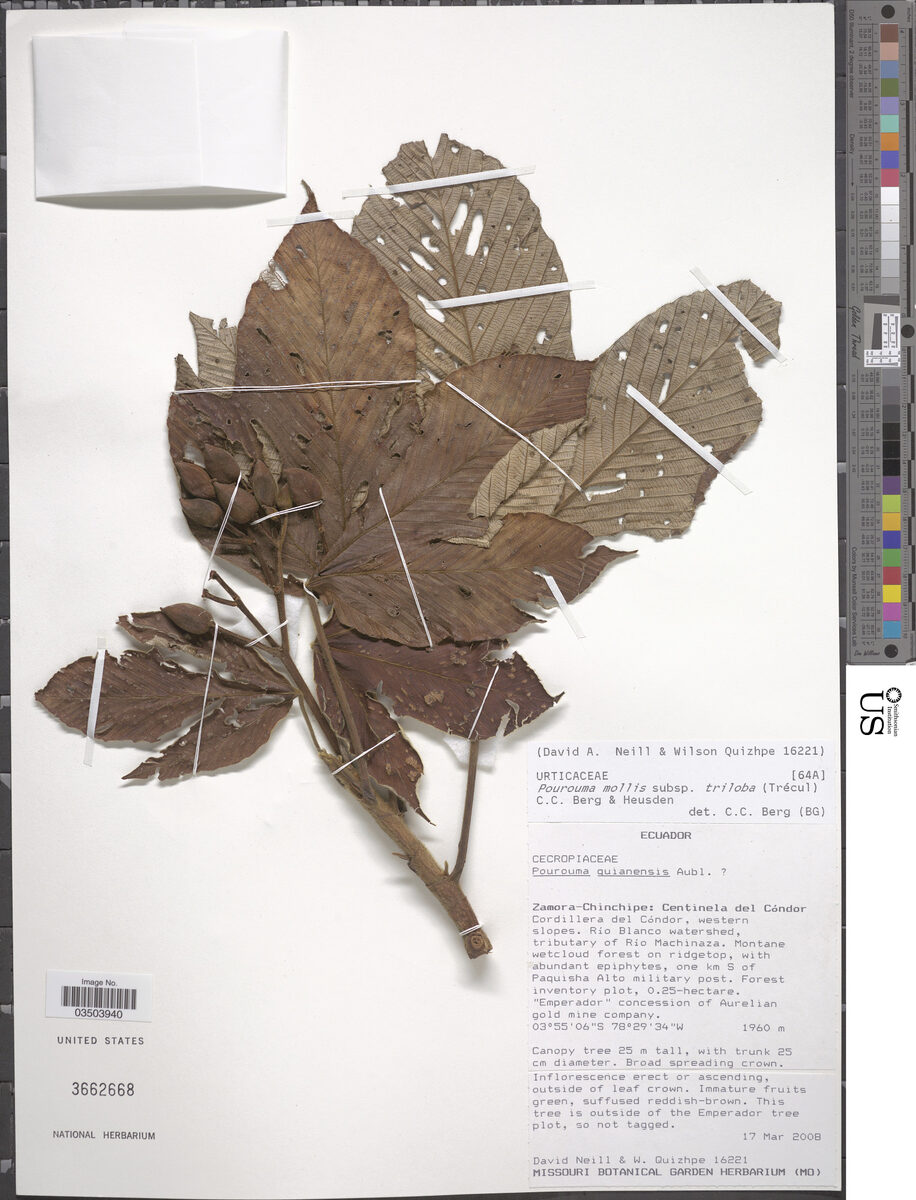
Debregeasia hypoleuca - (Hochst.)Wedd.
(Hochst.)Wedd.
gbif· cc-by-nc-sa
MBG
gbif· cc0
Conveyor Belt
gbif· cc-by-sa
GBIF
Description
Debregeasia hypoleuca is an evergreen Shrub growing to 5 m (16ft 5in). See above for USDA hardiness. It is hardy to UK zone 8 and is frost tender. It is in leaf all year, and the seeds ripen from October to November. The species is dioecious (individual flowers are either male or female, but only one sex is to be found on any one plant so both male and female plants must be grown if seed is required). . The plant is not self-fertile. Suitable for: light (sandy), medium (loamy) and heavy (clay) soils. Suitable pH: mildly acid, neutral and basic (mildly alkaline) soils. It can grow in semi-shade (light woodland). It prefers moist soil.
Edible Uses
Fruit - raw or cooked. Sweet but insipid and mucilaginous. About the size of a pea. Used as a flavouring.
Distribution
W. Asia to the W. Himalayas.
Where It Grows
TEMPERATE ASIA: Saudi Arabia, Yemen, Afghanistan, China (Xinjiang Uygur Zizhiqu (southwest), Xizang Zizhiqu (south)) TROPICAL ASIA: India, Nepal, Pakistan AFRICA: Eritrea, Ethiopia
Cultivation
Prefers a fertile well-drained loam with some shelter at the hottest part of the day. Plants tolerate occasional lows to about -5°c. This species is probably not very hardy in Britain and will probably require greenhouse protection, though it might be possible to grow it outdoors in the mildest areas of the country, especially if it is given the protection of a warm wall. Dioecious, male and female plants must be grown if seed and fruit is required.
Propagation
Seed - sow late winter to mid-summer in a greenhouse and only just cover the seed. Germination usually takes place within 1 - 2 months at 20°c. When they are large enough to handle, prick the seedlings out into individual pots and grow them on in the greenhouse for at least their first winter. Plant them out into their permanent positions in late spring or early summer, after the last expected frosts. Softwood cuttings in early summer.
Other Uses
Fibre WoodA fibre is obtained from the bark. It is used for making twine and rope[46, 51, 61, 123, 140, 158]. Wood - soft and light. It is not much use and is mployed mainly as a fuel.