Dendrocnide excelsa
(Wedd.) Chew
Giant stinging tree
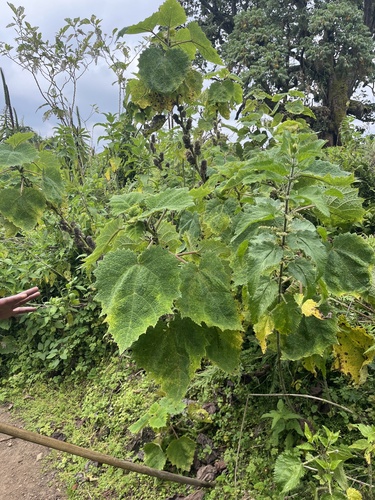
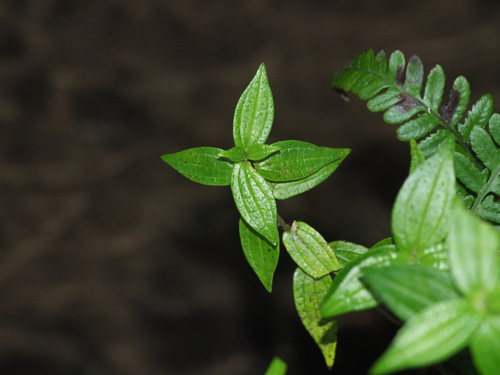
iNaturalist· cc-by-nc
(c) ericguymer, some rights reserved (CC BY-NC)
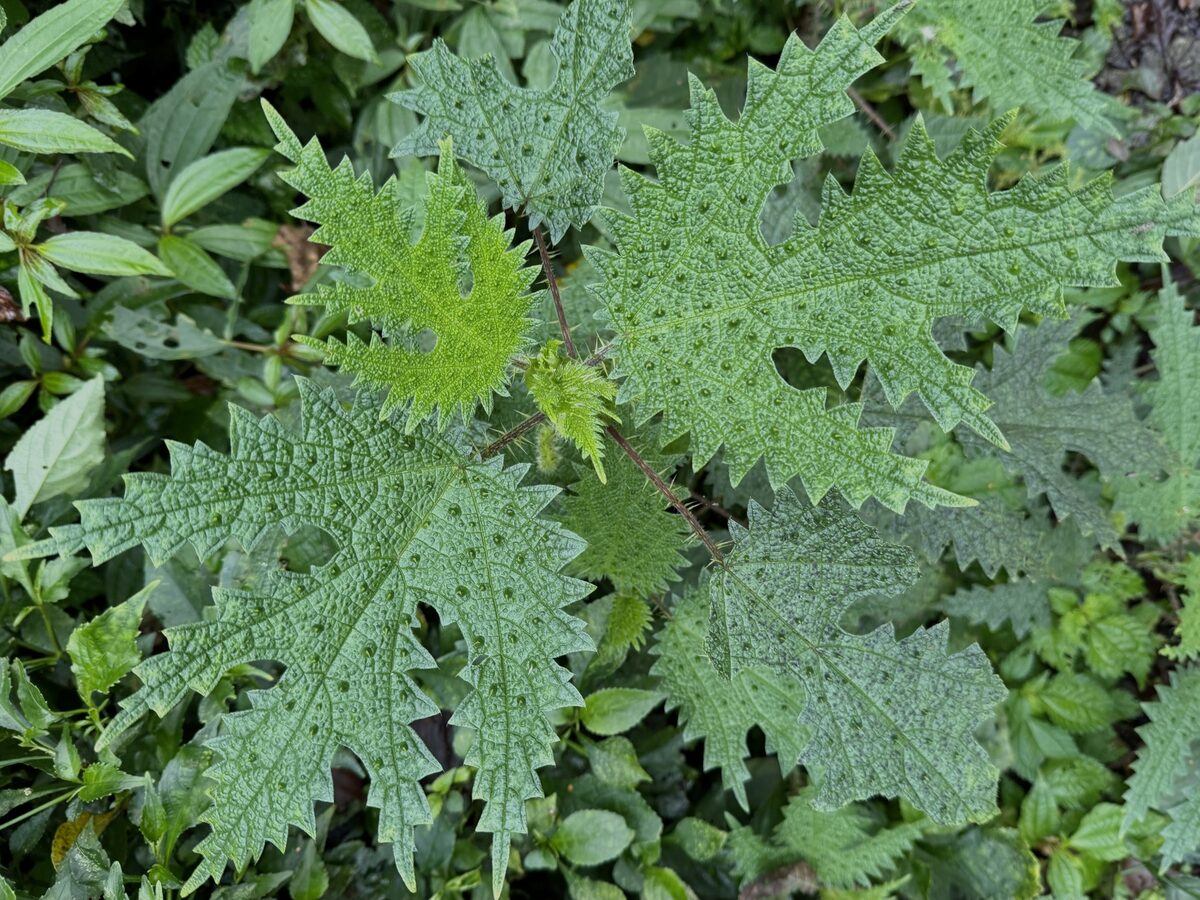
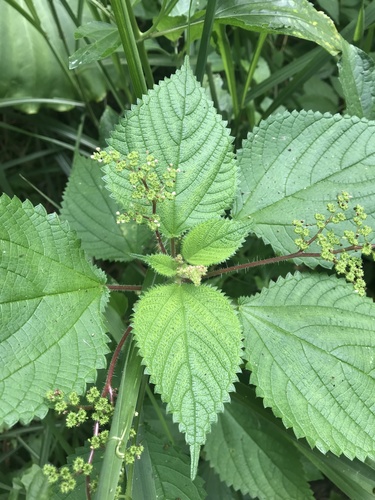
iNaturalist· cc-by-nc
(c) ecoem22, some rights reserved (CC BY-NC)
Summary
Source: WikipediaDendrocnide excelsa, commonly known as the giant stinging tree or fibrewood, is a rainforest tree in the nettle family Urticaceae, which is endemic to eastern Australia. It occurs from Tathra, New South Wales to Imbil in southeastern Queensland, and is very common at Dorrigo National Park and other rainforest walks in eastern Australia. The habitat of the giant stinging tree is subtropical, warm temperate or littoral rainforest, particularly in disturbed areas, previously flattened by storms or cyclones. It is well known for its extremely painful, long-lasting sting.
Description
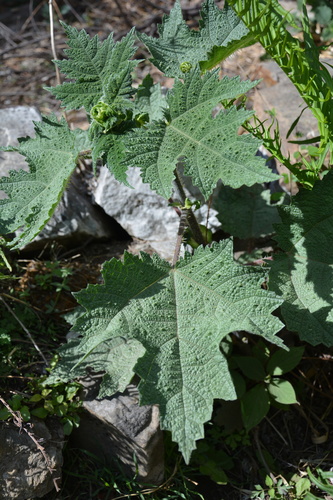
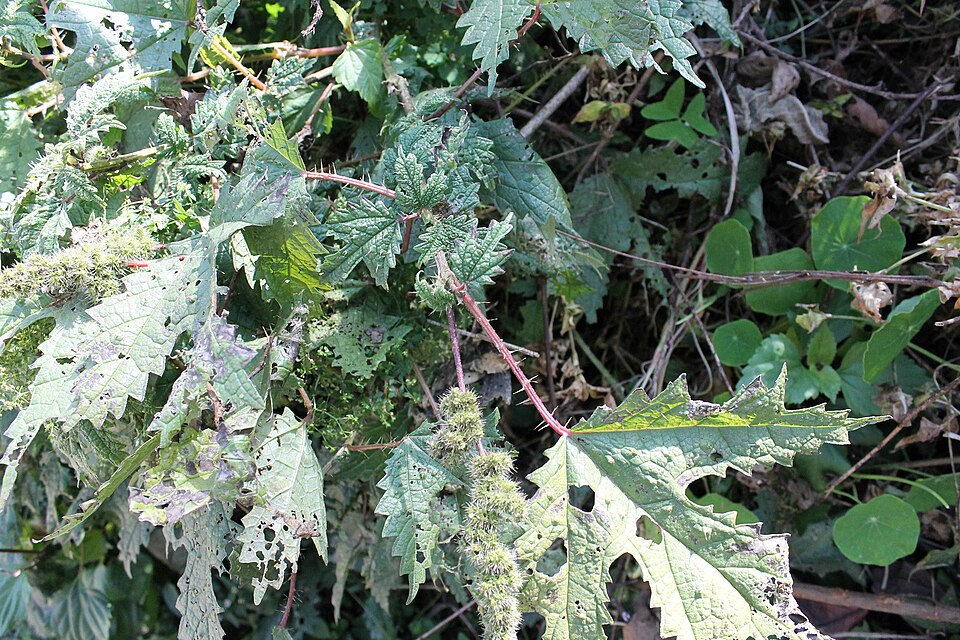
A tall spreading tree. It grows 10-38 m high and spreads 5-15 m wide. The bark is grey and scaly. The timber is soft. The young parts are covered with stiff stinging hairs. The leaves are 15-30 cm long by 15-20 cm wide. They are broadly oval and pale green. There are teeth around the edge. The leaf stalks are 3-15 cm long. The flowering stalks are in the axils of leaves. The flowers are of one sex. Male and female flowers are on separate trees. The nut is 0.1-0.2 cm across. It is on a fleshy stalk. This is white or pink.
Edible Uses
Fruit - raw. The fruits have a crisp texture and an acid flavour. Extreme care should be exercised if trying to eat this fruit - the stinging hairs are particularly virulent and need to be completely removed before eating the fruit. The fruits are produced in small clusters which can fall to the ground when ripe.
Traditional Uses
Caution: The plant has stinging hairs. The fruit is edible after the stinging hairs are removed.
This uses section is brief — help expand it
Known Hazards
The plant is covered with stinging hairs, particularly on young parts and leaves, which cause a severe sting.
Distribution
It grows in rainforests in subtropical and warm temperate places. It is often in clearings and on the edges of the forest. It needs a well drained soil.
Where It Grows
Australia*,
Cultivation
Plants can be grown from fresh seed or by cuttings.
Propagation
Seed - it germinates readily. Cuttings root easily.
Other Uses
A fibre is obtained from the inner bark, and also from the root bark. The fibre from the root bark is said to be better quality. It is used for cordage, nets etc. Traditionally, the Aborigines would simply chew the bark until the fibres were sufficiently separated to be twisted into a cord. The bark can also be beaten with a wooden hammer onto a flat piece of wood, in a manner similar to tapa cloth (Brousonettya papyrifera), to make a rather rough cloth. The timber is too soft to be of much use. A fast-growing natural pioneer species, it is sometimes used in reforestation projects within its native range - though care should be taken of its stinging hairs.
Notes
There are 36 Dendrocnide species. CAUTION: Leaves sting badly.
Nutrition
| Part | Moisture | kJ | kcal | Protein | Vit A | Vit C | Iron | Zinc |
|---|---|---|---|---|---|---|---|---|
| Fruit | 71.9 | — | — | 2.3 | — | 3 | 1.2 | 0.5 |
Synonyms
References (13)
- Bodkin, F., 1991, Encyclopedia Botanica. Cornstalk publishing, p 334
- Caton, J.M. & Hardwick, R. J., 2016, Field Guide to Useful Native Plants from Temperate Australia. Harbour Publishing House. p 190
- Cribb, A.B. & J.W., 1976, Wild Food in Australia, Fontana. p 28
- Cronin, L., 1989, The Concise Australian Flora. Reed. p 157
- Elliot, W.R., & Jones, D.L., 1984, Encyclopedia of Australian Plants suitable for cultivation. Vol 3. Lothian. p 250
Show all 13 references Hide references
- Flora of Australia, Volume 3, Hamamelidales to Casuarinales, Australian Government Publishing Service, Canberra (1989) p 78, 79
- Haslam, S., 2004, Noosa's Native Plants. Noosa Integrated Catchment Assn. Inc. p 332
- Hibbert, M., 2002, The Aussie Plant Finder 2002, Florilegium. p 85
- Hiddins, L., 1999, Explore Wild Australia with the Bush Tucker Man. Penguin Books/ABC Books. p 142
- Lazarides, M. & Hince, B., 1993, Handbook of Economic Plants of Australia, CSIRO. p 78
- Low, T., 1991, Wild Food Plants of Australia. Australian Nature FieldGuide, Angus & Robertson. p 79
- Nicholson, N & H., 1996, Australian Rainforest Plants 2, Terania Rainforest Publishing. NSW. p 24
- Williams, J.B., Harden, G.J., and McDonald, W.J.F., 1984, Trees and shrubs in rainforests of New South Wales and Southern Queensland. Univ. of New England, Armidale. p 64