Cyathea contaminans
(Wallich ex Hooker) Copeland
Blue tree fern
iNaturalist· cc-by-nc
(c) Naufal Urfi Dhiya'ulhaq, some rights reserved (CC BY-NC)
iNaturalist· cc-by-nc
(c) Naufal Urfi Dhiya'ulhaq, some rights reserved (CC BY-NC)
iNaturalist· cc-by-nc
(c) Naufal Urfi Dhiya'ulhaq, some rights reserved (CC BY-NC)
Description
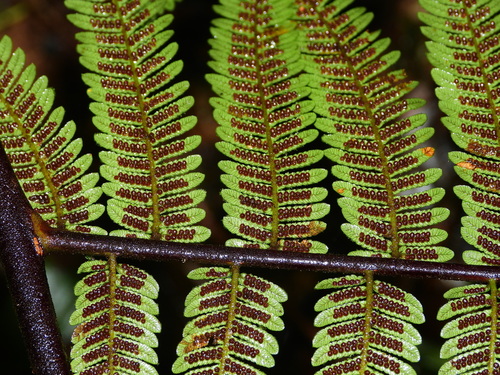
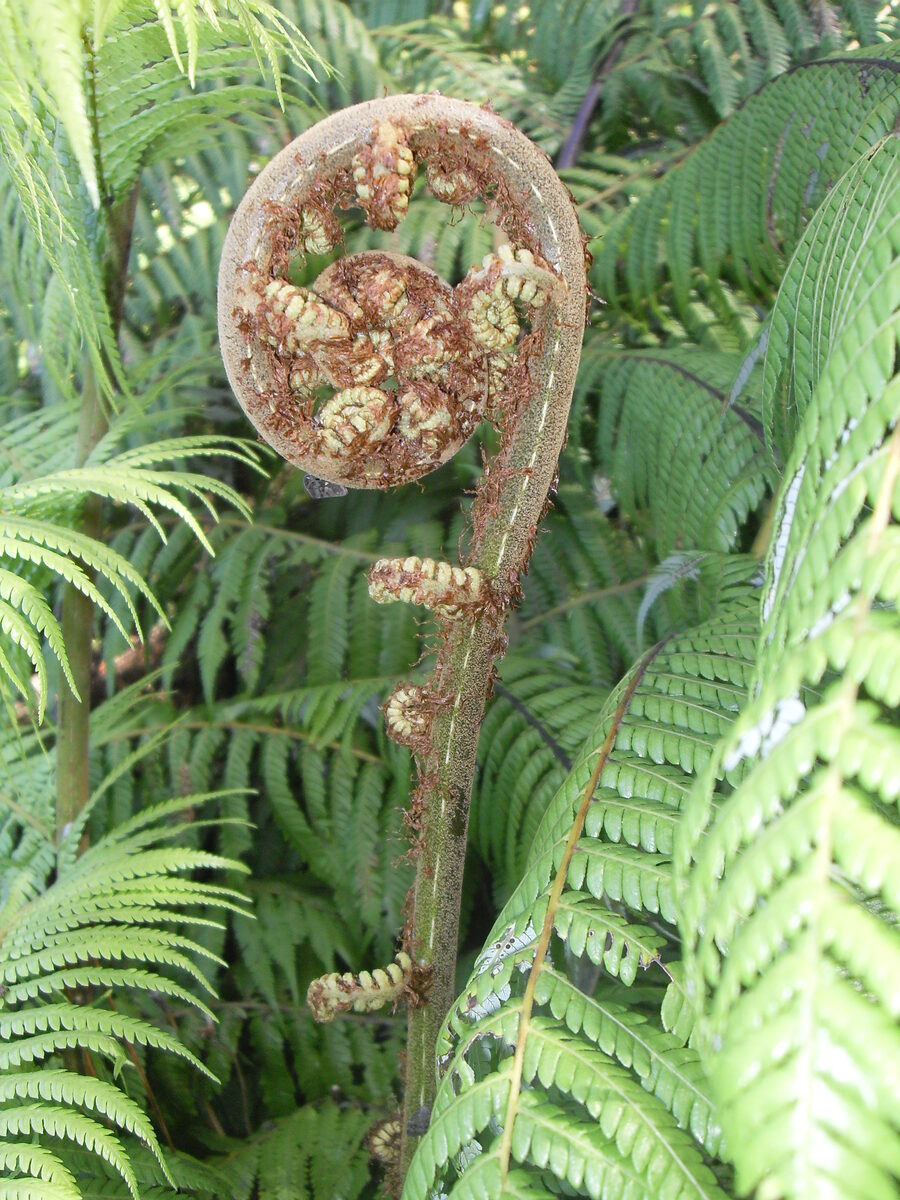
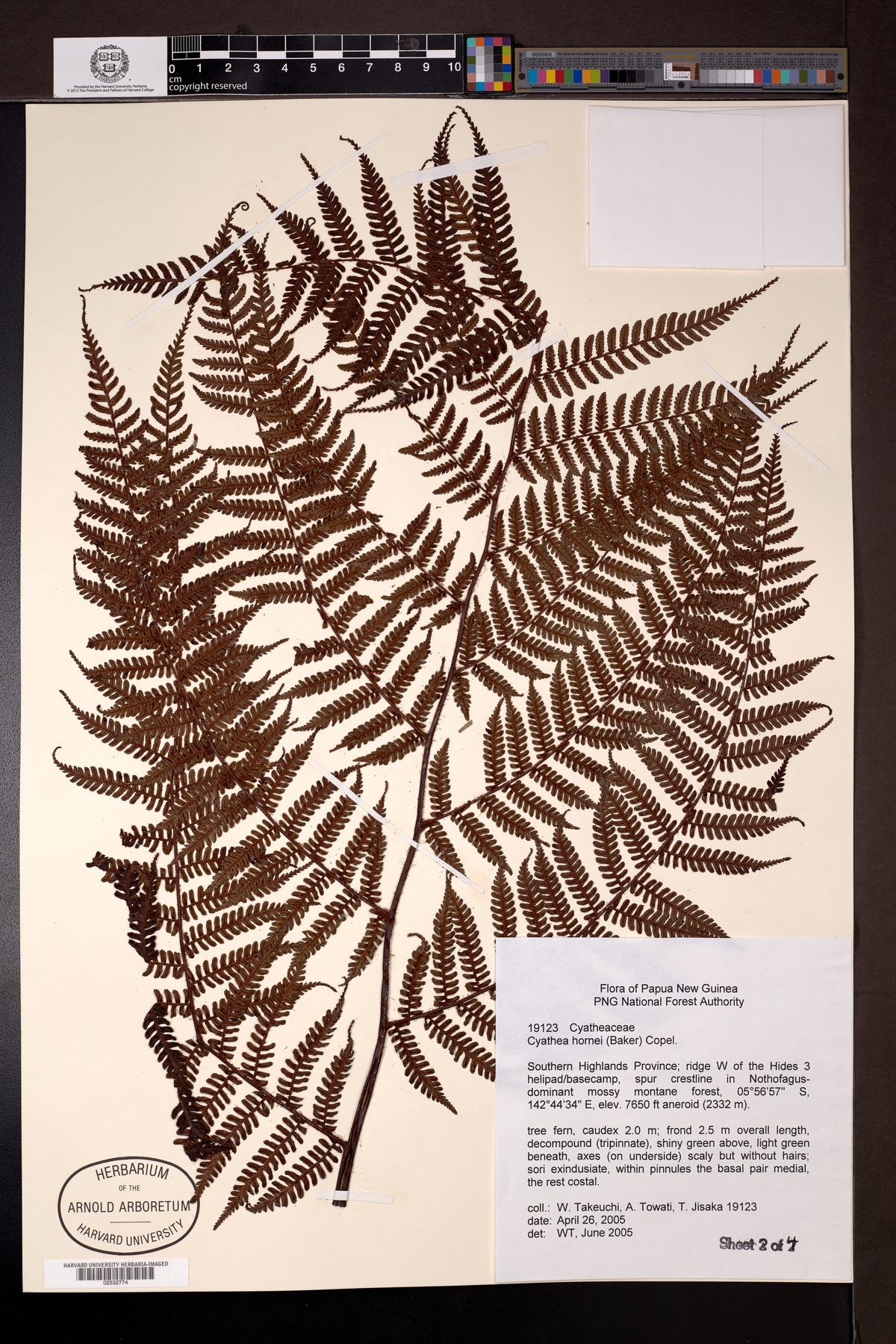
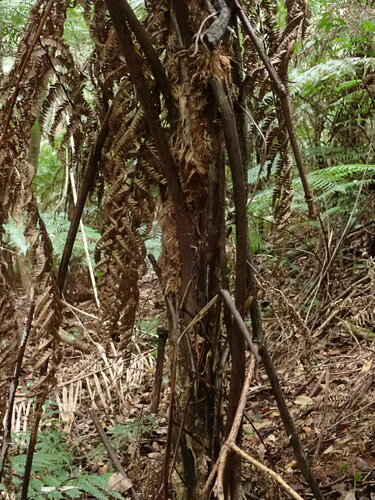
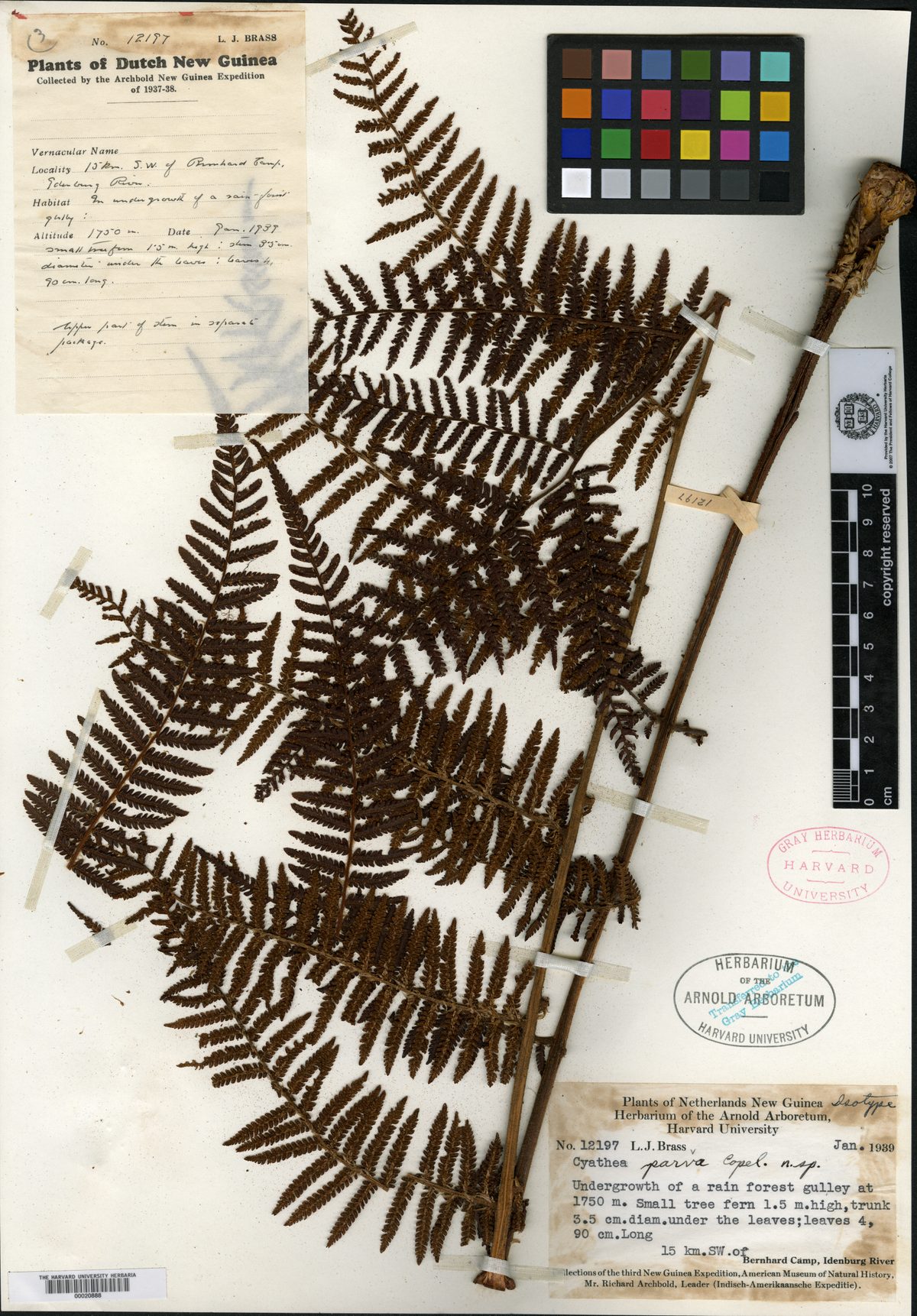
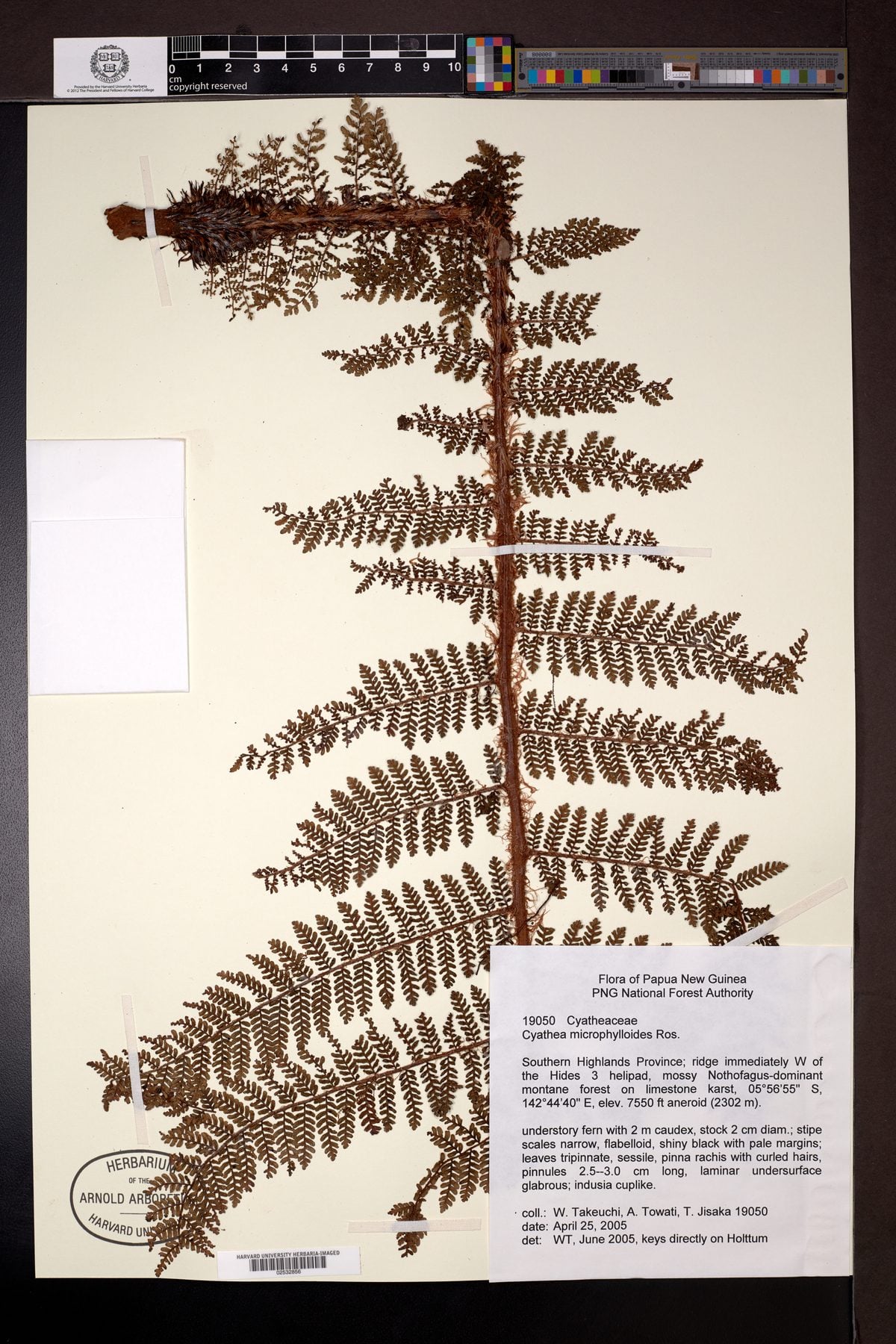
A tree fern. It has erect trunks 5-8 m tall. The trunks can be 20 m tall. The trunks are 12-15 cm thick. It has many roots. These make the base thick. The fronds are 2-3.5 m long and have scales on all surfaces. The fronds are divided 2 or 3 times. The fronds have many side leaflets. These are 50-75 cm long. The secondary leaflets are 8-12 mm long. The spore bodies are on the under surface of the fronds. They are near the rib. The covering over these falls off early. The old fronds fall off.
Edible Uses
The young fronds are cooked and eaten with meat. The young pith is cut up and steamed with rice. It is an important green leafy vegetable in Papua New Guinea, especially at pig feasts.
Traditional Uses
The young fronds are cooked and eaten with meat. The young pith is cut up and steamed with rice and eaten when tree ferns are being harvested for buildings. CAUTION Leaves of Cyathea ferns are known to contain chemicals called flavenoid glycosides.
Known Hazards
Leaves of Cyathea ferns are known to contain chemicals called flavonoid glycosides.
Distribution
A tropical plant. They require abundant moisture and do best in part shade. They grow in open forest often near streams. It mostly grows between 200-1600 m. They are frost tender.
Where It Grows
Asia, Australia, India, Indochina, Indonesia, Laos, Malaysia, Pacific, Papua New Guinea, PNG, Philippines, SE Asia, Thailand, Vietnam, West Papua,
Cultivation
These ferns mostly grow naturally. They are preserved when bush is being cleared for gardens. They can easily be raised from spores on the back of fronds. They can be transplanted if some roots are included and the fronds are trimmed.
Other Information
In Papua New Guinea, a very common and important green leafy vegetable, especially at pig feasts.
Notes
There are about 800 Cyathea species.
Synonyms
Also Known As
Anonotong, Gantaw, Hua ai pet, Pakis pohon biru, Pakong buaya, Paku arjuno, Paku gajah, Paku gajah gunung, Paku pohon, Paku tiang, Paku tihang, Pusa-pusa, Rang tientoa ban, Teratera
References (14)
- Borrell, O.W., 1989, An Annotated Checklist of the Flora of Kairiru Island, New Guinea. Marcellin College, Victoria Australia. p 2
- Chin, W.Y., 1998, Ferns in the Tropics. Kangaroo. p 111
- French, B.R., 1986, Food Plants of Papua New Guinea, A Compendium. Asia Pacific Science Foundation p 67
- Goudey, C.J., 1988, A Handbook of Ferns for Australia and New Zealand. Lothian. p 82
- Mulyoutami, E., et al, 2009, Local knowledge and management os simpikng (forest gardens) among the Dayak people in East Kalimatan, Indonesia. Forest Ecology and Management. 257:2054-2061
Show all 14 references Hide references
- Ochse, J.J. et al, 1931, Vegetables of the Dutch East Indies. Asher reprint. p 212 (As Alsophila glauca)
- Peekel, P.G., 1984, (Translation E.E.Henty), Flora of the Bismarck Archipelago for Naturalists, Division of Botany, Lae, PNG. p 9, 11
- Pham-Hoang Ho, 1999, An Illustrated Flora of Vietnam. Nha Xuat Ban Tre. p 115
- Powell, J.M., Ethnobotany. In Paijmans, K., 1976, New Guinea Vegetation. Australian National University Press. p 109
- Priyadi, H., et al, Five hundred plant species in Gunung Halimun Salak National Park West Java. A checklist including Sundanese names, distribution and use. CIFOR, FFPRI, SLU p 136
- Large, M.F., & Braggins, J.E., 2004, Tree Ferns. CSIRO Publishing, Melbourne, Australia. p 114 Plate 34
- Sukarya, D. G., (Ed.) 2013, 3,500 Plant Species of the Botanic Gardens of Indonesia. LIPI p 860
- Wahyudi, 2017, Non-timber Forest Product (NTFP) Commodities Harvested and Marketed by Local People at the Local Markets in Manokwari - West Papua. Indonesian Journal of Forestry Research Vol. 4, No. 1, 27-35
- Yusuf, U. K., 2010, Ferns of Malaysian Rain Forest. A Journey Through the Fern World. Universiti Putra Malaysia Press p 32