Cyathea dealbata
(G. Forster) Swartz
Tree fern, Ponga fern, Silver fern
iNaturalist· cc-by-nc
(c) David Hutchinson, some rights reserved (CC BY-NC), uploaded by David Hutchinson
iNaturalist· cc-by-nc
(c) John B, some rights reserved (CC BY-NC), uploaded by John B
iNaturalist· cc-by-nc
(c) Laura, some rights reserved (CC BY-NC), uploaded by Laura
Summary
Source: WikipediaAn evergreen tree fern reaching 9 m tall and 2 m wide. Hardy to UK zone 9 and frost tender. Year-round foliage. Accommodates light, medium, or heavy soils across a range of pH levels. Grows in full to semi-shade and prefers moist or wet soil conditions.
Description
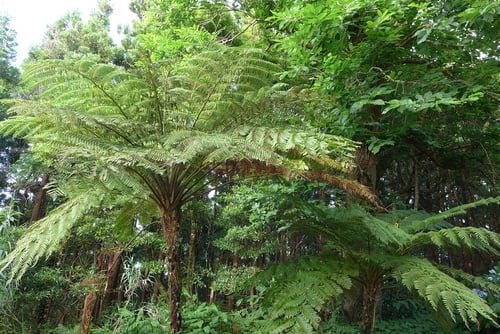
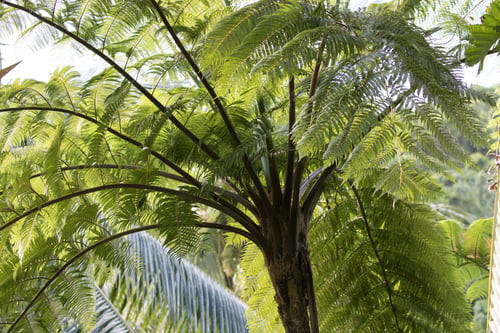
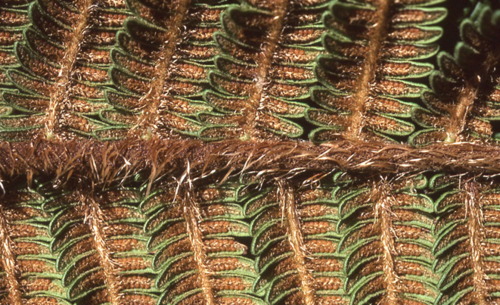
A large tree fern. It has an erect trunk. It can be 10 m tall. Occasionally it has a creeping form. The fronds are about 4 m long. Underneath the fronds is white. The fronds are divided 3 times. The stalk is pale brown with a silver blush. It can be glossy and twisted. The bases of the stalks remain sticking out from the trunk.
Edible Uses
The pith from the stem is starchy and nutritious, normally roasted but also edible raw. Use the core near the growing tip — not the trunk itself, which is composed of a peaty substance from decaying roots. Reported flavors vary widely: bitter, sweet, astringent, or reminiscent of a bad turnip. Note that harvesting the stem kills the plant, so this use cannot normally be condoned. Young fronds can be cooked as a vegetable; harvested just before they unfurl, they are juicy and slimy with a flavor like bitter celery.
Traditional Uses
The pith is eaten.
This uses section is brief — help expand it
Medicinal Uses
None known
Distribution
It does best in a sheltered position. It is damaged by hot sunlight. It grows naturally in dry open forest. It grows well in well-drained humus. It can stand some frost. It suits hardiness zones 9-11. Geelong Botanical Gardens.
Where It Grows
Australia, Chatham Islands, New Zealand*,
Cultivation
Plants can be grown by spores.
Propagation
Surface-sow spores at any time of year in a light position in a warm greenhouse. Keep the growing medium moist by standing the pot in shallow water or enclosing it in a plastic bag. Germination takes one to three months at 25°C. Prick out patches of young plants into small pots and stand these in shallow water until well established. Grow on in a shady greenhouse position for at least the first two winters before planting out in late spring.
Other Uses
None known
Notes
It is New Zealand's National emblem. There are about 800 Cyathea species.
Synonyms
References (10)
- Bodkin, F., 1991, Encyclopedia Botanica. Cornstalk publishing, p 308
- Cundall, P., (ed.), 2004, Gardening Australia: flora: the gardener's bible. ABC Books. p 448
- Etherington, K., & Imwold, D., (Eds), 2001, Botanica's Trees & Shrubs. The illustrated A-Z of over 8500 trees and shrubs. Random House, Australia. p 247
- Goudey, C.J., 1988, A Handbook of Ferns for Australia and New Zealand. Lothian. p 83
- Hedrick, U.P., 1919, (Ed.), Sturtevant's edible plants of the world. p 255
Show all 10 references Hide references
- Hibbert, M., 2002, The Aussie Plant Finder 2002, Florilegium. p 78
- Large, M.F., & Braggins, J.E., 2004, Tree Ferns. CSIRO Publishing, Melbourne, Australia. p 120 Plates 41-44
- Lord, E.E., & Willis, J.H., 1999, Shrubs and Trees for Australian gardens. Lothian. p 95
- Plants for a Future database, The Field, Penpol, Lostwithiel, Cornwall, PL22 0NG, UK. http://www.scs.leeds.ac.uk/pfaf/
- Salmon, J.T., 1989, The Native Trees of New Zealand. Heinmann Reid p 362